
How Air Purifiers Help with Allergies: A Complete Guide to Breathing Easier at Home
If you wake up with a stuffy nose, sneeze throughout the day, or feel like your allergies are worse indoors than outdoors, you're not alone. According to the Asthma and Allergy Foundation of America, more than 50 million Americans experience allergies each year, and many of these symptoms are triggered by indoor allergens like dust mites, pet dander, and pollen that gets tracked inside.
While you can't control what's happening outside, you can take steps to improve the air quality inside your home. That's where air purifiers come in. In this comprehensive guide, we'll explore how air purifiers work, which technologies are most effective for allergies, and how to choose the right system for your specific needs.
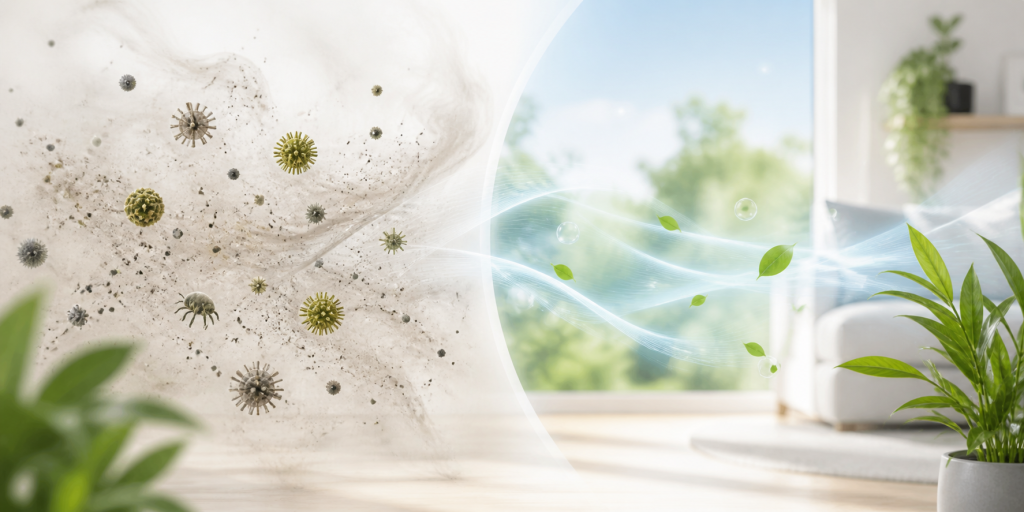
Understanding Indoor Allergens: What's Actually in Your Air?
Before we dive into solutions, it's important to understand what you're dealing with. Indoor air can contain a variety of allergens that trigger uncomfortable symptoms:
Common Indoor Allergens
Dust Mites: These microscopic creatures thrive in bedding, upholstered furniture, and carpets. Their waste products are one of the most common indoor allergens. Even clean homes have dust mites, and they're present year-round.
Pet Dander: If you have cats or dogs, their skin flakes (dander) become airborne and can trigger allergic reactions. Pet allergens are sticky and can remain in your home for months, even after the pet is gone.
Pollen: While we typically think of pollen as an outdoor allergen, it easily makes its way indoors through open windows, on clothing, and on pets. Unlike outdoor pollen that disperses, indoor pollen can become concentrated in certain areas of your home.
Mold Spores: Mold grows in damp areas like bathrooms, basements, and around leaky windows. The spores become airborne and can cause respiratory issues, especially for those with mold allergies or asthma.
Volatile Organic Compounds (VOCs): These chemicals come from household products, cleaning supplies, and building materials. While not traditional allergens, they can irritate the respiratory system and worsen allergy symptoms.
How Air Purifiers Actually Work Against Allergens
Air purifiers don't just mask odors or circulate air—they actively remove particles from the air in your home. Different technologies target allergens in different ways, and the most effective systems often combine multiple approaches.
HEPA Filtration: The Gold Standard
High-Efficiency Particulate Air (HEPA) filters are considered the most effective mechanical filters for capturing airborne allergens. True HEPA filters must remove at least 99.97% of particles that are 0.3 microns in diameter. To put that in perspective, pollen particles are typically 10-100 microns, dust mite waste is 10-40 microns, and mold spores are 3-40 microns.
HEPA filters work through a combination of three mechanisms: interception (particles follow air streamlines and stick to fibers), impaction (larger particles collide with fibers), and diffusion (tiny particles bounce around and eventually hit fibers). This multi-layered approach makes HEPA extremely effective at capturing allergens of various sizes.
Activated Carbon Filtration
While HEPA filters excel at capturing particles, activated carbon filters target gases, odors, and VOCs. The carbon has millions of tiny pores that trap gaseous pollutants through a process called adsorption. For allergy sufferers who are also sensitive to chemical irritants, this layer adds important protection.
Ionization Technology
Ionizers release negative ions into the air that attach to positively charged particles like dust, pollen, and dander. This makes the particles heavier, causing them to fall out of the air or become easier for filters to capture. Some advanced systems use bipolar ionization, which releases both positive and negative ions for more comprehensive air cleaning.
UV-C Sterilization
Ultraviolet light in the UV-C spectrum can destroy the DNA of microorganisms like mold spores, bacteria, and viruses. While this doesn't directly capture allergens, it prevents biological contaminants from multiplying and adds an extra layer of protection, especially important for those with mold allergies or compromised immune systems.
Photocatalytic Oxidation (PCO)
This advanced technology uses UV light and a catalyst (usually titanium dioxide) to break down pollutants at the molecular level. It can destroy allergens, VOCs, and odors rather than just capturing them. PCO is particularly effective when combined with other filtration methods.
The Science Behind Air Purifiers and Allergy Relief
Multiple peer-reviewed studies have examined the relationship between air purification and allergy symptoms. A 2018 study published in the Journal of Allergy and Clinical Immunology found that participants using HEPA air purifiers in their bedrooms experienced significant improvements in nasal symptoms and sleep quality compared to the control group.
Another study from the American Academy of Allergy, Asthma & Immunology showed that combining HEPA filtration with regular cleaning reduced indoor allergen levels by up to 75% over a three-month period. The key finding was consistency—air purifiers need to run continuously to maintain low allergen levels.
It's important to note that air purifiers work best as part of a comprehensive approach. They're most effective when combined with other allergy-reduction strategies like regular cleaning, controlling humidity levels, and minimizing clutter where dust can accumulate.
Choosing the Right Air Purifier for Your Allergy Needs
Not all air purifiers are created equal, and choosing the wrong system can mean wasted money and continued suffering. Here's what to consider when selecting an air purifier for allergies:
Room Size and Coverage Area
One of the most common mistakes is buying an air purifier that's too small for the space. Check the manufacturer's recommended room size and look for the Clean Air Delivery Rate (CADR) rating. The CADR tells you how many cubic feet of clean air the purifier delivers per minute. For allergy relief, you want the air in your room to be cleaned 4-5 times per hour.
For example, if you have a 300-square-foot bedroom with 8-foot ceilings, that's 2,400 cubic feet. To clean it 5 times per hour, you'd need a CADR of at least 200 (2,400 ÷ 60 minutes × 5 changes per hour).
Filter Types and Replacement Costs
Look for units with true HEPA filters rather than "HEPA-type" or "HEPA-like" filters, which aren't held to the same standards. Consider the ongoing cost of replacement filters—a cheaper unit might cost more in the long run if filters are expensive or need frequent replacement. Most HEPA filters need replacement every 6-12 months, while carbon filters typically need changing every 3-6 months.
Noise Level
If you're planning to use the air purifier in a bedroom, noise level matters. Look for units that operate at 30-40 decibels on low settings (about as quiet as a whisper or library). Many modern purifiers have sleep modes that dim lights and reduce fan speed for nighttime use.
Energy Efficiency
Since air purifiers work best when running continuously, energy consumption adds up. Look for Energy Star certified models that won't significantly increase your electricity bill. Most efficient units cost just a few dollars per month to operate.
Smart Features
While not essential, features like air quality sensors, automatic speed adjustment, filter change indicators, and smartphone connectivity can make the purifier easier to use and more effective. Air quality sensors are particularly useful—they monitor particle levels and adjust the fan speed automatically.
If you're ready to explore options tailored to your specific needs, browse our selection of air purifiers for different room sizes and allergy concerns.
Air Purifier Placement for Maximum Allergy Relief
Bedroom: Your First Priority
You spend about one-third of your life sleeping, making the bedroom the most important room to purify. Place the air purifier within 6-10 feet of your bed, but not directly next to it where the fan noise might disturb sleep. Keep it away from walls and furniture that could block airflow—leaving at least 1-2 feet of clearance on all sides is ideal.
For bedroom use, consider quieter models designed for overnight operation. Our bedroom air purifiers are specifically selected for low noise levels and effective allergen removal in sleeping spaces.
Living Room and Open Spaces
Large, open areas require more powerful units with higher CADR ratings. Position the air purifier in a central location where air can circulate freely. If you have high ceilings or a very large space, you might need multiple units or a commercial-grade system.
Open floor plans present a challenge because air moves freely between spaces. High-capacity air purifiers for large homes can handle the increased square footage and continuous air movement in these layouts.
Home Office and Small Spaces
If you work from home, a desktop or compact air purifier can improve the air quality in your immediate breathing zone. These smaller units are perfect for offices, bathrooms, or other targeted areas where you spend significant time.
Multiple Rooms vs. Whole-Home Solutions
While portable air purifiers can be moved between rooms, this approach isn't ideal for continuous allergy relief. Allergens build up quickly when the purifier is turned off or moved. For multi-room coverage, either invest in several units or consider a whole-home HVAC system with HEPA filtration.
Beyond Air Purifiers: Complementary Strategies for Allergy Relief
Air purifiers are powerful tools, but they work best as part of a comprehensive allergy-management strategy:
Control Humidity Levels
Dust mites and mold thrive in humidity above 50%. Use a dehumidifier to maintain humidity between 30-50%. In dry climates, a humidifier can reduce airborne dust and allergens, but keep it clean to prevent mold growth.
Regular Cleaning with HEPA Vacuums
Vacuum at least twice weekly with a vacuum that has a HEPA filter to prevent re-circulating allergens. Damp mop hard floors to capture particles rather than pushing them into the air. Wash bedding weekly in hot water (at least 130°F) to kill dust mites.
Minimize Allergen Sources
Use allergen-proof covers on mattresses and pillows. Remove carpeting in favor of hard flooring if possible, or at least keep carpets out of bedrooms. Keep pets out of sleeping areas, and bathe them regularly to reduce dander.
Ventilation Done Right
During high pollen seasons, keep windows closed and rely on your air purifier and HVAC system for ventilation. Use bathroom and kitchen exhaust fans to remove moisture and prevent mold. Change HVAC filters every 1-3 months.
Reduce VOC Exposure
Choose low-VOC paints, cleaning products, and furnishings. Air out new items before bringing them into main living areas. Store chemicals in garages or sheds rather than inside the home.
What to Expect: Timeline for Allergy Relief
Many people expect immediate results from air purifiers, but realistic expectations lead to better outcomes:
First 24-48 hours: You might notice the air feels fresher and odors are reduced. Some people report easier breathing almost immediately, though this varies by individual sensitivity and allergen levels.
First week: As the air purifier continuously cycles air through the filters, particle levels drop. You may notice less dust accumulating on surfaces and reduced nighttime congestion.
2-4 weeks: This is when many users report significant improvements in allergy symptoms. Reduced sneezing, clearer sinuses, and better sleep quality are common reports. Allergen levels in the room should be substantially lower than baseline.
1-3 months: With consistent use, you've achieved a new baseline of cleaner air. Symptoms should be noticeably better, especially if you're also implementing other allergy-reduction strategies. Some studies show maximum benefit occurs around the 3-month mark.
Remember: consistency is key. Turning off your air purifier allows allergens to accumulate again. Run it continuously on appropriate settings for best results.
Common Mistakes to Avoid
Buying the wrong size: An undersized purifier won't effectively clean your space. Always check the manufacturer's recommended square footage and err on the side of a slightly larger unit.
Neglecting filter maintenance: Dirty filters don't work effectively and can actually become sources of allergens themselves. Set calendar reminders for filter changes and check them regularly.
Poor placement: Tucking the air purifier in a corner or against a wall restricts airflow. Give it space to breathe for maximum effectiveness.
Running it only when symptoms flare: Air purifiers work best with continuous operation. By the time symptoms flare, allergen levels are already high. Preventive use is more effective than reactive use.
Expecting a cure: Air purifiers reduce allergen exposure, which can significantly improve symptoms, but they don't cure allergies. They're one tool in a comprehensive management strategy.
Frequently Asked Questions
Do air purifiers really help with pet allergies?
Yes, HEPA air purifiers can significantly reduce airborne pet dander. However, pet allergens are sticky and cling to surfaces, so you'll also need regular cleaning of furniture, floors, and bedding. Keeping pets out of bedrooms and running an air purifier continuously provides the best results.
Can air purifiers help with seasonal allergies?
Absolutely. When pollen counts are high, keeping windows closed and running an air purifier creates a cleaner environment indoors. This gives your immune system a break from constant exposure and can reduce overall symptom severity.
How long should I run my air purifier?
For optimal allergy relief, run your air purifier 24/7. Most modern units are energy-efficient and designed for continuous operation. If that's not practical, run it at least during sleeping hours and whenever you're in the room.
Will an air purifier help with asthma?
Air purifiers can reduce asthma triggers like dust, pollen, and pet dander, potentially decreasing symptom frequency. However, they're not a replacement for prescribed asthma medications. Consult your doctor about incorporating air purification into your asthma management plan.
What's the difference between ionizers and HEPA filters?
HEPA filters physically trap particles in dense filter material, while ionizers charge particles to make them clump together or stick to surfaces. HEPA filtration is generally more reliable for allergy relief. The best systems combine both technologies for comprehensive air cleaning.
How often do I need to replace filters?
HEPA filters typically last 6-12 months, while carbon filters need replacement every 3-6 months. Pre-filters (if included) might need monthly cleaning or replacement. Follow manufacturer guidelines and check filters regularly—visible dirt or reduced airflow indicates it's time for a change.
Are expensive air purifiers worth it?
Higher-priced units often feature better filtration, larger coverage areas, quieter operation, and longer-lasting filters. Calculate the total cost of ownership including filter replacements. Sometimes a more expensive unit with cheaper filters costs less over time than a budget model with expensive replacement filters.
Taking the Next Step Toward Better Air Quality
Living with allergies doesn't mean you have to suffer in your own home. Air purifiers offer a proven, effective way to reduce allergen exposure and create a more comfortable living environment. The key is choosing the right system for your specific needs and using it consistently as part of a comprehensive approach to allergy management.
Whether you're dealing with seasonal pollen, year-round dust mite allergies, or pet dander sensitivities, there's an air purification solution that can help. The technologies we've discussed—HEPA filtration, activated carbon, ionization, UV-C sterilization, and photocatalytic oxidation—each play important roles in creating cleaner, healthier indoor air.
Remember that the best air purifier is one that matches your room size, runs quietly enough that you'll actually use it, and fits within your budget for both initial purchase and ongoing filter replacements. Don't fall for gimmicks or oversized claims—stick with proven technologies and reputable manufacturers.
Ready to breathe easier? Explore our selection of air purifiers designed specifically for allergy relief. Our systems combine advanced HEPA filtration with complementary technologies to provide comprehensive protection against indoor allergens. Choose from solutions for bedrooms, large living spaces, or portable units for travel—each one engineered to reduce allergens at home and help you breathe more comfortably every day.
Your home should be your sanctuary, not a source of discomfort. Take control of your indoor air quality and start experiencing the difference that clean air can make in your daily life.