
Air Purifiers for Asthma: What to Know Before You Buy
If you have asthma, the quality of the air inside your home can matter more than you might expect. Dust, pollen, pet dander, smoke, fine particles, mold-related particles, and other indoor pollutants can contribute to poor indoor air quality and may act as triggers for some people with asthma.
An air purifier cannot treat or cure asthma, and it cannot replace medication or medical care. But the right air-cleaning system can be one part of a broader strategy for reducing airborne pollutants in the places where you spend the most time. The U.S. Environmental Protection Agency notes that studies of portable HEPA air cleaners have found improvements in some allergy and asthma symptoms, although results are not consistent across all symptoms or studies.
The important question, then, is not simply whether you need an air purifier. It is which type of air purifier makes sense for your home, your room, and the pollutants you are trying to reduce.
Can an Air Purifier Help With Asthma?
Asthma has many potential triggers, and they are not the same for everyone. Some people are more sensitive to pollen or pet dander, while others may react to smoke, dust, mold, or fine particles.
An air purifier works by removing or reducing certain pollutants from the air. This can be useful when airborne particles are part of the problem.
However, an air purifier has clear limitations. It will not remove every pollutant, and it cannot eliminate the source of contamination. For example, if there is mold growing because of a moisture problem, an air purifier may capture some airborne particles but will not solve the underlying issue. The moisture source still needs to be fixed.
That is why air purification works best as part of a larger indoor-air-quality strategy that includes source control, cleaning, and adequate ventilation.
What Should You Look for in an Air Purifier for Asthma?
There are several characteristics worth considering before buying a purifier for a home where someone has asthma.
Effective Particle Filtration
Particles are one of the main reasons people look for an air purifier in the first place. Dust, pollen, pet dander, and fine particulate matter can remain suspended in indoor air and be inhaled.
For particle removal, the EPA recommends looking at the purifier's Clean Air Delivery Rate (CADR) and choosing a unit appropriately sized for the room. A higher CADR generally means that the purifier can filter more air and handle a larger space.
HEPA Filtration
HEPA filtration is one of the most established approaches for removing airborne particles.
A good HEPA purifier can capture a wide range of particles, including many of the particles associated with dust, pollen and pet dander. This makes HEPA filtration particularly relevant when airborne particles are among your asthma triggers.
The important point is that HEPA is not a treatment for asthma. Its role is to reduce particulate pollution in the air you breathe.
Activated Carbon for Gases and Odors
Particles are not the only indoor-air concern.
Cooking, cleaning products, furnishings, paints and other household materials can release gases and volatile organic compounds (VOCs). Smoke can also introduce a mixture of particles and gases into the indoor environment.
Activated carbon can help with certain gaseous pollutants and odors. The EPA notes that carbon filters can be useful for gases, particularly when the filter contains a substantial amount of carbon material.
For this reason, a purifier that combines particle filtration with activated carbon may be more versatile than a particle-only unit.
Don't Ignore Room Size
Even a good air purifier will not perform as expected if it is too small for the space.
Before buying, measure the room where you plan to use the purifier and compare it with the manufacturer's recommended coverage and available CADR information.
A purifier designed for a bedroom may be completely inadequate for a large open living area. On the other hand, buying an unnecessarily large unit for a small room can increase cost, noise and energy consumption without providing a meaningful advantage.
If you have an open floor plan, consider the entire area that the purifier will need to serve rather than measuring only one section of the room. The EPA also recommends considering ceiling height when selecting a unit.
The Bedroom May Be the Most Important Place
For many people, the bedroom is a logical place to start.
You spend several consecutive hours there every night, and bedding, mattresses, carpets and upholstered furniture can all contribute to the amount of dust and other particles in the room.
If airborne particles are one of your triggers, placing an appropriately sized purifier in the bedroom and running it consistently can make more sense than moving a small purifier from room to room.
Position the unit so that its airflow is not blocked by curtains, furniture or other objects. The EPA recommends placing portable air cleaners in rooms where people spend the most time while keeping airflow unobstructed.
What About Dust and Pet Dander?
Dust and pet dander are common concerns in homes with asthma.
A purifier can capture airborne particles, but it cannot remove everything that has already settled on a mattress, carpet, sofa or floor.
That means air purification should be combined with regular cleaning.
Wash bedding regularly, vacuum floors and upholstery, reduce unnecessary dust-collecting surfaces and keep pets away from areas where you sleep if pet exposure is a known trigger.
The purifier should be thought of as one part of the system rather than a replacement for cleaning.
What About Pollen?
Pollen can enter a home through open windows, doors, clothing and ventilation systems.
During periods of high outdoor pollen, keeping windows closed when practical and using air conditioning or appropriate ventilation can reduce the amount entering the home. An appropriately sized particle air purifier can then help capture some of the airborne particles that remain indoors.
Again, the goal is not to make the room completely pollen-free. The goal is to reduce the amount of airborne particulate matter.
What About Smoke?
Smoke is another reason people consider an air purifier.
Tobacco smoke, wildfire smoke and smoke from other combustion sources can contain both fine particles and gaseous pollutants. A purifier with effective particle filtration and activated carbon may help reduce some of these contaminants indoors.
But the most effective approach is always to eliminate the source whenever possible.
For example, if someone smokes indoors, an air purifier should not be treated as a substitute for a smoke-free environment.
Be Careful With Ozone-Generating Air Purifiers
This is particularly important when choosing an air purifier for someone with asthma.
Some air-cleaning devices intentionally produce ozone or use technologies that can potentially generate ozone as a byproduct. The EPA advises avoiding portable air cleaners that intentionally produce ozone because ozone is a lung irritant.
The EPA also notes that ozone can worsen chronic respiratory diseases such as asthma.
For that reason, an ozone-generating device should not automatically be considered a better choice simply because it uses additional air-treatment technologies.
If asthma is the reason you are shopping for an air purifier, particle filtration, appropriate room sizing and low- or zero-ozone operation deserve particular attention.
An EcoQuest Air Purifier to Consider

Fresh Air Double Plus
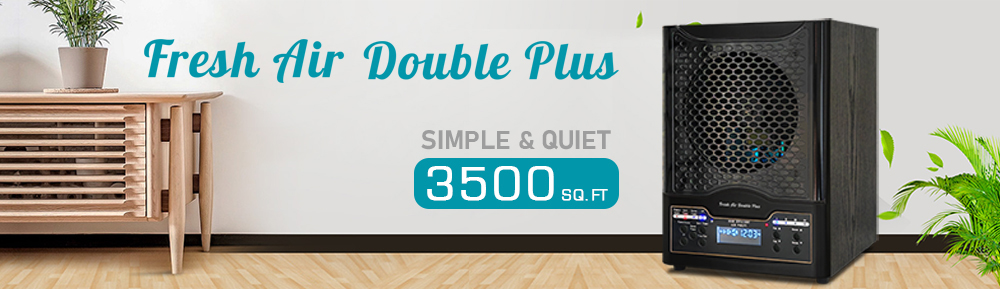
Fresh Air Double Plus combines several air-treatment technologies, including HEPA filtration and activated carbon, along with UV, ionization and other technologies. The unit is designed for spaces from approximately 600 to 3,500 square feet and has a four-speed fan. According to the product specifications, it includes a HEPA filter, carbon, pre-filter and electrostatic lint screen.
The HEPA and carbon components make Fresh Air Double Plus relevant for readers looking for a system that addresses both airborne particles and certain odors or gaseous pollutants.
However, there is an important qualification for anyone with asthma: Fresh Air Double Plus also has an adjustable ozone-generation function. The product specifications list ozone output of 0–360 mg/hour. Because the EPA advises avoiding air cleaners that intentionally produce ozone, this product should not be presented as an asthma-specific medical recommendation. Anyone with asthma should carefully consider the ozone feature and follow appropriate safety guidance rather than assuming that all operating modes are suitable for occupied spaces.
In other words, the product's HEPA and activated-carbon filtration are the relevant features when evaluating it for general indoor air cleaning, while its ozone function requires particular caution in an asthma-focused application.
Learn MoreWhat an Air Purifier Cannot Do
It is easy to expect too much from an air purifier, especially when dealing with asthma.
An air purifier cannot:
- Cure or treat asthma
- Replace prescribed asthma medication
- Remove every indoor pollutant
- Fix a water leak or moisture problem causing mold
- Replace regular cleaning
- Make an environment completely free of allergens
- Make indoor smoking safe
The EPA specifically states that filtration should supplement, rather than replace, source control and ventilation.
This distinction is important. A purifier can reduce certain airborne pollutants, but controlling the source of those pollutants is often more effective.
Mold Requires a Different Approach
Mold deserves special attention because simply placing an air purifier in a moldy room does not solve the problem.
If mold is growing because of a leak, excessive humidity, condensation or another moisture problem, the source needs to be corrected. The affected material may also need to be cleaned or removed.
An air purifier can potentially capture some airborne mold particles, but it does not stop mold from growing.
If mold or persistent musty odors are present, deal with the moisture problem first and use air purification only as a supporting measure.
Common Mistakes When Buying an Air Purifier for Asthma
Choosing by room size alone
Coverage claims are useful, but CADR and actual airflow matter too. A large room requires a purifier capable of moving and cleaning enough air.
Focusing only on the filter type
HEPA is important for particle filtration, but it is not the only factor. Room size, airflow, operating time and proper placement all affect performance.
Ignoring gases and odors
If smoke, cooking emissions or household VOCs are a concern, particle filtration alone may not address everything. Activated carbon can be useful for certain gaseous pollutants.
Assuming more technologies always mean better air
A purifier with ionization, UV, plasma or ozone may sound more advanced, but additional technologies are not automatically better for someone with asthma.
In particular, intentionally generated ozone deserves caution because of its potential respiratory effects.
Running the purifier only occasionally
Air cleaning depends on how much air the purifier processes. Higher fan speeds and longer operating times generally result in more air being filtered.
If the unit is intended to reduce airborne particles in a bedroom, consistent operation is generally more useful than turning it on only when the air feels dusty.
How to Use an Air Purifier More Effectively
Once you have selected an appropriate unit, placement and operation still matter.
Keep the airflow unobstructed. Avoid placing the purifier directly behind furniture or curtains.
Use it in the room where you spend the most time, especially if that room contains a known source of airborne particles.
Keep doors and windows closed when appropriate during periods of high outdoor pollution or pollen, while still maintaining adequate ventilation when outdoor air quality permits.
Clean or replace filters according to the manufacturer's instructions. A loaded filter can reduce airflow and affect performance.
And remember that the purifier works best alongside other measures: regular cleaning, controlling humidity, fixing leaks, reducing smoke exposure and addressing known asthma triggers.
Building a More Asthma-Friendly Home
An air purifier is only one part of indoor air quality management.
A more complete approach may include:
- Using an appropriately sized particle air cleaner
- Choosing effective filtration such as HEPA when particle reduction is the goal
- Using activated carbon when gases or odors are also a concern
- Keeping indoor humidity under control
- Fixing leaks and moisture problems quickly
- Cleaning dust and pet dander regularly
- Reducing exposure to tobacco smoke
- Controlling outdoor pollen entering the home
- Maintaining HVAC filters according to manufacturer recommendations
- Avoiding products that intentionally generate ozone in occupied spaces
For central HVAC systems, the EPA recommends using the highest-efficiency filter that the system can accommodate, with MERV 13 or higher where compatible with the system.
The Bottom Line
The best air purifier for someone with asthma is not necessarily the one with the most technologies or the biggest list of features.
Start with the pollutants that are actually relevant to your home. If airborne particles such as dust, pollen and pet dander are a concern, look for effective particle filtration and enough airflow for the room. If smoke or gaseous pollutants are also an issue, consider a purifier with an appropriate amount of activated carbon.
Just as importantly, pay attention to ozone. For people with asthma, intentionally generating ozone indoors is a significant concern, and the EPA recommends avoiding portable air cleaners that intentionally produce it.
An air purifier can be a useful part of an asthma-friendly home, but it works best when combined with source control, cleaning, ventilation and whatever medical treatment has been recommended by your healthcare professional.