
Do You Really Need a HEPA Filter? How to Choose the Right Air Purifier
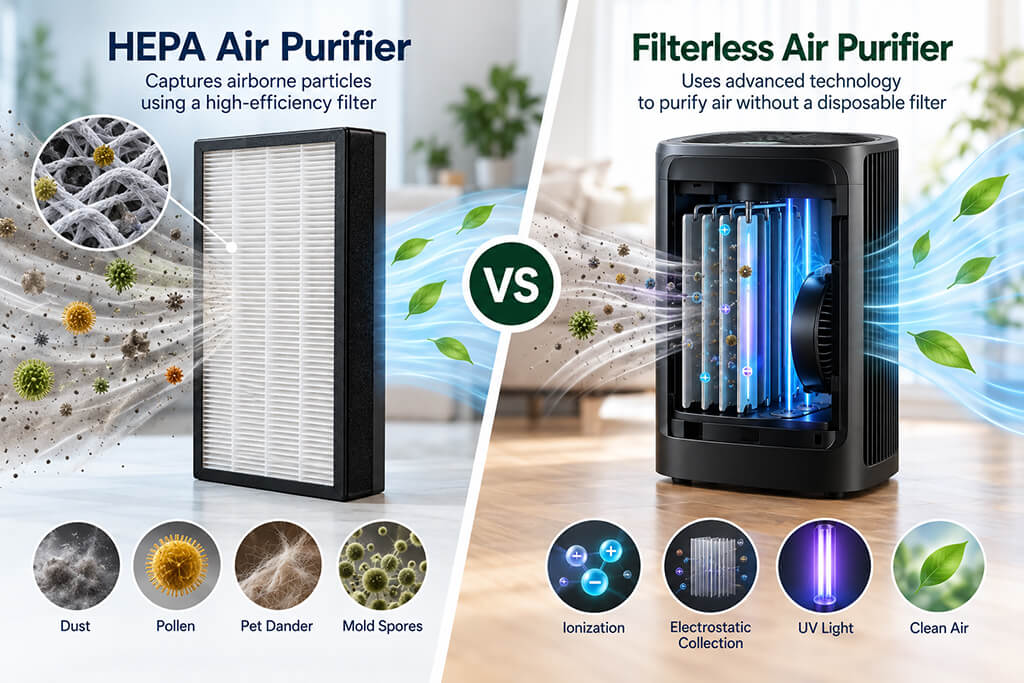
Walk into the air purifier aisle today and you will quickly see one feature mentioned again and again: HEPA filtration. It is easy to assume that a purifier with a HEPA filter is automatically the best choice. But HEPA is only one approach to air cleaning. Other systems are designed around ionization, electrostatic collection, UV, activated oxygen, or combinations of different technologies.
That creates a more useful question than simply asking which technology is better:
What do you actually want your air purifier to do, and how do you want to maintain it?
A purifier designed primarily to capture airborne particles is solving a somewhat different problem from a system designed to treat particles, odors and other indoor-air concerns through multiple technologies.
Understanding that difference can make choosing a purifier much easier.
Start With the Air, Not the Filter
Before comparing products, think about what is actually bothering you about the air in your home.
Maybe you are dealing with visible dust. Perhaps pollen becomes a problem during certain seasons. Pet dander, cooking odors, tobacco smoke or musty smells may be more important in your home.
These situations are not identical.
Airborne particles are one category of indoor pollution. Odors and gases are another. A purifier that performs very well in one area may not be equally effective in another.
This is why the word HEPA should not be the only thing you look for when comparing air purifiers.
What a HEPA System Actually Does
HEPA stands for High-Efficiency Particulate Air.
A HEPA filter uses a dense network of fibers to physically capture airborne particles as air passes through it. This makes HEPA particularly relevant when the main goal is reducing particles such as dust, pollen, pet dander and other fine particulate matter.
One of the biggest advantages of this approach is that it is straightforward.
Air goes into the machine, passes through the filter, and particles are captured by the filter media.
But there is an obvious consequence: the material collecting those particles eventually becomes loaded with them.
That is why HEPA purifiers require filter replacement.
How often a filter needs to be replaced depends on the model, operating time, air quality and the manufacturer's recommendations. A purifier running continuously in a home with pets or heavy dust exposure may require more frequent maintenance than one operating occasionally in a relatively clean environment.
The Part of HEPA Ownership People Often Forget
When comparing air purifiers, most people look at the purchase price first.
That can be misleading.
A $200 purifier that requires a $60 replacement filter several times a year can have a very different long-term cost from a more expensive system that does not rely on disposable filters.
With a HEPA purifier, the real ownership equation can include:
- Initial purchase price
- Replacement HEPA filters
- Activated carbon filter replacements, if included
- Electricity
- Cleaning and routine maintenance
This does not make HEPA a bad choice. Replacement filters are simply part of the way this technology works.
For many people, that tradeoff is completely reasonable because mechanical particle filtration is their primary goal.
There Is Another Way to Approach Air Treatment
Filterless air purifiers take a different route.
Instead of depending primarily on a disposable HEPA filter, they use other methods to treat the air. Depending on the product, this can include ionization, electrostatic collection, UV treatment, activated oxygen or combinations of technologies.
There is no single "filterless technology."
That distinction is important.
Two products can both be described as filterless while working in completely different ways. One may focus on particle collection, another may combine several air-treatment technologies, and another may be designed primarily for a particular type of space.
So when you see filterless, don't stop there. Find out what technology is actually inside the unit.
What You Give Up by Removing the Disposable Filter
The obvious advantage of a filterless design is that you don't have to keep buying a disposable HEPA filter.
But removing the filter does not mean removing maintenance.
A filterless purifier may still require you to:
- Clean collection surfaces
- Remove accumulated dust
- Clean air-intake and output areas
- Maintain internal components
- Replace specific service parts when necessary
The difference is that instead of regularly throwing away a loaded filter, you may be maintaining reusable components.
For some homeowners, that is a much more convenient arrangement.
For others, simply replacing a filter every few months is easier.
There is no universally better maintenance system. It comes down to what you prefer.
The Real Comparison Is Particle Capture vs. Air Treatment
This is where the HEPA-versus-filterless discussion becomes more useful.
A conventional HEPA purifier is primarily a mechanical particle filtration system.
A filterless purifier may be an air-treatment system using one or several technologies.
That means the two approaches shouldn't always be compared as though they are competing versions of exactly the same thing.
If your number-one concern is airborne dust or pollen, you may place a high value on mechanical particle filtration.
If you are looking for a broader approach that may address particles, odors and other indoor-air concerns while reducing reliance on disposable filters, a multi-technology system may be more appealing.
The individual specifications matter more than the label.
What About Pet Owners?
Living with pets can create several different air-quality challenges at once.
There is pet hair, but hair is not necessarily the same thing as airborne pet dander. There can also be dust, odors and particles carried into the home on fur and clothing.
A purifier can be useful, but it shouldn't be expected to solve the entire problem.
Regular vacuuming, washing pet bedding, cleaning upholstery and grooming pets can reduce the amount of material entering and accumulating in the home.
For airborne particles, a HEPA system offers a straightforward mechanical filtration approach.
Alternative air-treatment systems may also be worth considering, particularly if odors are an important part of the problem.
The key is to identify whether your priority is particle removal, odor control, or both.
Smoke Is a Different Challenge
Smoke is more complicated than ordinary household dust.
Whether it comes from tobacco, cooking, a fireplace or wildfire conditions, smoke can contain a mixture of fine particles and gaseous compounds.
A HEPA filter can capture airborne particles, but HEPA alone is not designed to remove every gaseous component of smoke.
This is where activated carbon and other air-treatment technologies can become relevant.
However, no purifier should be viewed as a substitute for eliminating the source. If smoking is occurring indoors, removing the source is far more important than trying to clean the resulting smoke afterward.
During wildfire events, follow local air-quality guidance and use an appropriately sized air cleaner for the conditions.
Don't Confuse Odor Removal With Particle Removal
This is one of the easiest mistakes to make when shopping for an air purifier.
You may notice that one purifier makes a room smell fresher while another is specifically designed to capture airborne particles.
Those are not necessarily measuring the same thing.
Odors are caused by airborne chemicals and particles. A purifier may reduce an odor without removing every pollutant associated with it, while a particle filter may remove particles without eliminating the underlying smell.
If odors are important to you, look specifically for information about odor and gas treatment rather than assuming that any air purifier will perform equally well.
Room Size Still Matters More Than Many Buyers Realize
A sophisticated purification technology won't compensate for an undersized machine.
Imagine placing a small bedroom purifier in a large open living area. The unit may technically be running, but it simply cannot process the same volume of air as a larger system designed for that space.
Before buying, consider:
How much air needs to be treated?
Look at the manufacturer's recommended coverage area and airflow specifications. Think about ceiling height and whether the room is enclosed or connected to other areas of the home.
For an open floor plan, the relevant space may be much larger than the room where you intend to place the purifier.
A Filterless Purifier Is Not Automatically Maintenance-Free
This deserves repeating because the terminology can create the wrong impression.
Filterless does not mean maintenance-free.
The advantage is that many filterless systems do not require regular disposable HEPA filter purchases. Instead, their maintenance may involve cleaning reusable components or servicing specific parts.
That can be particularly attractive if you dislike the ongoing task of finding, ordering and replacing filters.
But you should still check the owner's manual before buying.
Find out:
- What needs to be cleaned?
- How often?
- Can the components be cleaned at home?
- Are replacement parts available?
- How long are those parts expected to last?
- Is professional servicing ever required?
A clear maintenance schedule is much more useful than simply seeing the word "filterless" on the box.
Don't Ignore Ozone
There is one additional issue that deserves special attention when looking at alternative air-treatment technologies.
Some air purifiers intentionally generate ozone, while certain technologies can produce ozone as a byproduct.
The U.S. Environmental Protection Agency identifies ozone as a lung irritant and advises consumers to avoid portable air cleaners that intentionally produce ozone.
This means you should never assume that a purifier with more technologies is automatically a better purifier.
If a system uses ionization, plasma, activated oxygen or another technology that may involve ozone, check its specifications, operating instructions and applicable safety information carefully.
This is especially important when the purifier will operate continuously in occupied rooms.
The Cost Comparison Looks Different Over Time
A fair comparison between HEPA and filterless systems should cover several years, not just the day you buy the machine.
With a conventional HEPA purifier, you may pay for:
- Replacement filters
- Carbon filters, if included
- Electricity
- Routine cleaning
With a filterless system, you may pay for:
- Electricity
- Cleaning and maintenance
- Replacement service components, depending on the model
The exact numbers vary widely.
A filterless purifier is not automatically cheaper to own, just as a HEPA purifier is not automatically more expensive.
The important thing is to calculate the total cost of ownership, including the maintenance the manufacturer actually requires.
EcoQuest Air Purifiers: HEPA and Filterless Options
If you're comparing different air purification technologies, EcoQuest offers both HEPA-based systems and filterless air treatment options. Here are three models that illustrate the differences discussed above.
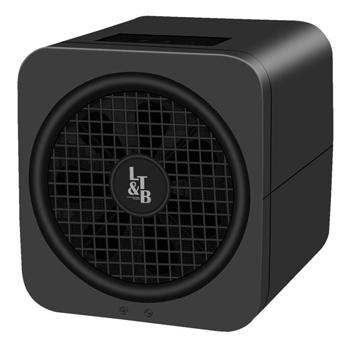
Room HEPA Purifier
The Room HEPA Purifier is a compact option for smaller spaces. Its three-stage system combines pre-filtration, H13 HEPA filtration and activated carbon to capture fine airborne particles while also helping reduce odors. The unit is designed for spaces up to approximately 100 square feet and can be placed on a desk or countertop.
Recommended for:
- Bedrooms
- Home offices
- Small rooms
- Desks and workspaces
- Personal air cleaning
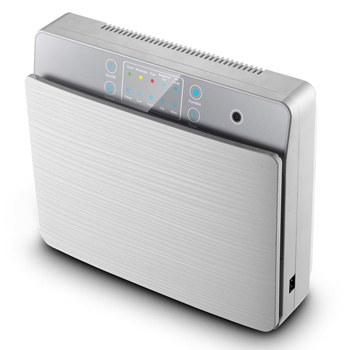
ALPINIST Wall-Mounted Air Purifier
ALPINIST takes a more comprehensive approach to room air purification, combining four filtration stages: pre-filtration, HEPA, activated carbon and a cold catalyst filter. It can be wall-mounted or used as a desktop unit, making it a practical choice when floor or counter space is limited.
Recommended for:
- Bedrooms
- Home offices
- Small rooms
- Kitchens
- Bathrooms
A Filterless Alternative
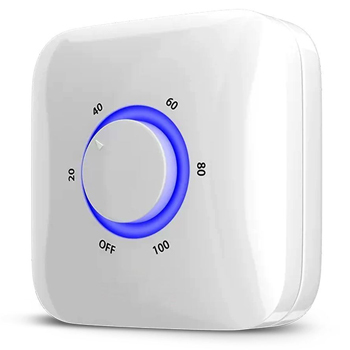
EcoSpace (EcoZone)
EcoSpace (EcoZone) takes a different approach. Instead of using a disposable HEPA filter, it uses filterless air treatment with ionization, UV and Active-Ox technology. Routine maintenance is limited to occasional cleaning of the unit.
Recommended for:
- Bedrooms
- Pantries
- Closets
- Kitchens
- Garages
Important: EcoZone generates ozone as part of its air-treatment process. Ozone-generating devices should not be presented as a direct substitute for HEPA filtration in occupied living spaces. Follow the manufacturer's operating instructions and consider applicable indoor-air-quality guidance before use.
Which Technology Makes More Sense for You?
Instead of looking for a universal winner, match the technology to the situation.
If airborne particles are your main concern
A quality HEPA purifier is a logical place to start.
Mechanical filtration is well established and specifically designed to capture airborne particles.
If you want to avoid disposable filters
A filterless system may be more attractive.
You trade regular filter purchases for cleaning and maintaining the components used by the particular purifier.
If odors are a major concern
Look beyond the HEPA label.
Check whether the purifier includes activated carbon or another technology designed for odor and gas treatment.
If you need to cover a large area
Start with the coverage and airflow specifications.
A purifier with the right technology but insufficient airflow may not be the right choice for the space.
If you want several purification technologies in one unit
A multi-technology system may be worth investigating.
Just remember that additional technologies introduce additional questions about maintenance, performance and, in some cases, ozone.
A Simple Way to Compare Two Purifiers
When you're looking at two models, make a short checklist instead of comparing marketing claims.
Air quality concern: What are you trying to reduce: dust, pollen, pet dander, smoke, odors or something else?
Treatment method: How does each purifier actually treat the air?
Coverage: Is the unit large enough for the room?
Maintenance: What has to be cleaned or replaced?
Recurring cost: What will you spend on filters or service parts over several years?
Noise: Will you be comfortable running it continuously, especially in a bedroom?
Ozone: Does the technology intentionally produce ozone or have a potential ozone concern?
Availability of parts: Can you still obtain filters or replacement components several years after purchase?
This approach gives you a much clearer picture than simply comparing the number of features on each product page.
The Choice Is Really About Your Priorities
HEPA and filterless air purifiers represent two different approaches to managing indoor air.
HEPA systems rely on mechanical filtration and are particularly straightforward when airborne particle removal is the main goal. Their tradeoff is the ongoing need for filter replacement.
Filterless systems reduce or eliminate dependence on disposable HEPA filters and can use a variety of alternative technologies. Their tradeoff is that you need to understand exactly how the individual system works and what maintenance it requires.
Neither approach wins in every situation.
If you have pets and mainly want to reduce airborne dander, your priorities may be different from someone trying to manage cooking odors. Someone dealing with seasonal pollen may make a different choice from a homeowner looking for a low-maintenance system for a large open floor plan.
The best purifier is the one that matches your air-quality problem, your space and your expectations for maintenance.
And before making the final decision, look past the marketing label. Check the technology, room coverage, maintenance requirements, ongoing costs and safety information.
That is a much better way to choose between HEPA and filterless air purification than assuming one technology is automatically right for every home.