
RCI Cell Replacement: A Guide for EcoQuest Owners
Replace the RCI cell when the display shows “REPLACE RCI CELL” or when your model's interval arrives, typically every two to three years, but check whether the UV bulb has also failed first. The correct interval is model-specific, and a new cell won't restore performance if the lamp, airflow, or installation is the actual problem.
You're likely looking at the purifier after an odor returns, a warning appears, or the unit no longer seems to produce the same result. RCI cell replacement is usually straightforward, but it isn't just a matter of sliding in a new part. The cell must match the purifier, seat correctly, and connect securely. The catalytic surface and the UV lamp are separate parts of the operating system, so replacing one doesn't automatically fix a failure in the other.
Table of Contents
- Why Your RCI Cell Needs Replacement
- Safety Precautions and Tools Required
- Step-by-Step Removal and Installation Process
- Choosing the Right RCI Cell for Your Unit
- Troubleshooting Common Post-Installation Issues
- Maintenance Tips for Long-Term Performance
- Where to Buy Authorized Replacement Parts
Why Your RCI Cell Needs Replacement
The first trigger is the purifier's own display. On Fresh Air equipment, the manufacturer's manual specifies replacement when the display shows “REPLACE RCI CELL” or every three years, whichever comes first. Another model guide specifies a two-year interval, which confirms that no single replacement schedule applies across the entire product range. Check the manual for the exact model before ordering a part. The Fresh Air manual provides the model-specific procedure and interval.
RCI cells are serviceable components, not permanent fixtures. Their catalytic surfaces can lose activity as reaction by-products and contaminants accumulate, covering active sites and reducing reaction rates. A technical review of photocatalytic oxidation cites a historical maintenance guideline suggesting catalyst regeneration approximately every six months and full replacement about every five years, but those figures aren't universal RCI specifications. Actual service life depends on ultraviolet intensity, airflow, humidity, pollutant concentration, operating hours, and cell construction. The Concordia technical review-final_manuscript.doc) explains why those variables matter.
The warning light isn't the only test
A warning display is useful, but it doesn't identify every possible fault. A cell can be old while the UV lamp remains functional, or the lamp can weaken while the cell still appears physically intact. If odor control has declined, inspect the cell and airflow, then verify that the lamp is operating before assuming the cell alone has expired.
Catalyst replacement restores the active surface, but it won't compensate for restricted airflow, heavy contamination elsewhere in the purifier, or operation outside the intended room volume. Treat the warning as a maintenance instruction, not proof that every other purification component is healthy.
Practical rule: Confirm the exact model, replacement interval, cell type, and UV-lamp condition before ordering parts.
Safety Precautions and Tools Required
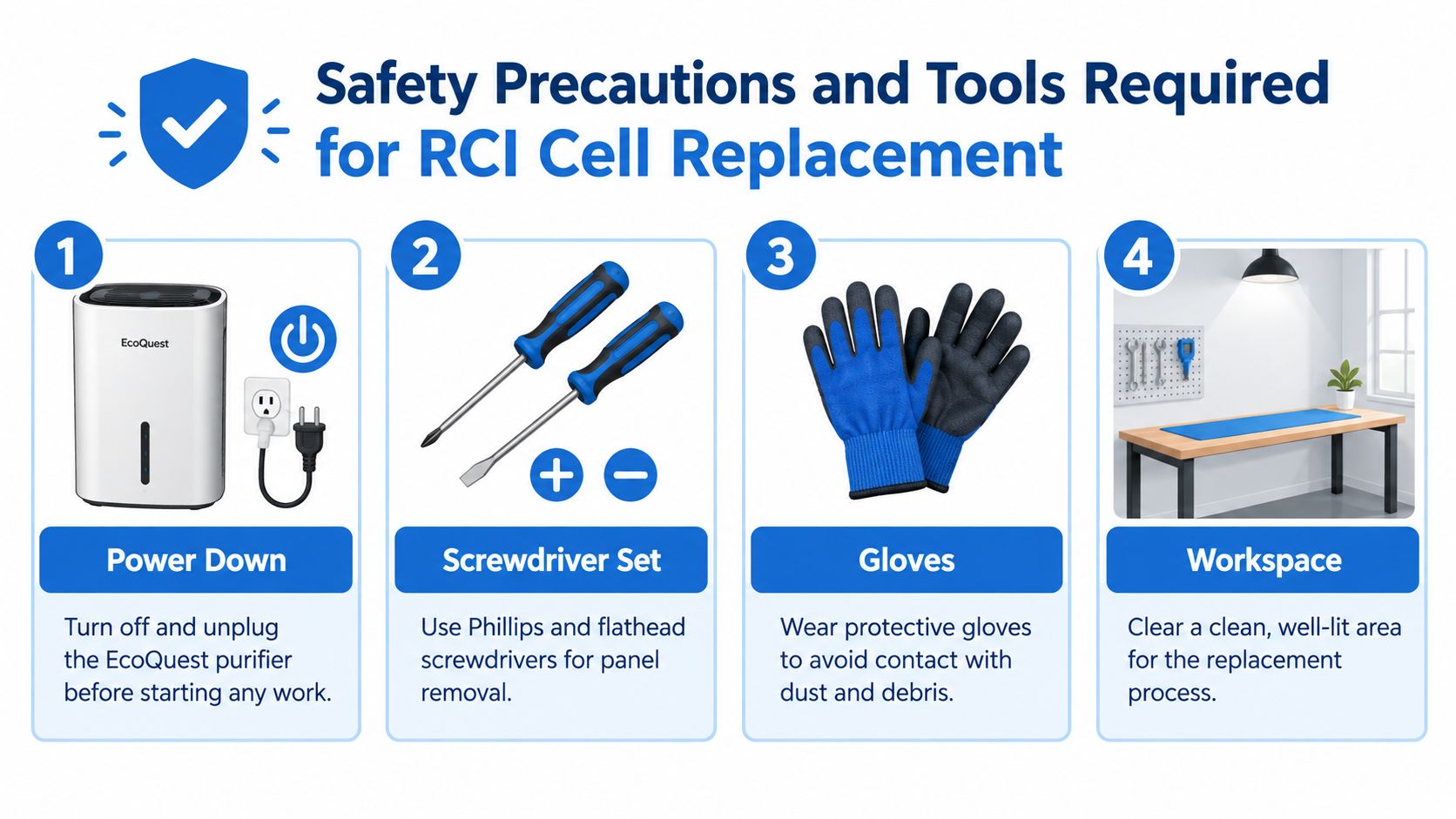
Work on the purifier only after it has been switched off and unplugged. Don't rely on the control panel alone. Disconnecting the mains supply prevents the unit from starting while your hands are near electrical connectors, the UV assembly, or the cell compartment.
Prepare the work area before opening the housing:
- Screwdrivers: Keep the Phillips and flathead sizes used by your model within reach for access panels and screens.
- Protective gloves: Wear gloves when the cell or surrounding surfaces contain dust, residue, or debris.
- Lighting: Use a bright, stable light so you can see connector locks, thumbscrews, brackets, and seating points.
- Clean surface: Place removed parts on a clear surface where small screws and tabs won't disappear.
- Replacement check: Compare the new cell with the old one before installation, including its connector, brackets, studs, and overall orientation.
The ActiveOx RCI PCO Cell with ozone is listed as an essential part of an air purifier, and its catalog guidance says the RCI PCO cell should be replaced when the UV light bulb burns out. That instruction makes a lamp check especially important rather than treating the cell as an isolated component.
Step-by-Step Removal and Installation Process
Start with the purifier unplugged and positioned so you can reach the rear access area without twisting the cabinet. Fresh Air style assemblies use a rear access panel or lint screen, a connector with locking tabs, two thumbscrews, and a plate cage that guides the cell into position.
Remove the old cell
- Open the access area. Remove the relevant rear panel or lint screen according to the unit manual. Set the screws or screen aside in a safe place.
- Release the connector. Find the RCI connector and press both locking tabs. Pull the connector straight out. Don't yank the wires or lever the plug sideways, because that can damage the connector or its latch.
- Remove the retaining screws. Take out both thumbscrews and keep them together. They secure the cell mechanically, so the cell shouldn't be forced out while they remain installed.
- Slide the cell downward. Lower it carefully, then slide it out of the compartment. Inspect the old part for contamination, damaged brackets, broken studs, or signs that it wasn't seated correctly.
The replacement has to enter in the same orientation as the original. Remove all packaging, compare the rear lip and angle brackets, and confirm that the connector position matches the unit before inserting it.
Seat the replacement correctly
Slide the new cell upward into the cage. Continue until the rear lip engages the two slotted protrusions in the plate cage. At the same time, the angle brackets and studs must align with their corresponding mounting points. If the cell stops early, sits at an angle, or requires force, remove it and check the orientation. Don't tighten the thumbscrews to pull a badly positioned cell into place.
Once the cell is fully seated, refit and tighten both thumbscrews. Insert the connector until both locking tabs click into place. A connector that looks attached but hasn't latched can prevent the purifier from recognizing or operating the cell.
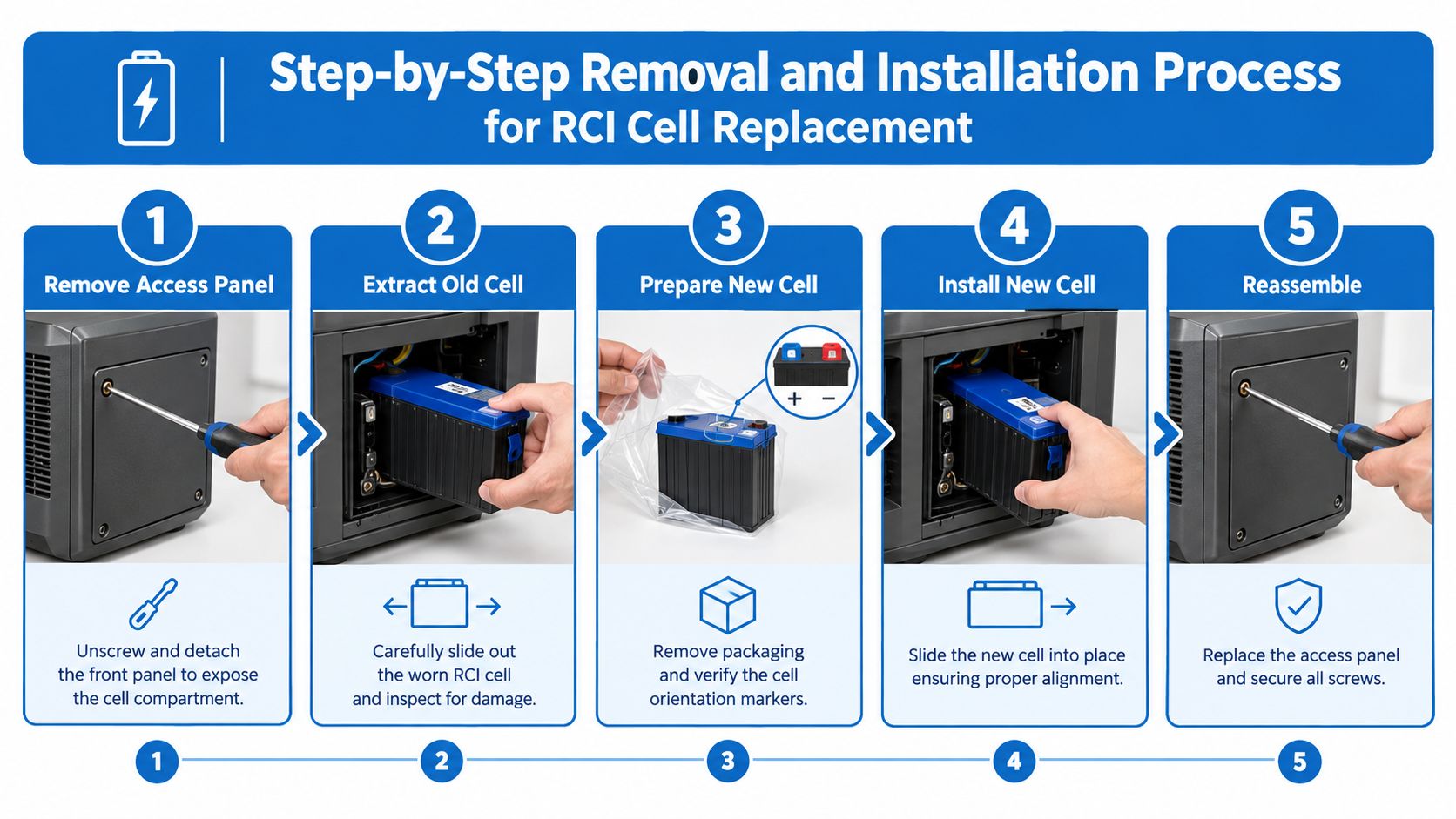
Reinstall the access panel or lint screen, then plug in the purifier and verify normal operation. If you're servicing equipment in a recreational vehicle or another mobile environment, the same principle applies to any adjacent appliance work. A specialist such as motorhome fridge repair specialists can help when the wider service issue involves an appliance rather than the purifier itself.
Choosing the Right RCI Cell for Your Unit
Compatibility comes before preference. The connector, physical dimensions, mounting points, and operating design must match the purifier. An ozone-free cell isn't automatically interchangeable with a cell designed for ozone operation, even when the parts look similar.
The main decision is whether your exact model calls for the ActiveOx cell with ozone or the ozone-free version. The catalog describes the ozone-free option as ozone free, while the with-ozone option is identified separately. Don't choose from the product name alone. Confirm the model and required configuration in the manual or compatibility information before purchasing.
| Feature | ActiveOx RCI PCO Cell, With Ozone | ActiveOx RCI PCO Cell, Ozone-Free |
|---|---|---|
| Catalog designation | Designed as the with-ozone version | Identified as ozone free |
| Main selection factor | Whether the purifier requires the with-ozone configuration | Whether the purifier requires the ozone-free configuration |
| Best check before purchase | Exact model manual and existing cell configuration | Exact model manual and existing cell configuration |
| Installation priority | Correct physical and electrical match | Correct physical and electrical match |
For a broader parts check, review the RCI cells and UV lamps catalog and compare the listed component with your unit's documentation. This is similar to how technicians compare power tool batteries: an apparently similar part still needs the correct electrical and mechanical compatibility.
Don't substitute a part because it fits the opening. The wrong configuration can alter how the purifier operates, and a replacement that doesn't match the intended design may create confusion during troubleshooting. If the old cell has no readable label, use the purifier model and manual as the primary identification method.
Troubleshooting Common Post-Installation Issues
A new cell that isn't recognized usually points to a connection or seating problem before it points to a defective replacement. Start by unplugging the purifier again, then inspect the installation rather than repeatedly cycling the power.
If the display still shows the warning
Check the connector first. Press the locking tabs, remove the plug, and reinstall it straight until both tabs are fully latched. Then confirm that the cell's rear lip is engaged with the two slotted protrusions and that the thumbscrews are tight. An incomplete latch or poor mechanical seat can prevent recognition even when the cell appears to be in the compartment.
If those checks pass, compare the replacement against the original and verify the part configuration. A model-specific replacement interval doesn't guarantee that every similarly named cell fits every purifier.
The second diagnostic question is the UV lamp. Photocatalytic oxidation depends on the amount of UV light reaching the catalyst, as well as catalyst quantity and pollutant contact time. EPA's technical summary of residential air cleaners explains these operating dependencies. A new catalyst surface can't perform properly if the UV source has weakened or failed, and replacing the lamp may have more effect on clean-air delivery than replacing photocatalytic media in some circumstances.
Check the wider operating conditions
Look for restricted airflow, visible contamination, and a room volume beyond the unit's intended application. Odor return isn't proof that the RCI cell alone has expired. Document what changed, inspect the cell and lamp, and consider emissions or performance testing where appropriate.
For a unit such as the Fresh Air Black EcoQuest, the catalog describes purification use in spaces up to 280 m2 and distinguishes operation in the presence of people from a separate disinfection mode. Follow the exact device instructions rather than applying a general operating assumption to every model.
If the warning remains after checking seating, connector latches, compatibility, and the UV lamp, use the EcoQuest repair service rather than forcing the cell or bypassing a diagnostic indication.
Maintenance Tips for Long-Term Performance
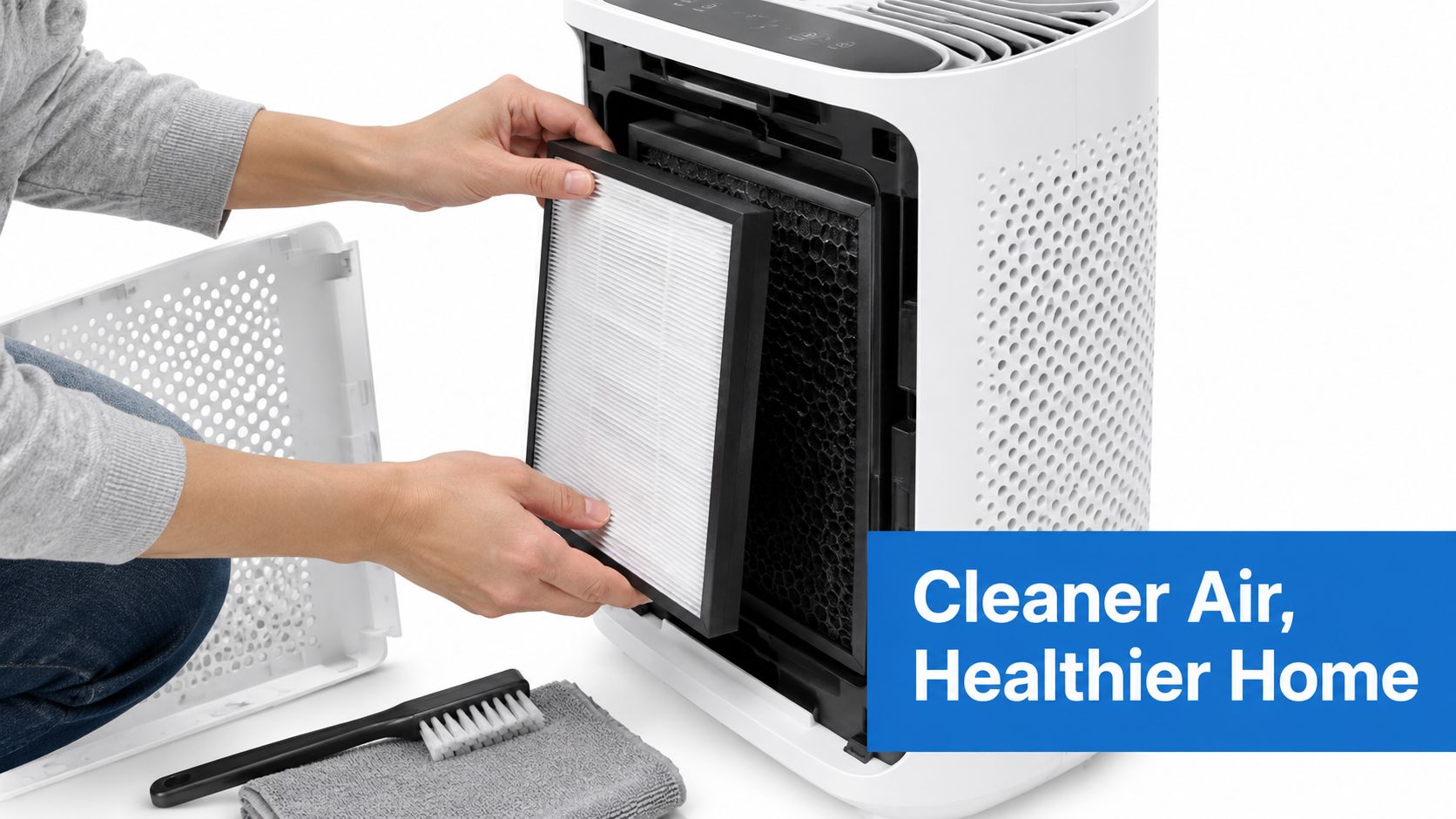
Replacement works best when it forms part of a simple inspection routine. Before each service, look for dust or residue on the cell, blocked intake or outlet paths, damaged wiring, and signs that the lamp area has become contaminated. Restricted airflow makes the purifier work under conditions different from those used to evaluate the cell.
Keep a record of the installation date, model number, cell type, and any warning displayed by the unit. That record helps separate gradual catalyst aging from a sudden lamp failure or airflow problem. It also prevents guesswork when several purifiers in a home or business use different maintenance intervals.
What to inspect during service
- Air path: Make sure grilles, screens, and surrounding surfaces aren't restricting intake or discharge.
- Cell condition: Look for visible fouling, cracks, loose brackets, or damaged studs.
- UV condition: Confirm that the lamp is operating and replace it when the model's instructions require it.
- Electrical connection: Check that the connector is fully seated and its locking tabs remain intact.
- Operating environment: Note humidity, pollutant load, operating hours, and recurring odors, since each can affect service life.
A new cell doesn't make the purifier universally safe or eliminate every contaminant. EPA material warns that photocatalytic oxidation can produce by-products when catalyst composition and design don't match the compounds being treated. Reported examples include carbon monoxide, phosgene, hydrogen chloride, and chlorine during treatment of some chlorinated VOCs, and incomplete mineralization can produce aldehydes, ketones, and organic acids. EPA's residential air-cleaner summary supports a cautious approach involving ventilation, device instructions, and independent emissions testing where applicable.
Where to Buy Authorized Replacement Parts
Use the exact model and part information when ordering. Authorized sources and established dealers are more likely to provide compatibility details, manuals, and support for the unit you own. That matters when the catalog includes separate cell configurations and model-specific service intervals.
The RCI cell parts catalog can help you identify replacement components, but confirm the selection against your purifier manual before completing the order. If you can't verify the model, connector, or ozone configuration, stop and request technical assistance rather than relying on appearance.
The complete maintenance decision is simple but not one-dimensional. Replace the cell when the display or model interval calls for it, inspect the UV lamp at the same time, and correct airflow or contamination problems before judging the result. Proper mechanical seating and a fully latched connector are just as important as buying the correct part.
EcoQuest Purifiers offers RCI cells, UV lamps, manuals, replacement parts, and repair services for models in its catalog. Visit EcoQuest Purifiers to identify the correct cell for your unit, check related maintenance parts, and get support before starting the replacement.