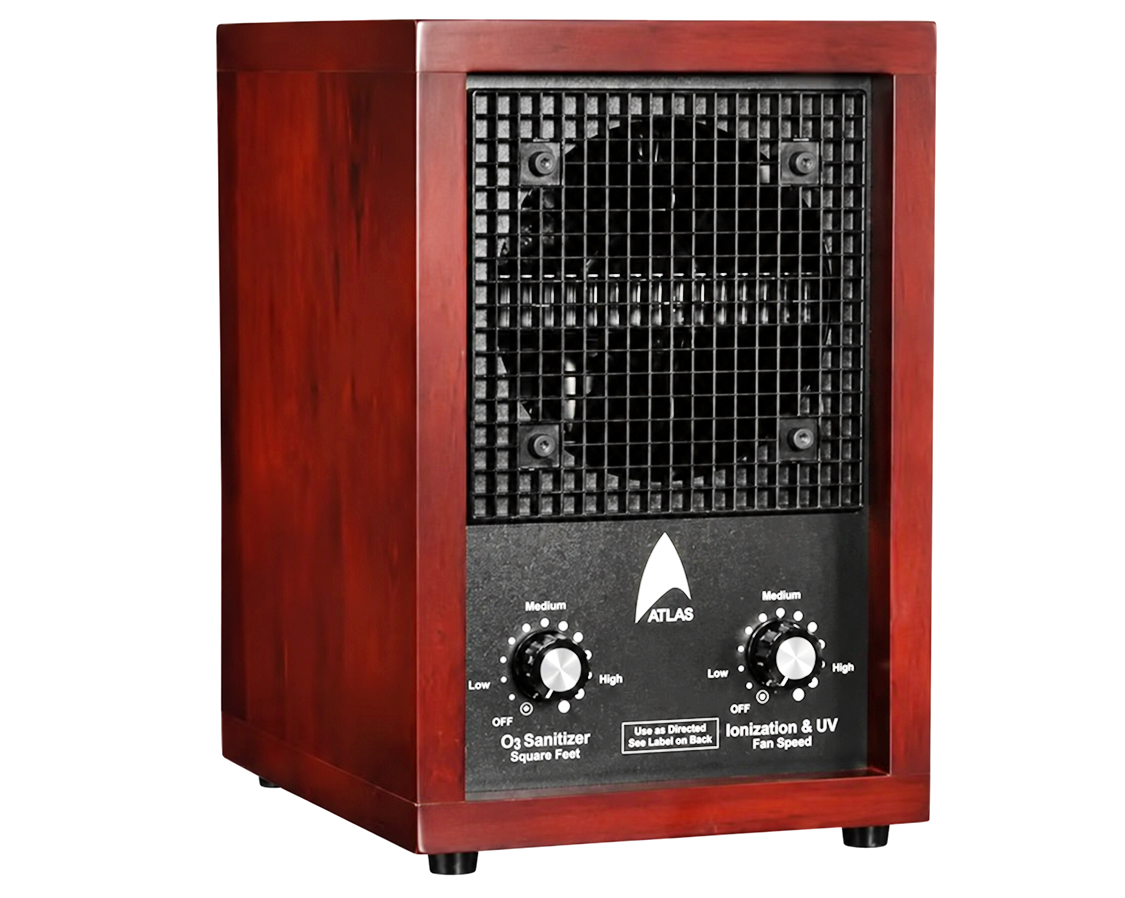
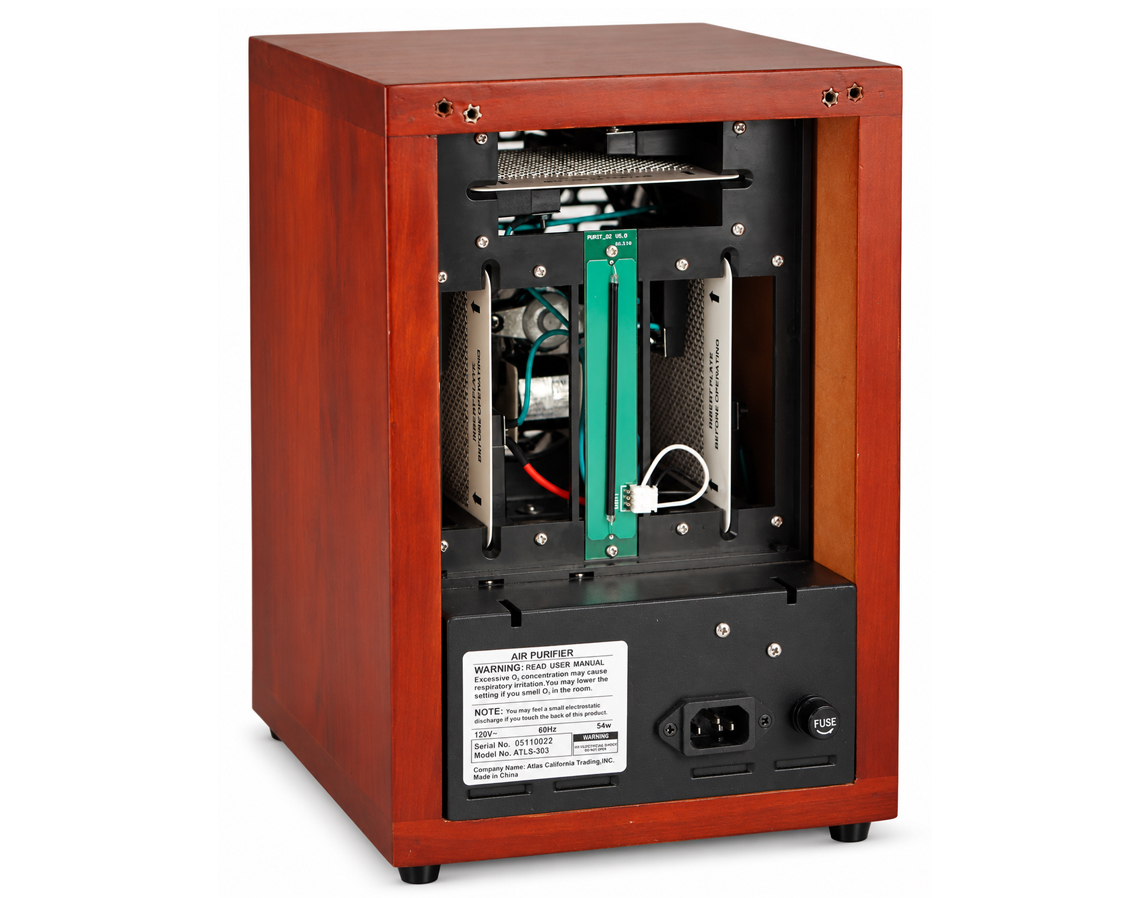
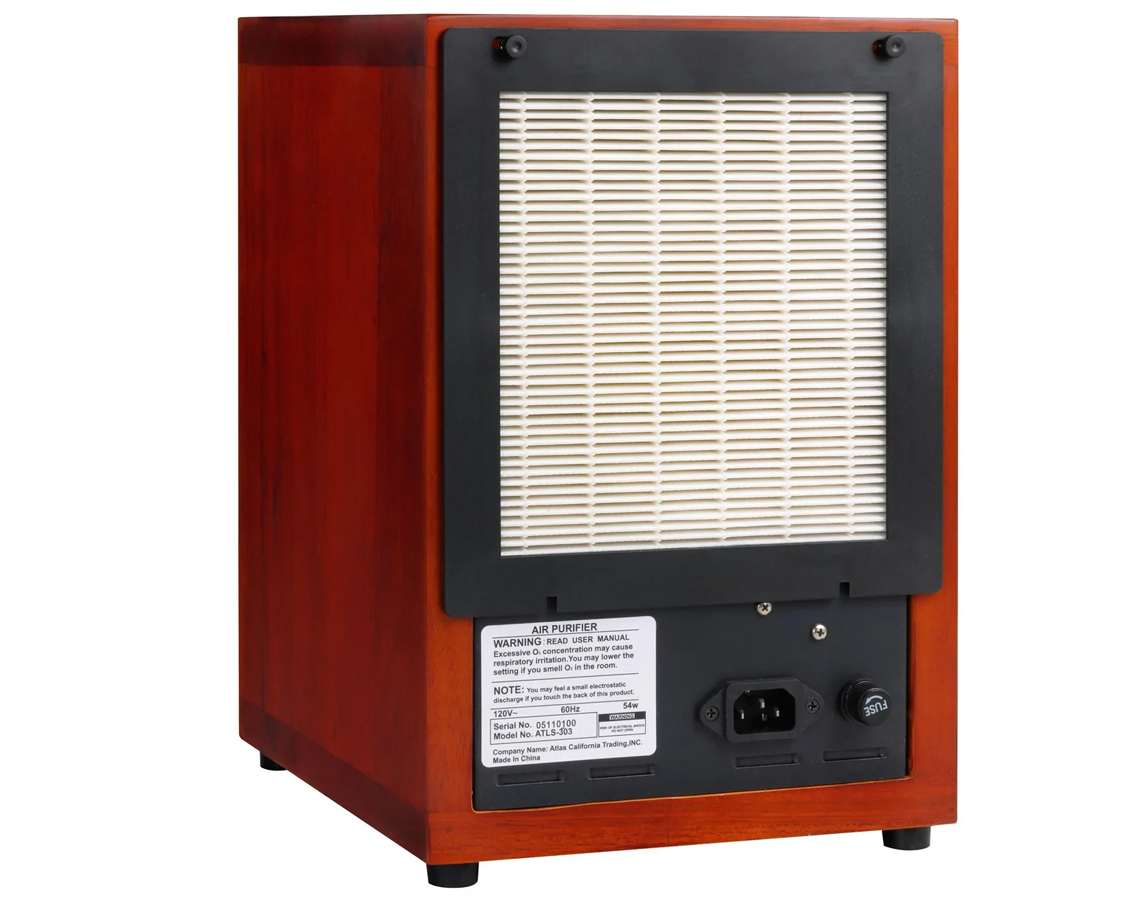

The Atlas Classic Triple Plus Air Purifier brings several air-treatment methods together in a single, compact appliance. Its design incorporates a reusable HEPA filter, ultraviolet (UV) light, photocatalytic technology, negative ion generation, and ozone-producing plates. Each component serves a different function, combining particle filtration with additional processes intended to address certain airborne contaminants and unwanted odors.
Built for residential and office environments, the Atlas Classic Triple Plus features a solid wood cabinet, stainless-steel internal components, and an adjustable-speed fan. Its washable filter and accessible service components also provide a practical approach to routine care, helping users maintain the system according to the manufacturer's instructions.
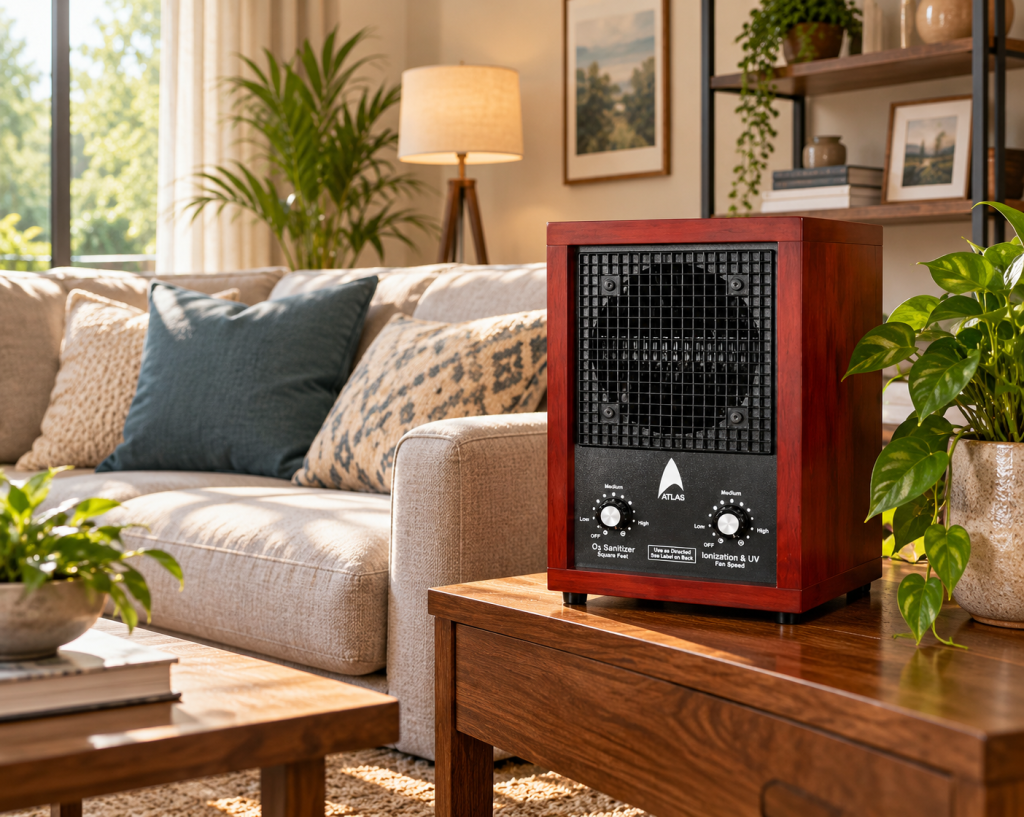
Indoor environments can contain a variety of airborne particles and chemical compounds. Dust, seasonal pollen, pet dander, cooking odors, and substances released by household products may all affect indoor air quality. The Atlas Classic Triple Plus combines a mechanical filtration stage with several additional air-treatment technologies to address different types of indoor air concerns.
Air passes through the washable HEPA filter, which is designed to retain particles within its fiber structure. The unit also incorporates a UV lamp and photocatalytic element, a negative ion generator, and ozone plates. These components operate through different mechanisms and have distinct capabilities, making it important to understand the purpose and limitations of each technology.
The HEPA filtration stage is designed to collect fine airborne particles as they pass through the filter material. Common examples include household dust, pollen, and pet dander. By retaining particles within its dense network of fibers, the filter helps reduce the amount of particulate matter carried through the unit's airflow.
The manufacturer describes the filter as capable of capturing 99.97% of particles measuring 0.3 microns under applicable test conditions. This rating relates to the filter's performance under specified conditions and should not be interpreted as a guarantee of an equivalent reduction in airborne particles throughout an entire room.
Unlike a filter designed for single use, the washable HEPA element can be cleaned and reused when maintained as directed. This may reduce the need to purchase disposable replacements and help limit filter waste over time. Following the recommended cleaning schedule is also important because accumulated dust can restrict airflow and affect system operation.
The Atlas Classic Triple Plus includes a UV lamp and a photocatalytic component as part of its multi-technology design. Ultraviolet light can affect microorganisms when they receive an adequate exposure dose. Photocatalytic treatment uses light to activate a catalyst, initiating reactions that may transform certain organic compounds under suitable conditions.
These processes differ from conventional particle filtration. While the HEPA filter physically captures particles, UV exposure and photocatalytic reactions provide additional forms of treatment. Their performance depends on several variables, including light intensity, exposure duration, airflow, the nature of the contaminant, and the condition of the internal components.
The inclusion of UV light does not, by itself, establish a specific rate of microorganism inactivation or pollutant removal. Actual performance should be evaluated using testing applicable to the complete appliance and its intended operating conditions.
Negative ion generation provides another method of interacting with airborne particles. The system releases negatively charged ions that may attach to particles suspended in the surrounding air. Depending on environmental conditions, this interaction can cause particles to cluster, settle, or deposit on nearby surfaces.
Ionization works differently from mechanical filtration. Rather than capturing particles directly within a filter, it changes their electrical charge and may influence how they move through the air. For this reason, ion generation should be viewed as a supplementary function rather than a replacement for particle filtration or regular cleaning.
The washable HEPA filter provides a separate particle-capture stage for air passing through the appliance. Routine cleaning of floors, furniture, and other surfaces remains important because particles that settle out of the air may still remain within the indoor environment.
Ozone plates form part of the Atlas Classic Triple Plus air-treatment system. They generate ozone, a reactive form of oxygen that can interact with certain odor-causing substances and other chemical compounds. This oxidation-based process differs from the physical particle capture provided by the HEPA filter and the light-assisted reactions associated with photocatalytic technology.
Ozone can react with some substances responsible for persistent odors, but its effectiveness varies according to the compounds present, ozone concentration, exposure time, and environmental conditions. It does not remove every type of indoor pollutant, and some ozone reactions can produce secondary compounds.
Important safety information: Ozone can irritate the respiratory system and may be harmful when inhaled. Do not operate ozone-generating functions in occupied spaces unless the manufacturer confirms that the specific operating conditions meet applicable safety requirements. Follow all instructions concerning occupancy, ventilation, operating time, and re-entry. Never assume that a room is safe to enter solely because an operating cycle has finished.
The Atlas Classic Triple Plus combines several air-treatment methods, each with a different intended role:
Because these technologies work differently, their results should not be treated as interchangeable. The overall performance of the appliance depends on the room environment, ventilation, pollutant sources, airflow, maintenance, and the operating mode selected.
The Atlas Classic Triple Plus combines its internal air-treatment components with a compact cabinet featuring a solid wood exterior. This construction gives the appliance a traditional appearance that can fit into a range of home and office interiors without requiring the footprint of a larger floor-standing unit.
Stainless-steel internal components form part of the appliance's construction, while the washable filter and accessible ozone plates support routine inspection and care. These features make regular maintenance an important part of keeping the unit in its intended operating condition.
Always disconnect the appliance from its power source before performing maintenance. Follow the manufacturer's instructions when cleaning or handling internal components, keep electrical parts dry, and take appropriate care when servicing the UV lamp and ozone-generating elements.
The variable-speed fan allows users to select an airflow setting suited to their preferences and environment. A higher setting moves more air through the unit over a given period, while a lower setting may be preferable when reduced operating noise is a priority.
Effective filtration depends in part on how much air passes through the filter and how freely it can move through the appliance. A dirty filter, blocked intake, or obstructed outlet can interfere with airflow. Keeping the unit properly positioned and following the recommended cleaning schedule helps support normal operation.
Actual air-cleaning results also depend on room dimensions, air circulation, pollutant concentration, and the location of the unit. Fan speed alone does not establish the effectiveness of the complete purification system.
The Atlas Classic Triple Plus is designed for indoor settings where particle filtration and supplementary air-treatment functions are desired. Potential applications include:
Actual coverage and performance depend on room size, ceiling height, ventilation, air circulation, pollutant levels, and the placement of the appliance. For persistent odors or indoor pollution, identifying and controlling the original source remains important. Air-cleaning equipment should complement appropriate ventilation and regular cleaning rather than replace them.
A practical approach to indoor air care combines suitable equipment with regular maintenance and sensible household practices. Cleaning surfaces, managing pollutant sources, maintaining appropriate ventilation, and keeping filtration components in good condition can all contribute to a more effective indoor air-quality routine.
The Atlas Classic Triple Plus brings reusable HEPA filtration together with UV light, photocatalytic treatment, negative ion generation, and ozone-based oxidation. Its washable filter can reduce reliance on disposable replacements, while adjustable fan speed offers flexibility for different operating preferences.
To maintain the appliance, clean the filter and serviceable components according to the manufacturer's instructions, keep the air intake and outlet unobstructed, and observe all safety requirements for ozone-generating functions. Understanding the capabilities and limitations of each technology helps set realistic expectations and supports responsible use.
| Color | Wood |
| Speed fan | Low, Medium, High |
| Ion Output | 11.3 trillion ions generated per second |
| Noise | 32 dB, 35 dB, and 45 dB, respectively |
| Ionization | Yes |
| UV | Yes |
| Active-Ox | Yes |
| Charcoal filter | Yes |
| HEPA filter | Yes |
| Type | For home (office) use |
| Coverage | 5000 ft2 |
| Voltage | 110V/60Hz |
| Power consuming | 22W |
| Size | 12.5" x: 8.25" x 9.10" |
| Weight | 16lbs |
| Warranty | 3 years |