
Air Purification Technologies Explained: Which One Actually Works?
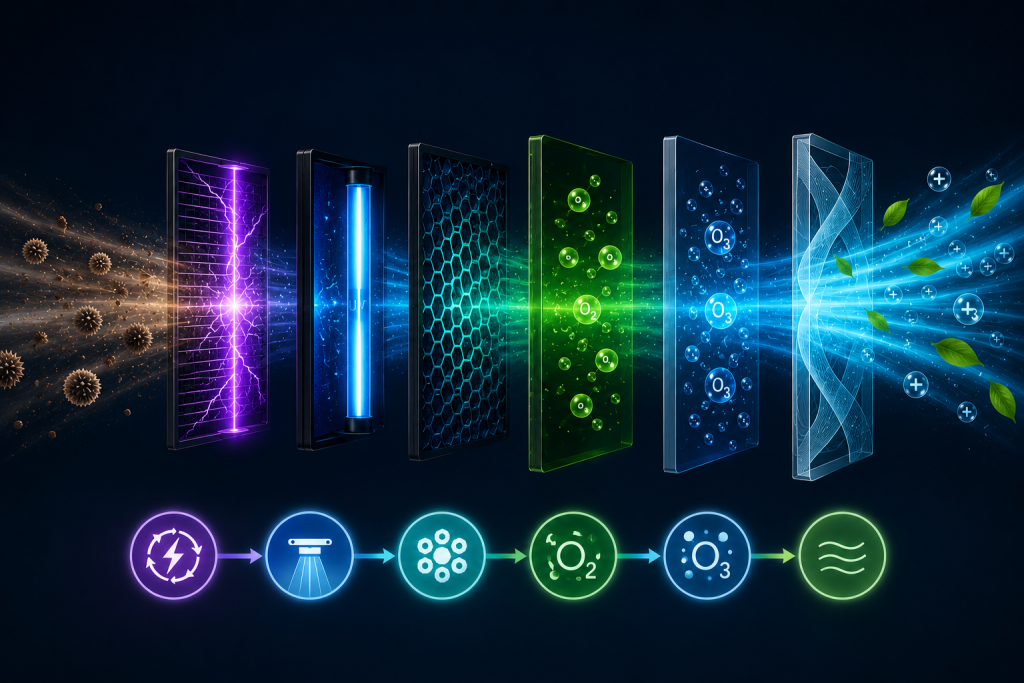
Walk into any store or browse online for an air purifier, and you'll quickly discover dozens of different technologies. Some manufacturers promote HEPA filtration. Others recommend activated carbon. Some focus on ionization, while others emphasize UV-C light, photocatalytic oxidation (PCO), activated oxygen, or ozone technology. Then there are air purifiers that combine several of these technologies into a single device. So which one is actually the best?
The honest answer is: None of them.
At least—not by themselves. Every air purification technology was developed to solve a different problem. Some technologies excel at removing dust and allergens. Others target odors or gases. Some are designed to complement filtration, while others support oxidation-based purification processes.
This is why the most advanced residential air purifiers rarely rely on a single purification method. Instead, they combine several complementary technologies that work together.
In this guide, we'll explain how every major air purification technology works, compare their strengths and limitations, and show why many modern premium air purifiers now use a multi-stage purification system instead of depending on just one technology.
Meet a Modern Multi-Technology Air Purifier
Before comparing each technology individually, let's look at a real-world example. The Fresh Air Double Plus air purifier doesn't rely on a single filtration method. Instead, it combines several purification technologies into one integrated system. These include:
- Ionization
- UV-C Light
- Photocatalytic Oxidation (PCO)
- Activated Oxygen
- Adjustable Ozone Output
Throughout this guide, we'll return to this air purifier to explain why each technology is included, what role it plays, and how these technologies complement one another.
Rather than treating these features as marketing terms, we'll examine them from an engineering perspective.
By the end of this article, you'll understand not only what each technology does—but why combining them can provide broader indoor air purification than relying on a single approach alone.
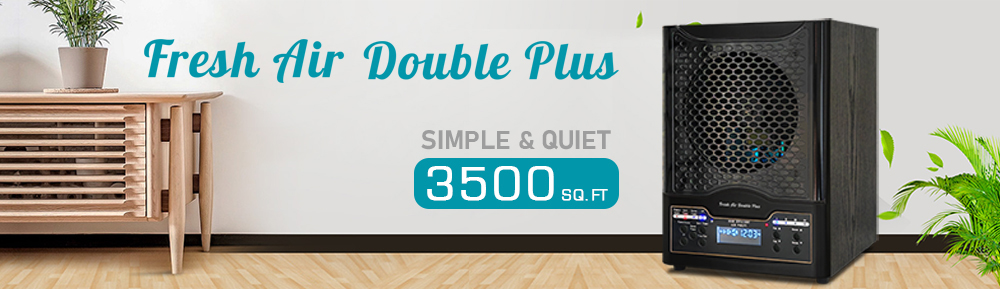
Fresh Air Black combines several complementary purification technologies into one integrated system. Throughout this guide, we'll explain the role of each technology and why they work best together rather than individually.
Why There Is No Perfect Air Purification Technology
To understand why, imagine cleaning your entire home using only one tool. A vacuum cleaner is excellent for removing dust from the floor. But it won't wash your windows. It won't disinfect your kitchen. It won't remove odors from the refrigerator. It won't dry a damp basement. Each task requires a different tool.
Air purification works exactly the same way. Indoor air contains many different types of pollutants. Each behaves differently. Each requires a different purification strategy. This is why comparing technologies isn't about choosing a winner. It's about understanding which technology is best suited for a particular type of contaminant.
What's Actually Floating in Your Indoor Air?
Many homeowners think about air pollution only in terms of dust. In reality, indoor air contains a surprisingly wide variety of airborne contaminants. These pollutants fall into several different categories.
Particles
Particles are tiny solid or liquid materials suspended in the air. Examples include:
- Household dust
- Pollen
- Pet dander
- Smoke particles
- Textile fibers
- Mold spores
- Dust mite debris
These are the contaminants most people can imagine because they have physical size. Mechanical filtration technologies are primarily designed to remove them.
Gases
Some pollutants aren't particles at all. Instead, they exist as invisible gases. Examples include:
- Volatile Organic Compounds (VOCs)
- Chemical fumes
- Paint emissions
- Cleaning product vapors
- Solvent vapors
Because these contaminants are gases rather than particles, technologies designed for particle filtration may not address them effectively.
Odor Molecules
Odors represent another completely different category.
Cooking smells. Pet odors. Garbage. Musty basements. Smoke odors.
These are caused by microscopic airborne molecules that behave differently from ordinary dust. This explains why a room may contain almost no visible dust yet still smell unpleasant.
Biological Contaminants
Indoor air can also contain biological materials such as:
- Mold spores
- Fungal fragments
- Airborne bacteria
- Allergens
Depending on the technology used, different air purifiers address these contaminants in different ways.
Why Different Pollutants Require Different Technologies
Now the picture becomes much clearer. A HEPA filter is excellent for capturing particles. Activated carbon works differently because it's designed to adsorb many gaseous compounds. Ionization changes how particles behave. Photocatalytic oxidation relies on chemical reactions. UV-C introduces another completely different purification mechanism. Each technology addresses a different challenge. Expecting one technology to solve every indoor air quality issue would be like expecting sunglasses to replace prescription glasses. They both involve lenses—but they serve different purposes.
Which Technology Targets Which Pollutants?
The table below illustrates why modern air purification has evolved toward multi-stage systems.
| Indoor Pollutant | Primary Technologies |
|---|---|
| Dust | HEPA, Electrostatic Filtration |
| Pollen | HEPA |
| Pet Dander | HEPA, Ionization |
| Smoke Particles | HEPA, Electrostatic |
| Cooking Odors | Activated Carbon, PCO, Activated Oxygen |
| VOCs | Activated Carbon, PCO |
| Musty Odors | Activated Carbon, PCO, Activated Oxygen |
| Airborne Allergens | HEPA |
| Mixed Indoor Air Pollution | Hybrid Multi-Technology Systems |
Notice something interesting. No single technology appears in every row. That's because no single technology addresses every category of indoor pollutant equally well.

Why Premium Air Purifiers Use Multiple Technologies
If you've ever looked inside a premium residential air purifier, you've probably noticed that many models don't advertise just one technology. Instead, they combine several. This isn't simply a marketing trend. It's a logical response to the complexity of indoor air pollution. Imagine a home with:
- A dog
- A gas stove
- New furniture
- Seasonal allergies
- Cooking odors
- Dust
- High pollen levels
No single purification method was originally developed to address all of these simultaneously. Modern hybrid systems attempt to provide broader indoor air purification by combining technologies that complement one another.
This is exactly the design philosophy behind systems like Fresh Air Black.
Rather than relying entirely on one purification method, it integrates multiple technologies that each contribute to a different stage of the purification process. Throughout the remainder of this guide, we'll examine every one of these technologies individually—and return to the Fresh Air Black system to see how each stage contributes to the overall design.
What You'll Learn Next
In the following sections we'll explore:
- HEPA Filtration
- Activated Carbon
- Ionization
- UV-C Light
- Photocatalytic Oxidation (PCO)
- Activated Oxygen
- Adjustable Ozone Technology
- Electrostatic Collection
- Hybrid Multi-Technology Systems
For each technology, we'll answer four essential questions:
- How does it work?
- What does it do well?
- What are its limitations?
- How is it used in modern air purification systems?
By the end of this guide, you'll have a much clearer understanding of why today's most advanced air purifiers combine multiple purification technologies—and how to choose the right solution for your home.
HEPA Filtration
For decades, HEPA filtration has been considered one of the most effective methods for removing airborne particles.
Hospitals, laboratories, clean rooms, aircraft cabins, and residential air purifiers all rely on HEPA technology because of its ability to capture microscopic particulate matter. Because of its popularity, many consumers assume that a HEPA filter automatically makes an air purifier the "best." In reality, HEPA is outstanding at one specific task—but that task represents only one part of indoor air purification.
What Does HEPA Mean?
HEPA stands for High-Efficiency Particulate Air. A true HEPA filter consists of an extremely dense network of microscopic fibers. Rather than functioning like a kitchen sieve, the fibers create a maze through which air must pass. As air moves through the filter, particles become trapped by several physical mechanisms:
- Interception
- Inertial impaction
- Diffusion
Together, these processes allow HEPA filters to capture a wide range of airborne particles without relying on chemicals or electrical charges.
What HEPA Does Well
HEPA filtration excels at removing solid airborne particles. Typical examples include:
- Household dust
- Pollen
- Pet dander
- Mold spores
- Textile fibers
- Dust mite debris
- Fine airborne particulate matter
For people primarily concerned about allergies or visible dust, HEPA filtration remains one of the most effective technologies available.
Where HEPA Has Limitations
This is where many buyers become surprised. Although HEPA captures particles exceptionally well, it is not designed to remove gases or odors. A HEPA filter generally cannot eliminate:
- Cooking odors
- Pet odors
- Paint fumes
- VOCs
- Household chemical vapors
Those contaminants consist of microscopic gas molecules rather than particles. They simply behave differently. Imagine trying to catch perfume using a fishing net. The net works perfectly for fish. But perfume molecules pass straight through. HEPA operates on a similar principle.
Advantages
- Excellent particle removal
- Proven technology
- Effective for allergy sufferers
- No chemical additives
- Well understood and extensively tested
Limitations
HEPA filters also require regular maintenance. Over time they become loaded with trapped particles. Eventually, airflow decreases and replacement becomes necessary. Typical replacement intervals depend on:
- Air quality
- Daily operating hours
- Filter size
- Manufacturer recommendations
This ongoing maintenance should always be considered when comparing air purifiers.
Best For
HEPA performs particularly well in homes affected by:
- Dust
- Seasonal allergies
- Pet dander
- Pollen
- Airborne particles
- Fine particulate pollution
Does Fresh Air Black Use HEPA?
This is one of the most common questions homeowners ask. The answer is: No.
Fresh Air Black follows a different engineering philosophy. Rather than relying primarily on dense mechanical filtration, it combines several complementary purification technologies designed to address different categories of indoor air pollutants. Instead of using HEPA as the central purification stage, the system integrates technologies such as:
- Ionization
- UV-C
- Photocatalytic Oxidation
- Activated Oxygen
- Adjustable Ozone Output
This doesn't mean one approach is universally better than the other. It simply reflects two different design philosophies. HEPA systems focus primarily on mechanical particle capture. Fresh Air Black is designed as a multi-stage active purification system, where different technologies perform different roles throughout the purification process. We'll explore each of these technologies in the following sections.
Activated Carbon Filtration
If HEPA is designed for particles, activated carbon is designed for something completely different. Many indoor air quality complaints involve:
- Cooking smells
- Smoke odors
- Pet odors
- Chemical fumes
- Household VOCs
These pollutants often consist of gaseous molecules rather than solid particles. Because of this, they require another purification strategy.
How Activated Carbon Works
Activated carbon begins as carbon-rich material that is processed to create millions of microscopic pores. These tiny pores dramatically increase the material's internal surface area. Instead of trapping particles inside fibers, activated carbon works through adsorption. Odor molecules attach themselves to the enormous surface area inside the carbon structure. This process allows activated carbon to reduce many airborne odor-causing compounds.
What Activated Carbon Removes
Activated carbon is commonly used for:
- Cooking odors
- Pet odors
- Smoke odors
- VOCs
- Household chemical fumes
- Paint odors
- Solvent vapors
Because these contaminants are gases, activated carbon complements particle filtration rather than replacing it.
Advantages
- Excellent odor control
- Effective for many VOCs
- Silent operation
- Passive technology
- Complements HEPA filtration
Limitations
Activated carbon eventually becomes saturated. Once its microscopic pores are filled, effectiveness gradually decreases. Replacement intervals vary depending on:
- Indoor pollution levels
- Humidity
- Carbon quantity
- Airflow
Another limitation is that activated carbon is not intended for removing dust or pollen. It solves a different problem.
Best For
Activated carbon is especially useful for:
- Kitchens
- Pet owners
- Smokers
- Apartments
- Newly renovated homes
- VOC reduction
Does Fresh Air Black Use Activated Carbon?
Another common question. Again, the answer is: No.
Fresh Air Black approaches odor management differently. Instead of relying on a large activated carbon filter, it incorporates multiple purification technologies—including Photocatalytic Oxidation (PCO), Activated Oxygen, UV-C, and ionization—that work together as part of its overall purification strategy. The objective isn't to imitate activated carbon. It's to use a different combination of technologies designed to support comprehensive indoor air purification. We'll examine these technologies in detail shortly.
Ionization Technology
Unlike HEPA or activated carbon, ionization doesn't begin by capturing contaminants inside a filter. Instead, it changes the behavior of airborne particles. This makes ionization one of the most distinctive technologies used in modern residential air purification.
How Ionization Works
Ionizers generate electrically charged ions. These ions disperse into the surrounding air. As airborne particles encounter these ions, they become electrically charged. Charged particles become more likely to:
- Cluster together
- Become heavier
- Be captured more easily by other purification stages
- Settle from the air more readily
Rather than replacing filtration, ionization can complement other purification methods.
What Ionization Helps Address
Ionization is commonly associated with:
- Dust
- Pollen
- Pet dander
- Smoke particles
- Fine airborne particulates
Performance depends on system design, airflow, room size, and the overall engineering of the purifier.
Advantages
- Quiet operation
- Low maintenance
- Continuous purification
- Works alongside other technologies
- No disposable particle filter
Limitations
Ionization should not be viewed as a complete air purification solution by itself. It works best when integrated with complementary purification technologies. This is one reason why ionization is frequently included in hybrid air purification systems rather than being used alone.
Best Applications
Ionization is commonly found in:
- Living rooms
- Bedrooms
- Offices
- Homes with pets
- Everyday air purification
How Fresh Air Black Uses Ionization
This is the first technology we've discussed that is included in Fresh Air Black. Within the purifier's multi-stage design, ionization represents one component of the overall purification process. Rather than acting as the sole cleaning mechanism, it works alongside the system's additional technologies. This layered approach reflects an important principle in modern air purification: Different technologies address different aspects of indoor air quality. Instead of asking one technology to solve every problem, Fresh Air Black combines several complementary methods that support one another throughout the purification process. We'll continue building this picture as we explore UV-C Light, Photocatalytic Oxidation, Activated Oxygen, and Adjustable Ozone in the next section.
Technology Comparison
| Technology | HEPA | Activated Carbon | Ionization |
|---|---|---|---|
| Dust | ★★★★★ | ★ | ★★★★ |
| Pollen | ★★★★★ | ★ | ★★★★ |
| Pet Dander | ★★★★★ | ★ | ★★★★ |
| Cooking Odors | ★ | ★★★★★ | ★★ |
| VOCs | ★ | ★★★★ | ★ |
| Smoke Particles | ★★★★ | ★★★★ | ★★★ |
| Filter Replacement | Yes | Yes | No |
| Maintenance | Moderate | Moderate | Low |
What We've Learned So Far
At this point, one important pattern is already becoming clear. HEPA, activated carbon, and ionization are not competing technologies—they are designed to address different indoor air quality challenges. HEPA excels at capturing airborne particles. Activated carbon focuses on many odors and gaseous pollutants. Ionization changes the behavior of airborne particles and complements other purification stages. This also explains why modern hybrid air purifiers rarely depend on a single technology alone. Instead, they combine complementary approaches to provide broader indoor air purification. In the next section, we'll examine the technologies that truly distinguish many premium air purification systems: UV-C Light, Photocatalytic Oxidation (PCO), Activated Oxygen, and Adjustable Ozone Output. These technologies play a central role in the design philosophy behind systems like Fresh Air Black, and together they help explain why multi-stage purification has become increasingly popular in today's air purification industry.
UV-C Light
If you've researched air purifiers, you've almost certainly come across UV-C technology. It's one of the most recognized names in indoor air purification, yet it's also one of the most misunderstood. Many homeowners assume UV-C works like a filter.
It doesn't. Unlike HEPA filtration or activated carbon, UV-C isn't designed to trap particles or adsorb odors. Instead, it serves a completely different purpose within a multi-stage purification system.
What Is UV-C Light?
Ultraviolet light is divided into three wavelength ranges:
- UV-A
- UV-B
- UV-C
Residential air purification systems that use ultraviolet technology typically incorporate UV-C, which has long been used in controlled environments such as hospitals, laboratories, HVAC systems, and water treatment applications. Inside an air purifier, the UV-C lamp is enclosed within the purification chamber, where passing air is exposed to ultraviolet energy as part of the purification process.
How UV-C Works
Unlike a filter, UV-C doesn't physically remove pollutants from the air. Instead, it acts on contaminants that pass through the purification chamber. The effectiveness of any UV-C stage depends on several engineering factors, including:
- Lamp intensity
- Airflow speed
- Exposure time
- Chamber design
- Overall system integration
For this reason, evaluating UV-C technology involves looking at the complete purifier—not simply whether it includes a UV lamp.
Advantages
- No disposable filter
- Continuous operation
- Low maintenance
- Complements other purification technologies
- Widely used in commercial air treatment systems
Limitations
UV-C should never be viewed as a replacement for filtration. It is not intended to remove:
- Dust
- Pet hair
- Pollen
- Smoke particles
- Household odors
- VOCs
Instead, it performs a different role within the purification process.
Best Applications
UV-C is commonly found in:
- Hybrid residential air purifiers
- HVAC purification systems
- Commercial air treatment equipment
- Healthcare facilities
- Laboratories
How Fresh Air Black Uses UV-C
Fresh Air Black includes UV-C as one stage within its multi-technology purification system. Rather than relying on UV-C alone, the purifier combines it with ionization, photocatalytic oxidation, activated oxygen, and adjustable ozone output. This layered approach allows each purification stage to contribute where it performs best. Think of UV-C as one member of a team rather than the entire team itself.
Photocatalytic Oxidation (PCO)
Among all modern residential air purification technologies, Photocatalytic Oxidation, or PCO, is one of the most advanced. It's also one of the least understood. Unlike mechanical filters, PCO isn't designed to trap contaminants. Instead, it is intended to help transform certain airborne organic compounds through oxidation processes.
What Is PCO?
Photocatalytic Oxidation combines two elements:
- UV-C light
- A photocatalyst, typically titanium dioxide (TiO₂)
When ultraviolet light strikes the catalyst, it activates a chemical reaction on the catalyst's surface. Instead of simply collecting pollutants, this reaction is designed to help break down certain airborne organic compounds into simpler substances.
Why UV-C and PCO Are Often Used Together
This is where many consumers become confused. PCO cannot function as intended without UV light. The UV lamp activates the catalyst. Without UV energy, the catalyst remains inactive. This is one reason why premium air purifiers often pair these two technologies together. Rather than competing with one another, they work as complementary stages.
What PCO Is Commonly Used For
Photocatalytic oxidation is often associated with:
- Cooking odors
- Household odors
- VOC reduction
- Smoke-related compounds
- Organic airborne contaminants
Performance depends heavily on the design of the purification chamber and the engineering of the system.
Advantages
- Continuous purification
- No large carbon filter
- Complements UV-C
- Supports multi-stage purification
- Common in premium systems
Limitations
PCO should not be viewed as a replacement for:
- HEPA filtration
- Dust removal
- Particle filtration
Instead, it addresses a different category of indoor air pollutants.
How Fresh Air Black Uses PCO
Fresh Air Black combines PCO with its UV-C purification stage. This is an excellent example of technologies working together rather than independently. UV-C activates the catalyst. The catalyst supports the oxidation process. Other purification stages then continue addressing different categories of indoor pollutants. Instead of depending on one technology to do everything, Fresh Air Black distributes different purification tasks across several complementary stages.
Activated Oxygen
Few technologies generate more curiosity than Activated Oxygen. The term sounds familiar, yet many homeowners aren't entirely sure what it means. Part of the confusion comes from the fact that different manufacturers use the term differently. For that reason, it's important to understand the concept rather than focusing solely on the marketing name.
What Is Activated Oxygen?
In residential air purification, Activated Oxygen generally refers to oxidation-based purification processes that use reactive forms of oxygen as part of a broader purification strategy. Unlike mechanical filters, Activated Oxygen isn't intended to capture pollutants. Instead, it interacts with airborne compounds through controlled oxidation processes.
Where Activated Oxygen Is Commonly Used
Activated Oxygen technologies are often incorporated into systems intended to address:
- Household odors
- Cooking smells
- Smoke odors
- Pet odors
- VOCs
Like every other purification method, performance depends on the complete system rather than a single component.
Advantages
- Supports odor-control strategies
- Continuous operation
- Works alongside UV-C and PCO
- No disposable particle filter
Limitations
Activated Oxygen should be viewed as one stage within a broader purification process. It does not replace:
- Cleaning
- Ventilation
- Source control
- Mechanical filtration
Instead, it complements them.
How Fresh Air Black Uses Activated Oxygen
Activated Oxygen represents another stage in Fresh Air Black's layered purification design. Rather than functioning independently, it works alongside:
- Ionization
- UV-C
- Photocatalytic Oxidation
- Adjustable Ozone
Each stage contributes to the purifier's overall air treatment strategy. This engineering philosophy is one of the defining characteristics of modern hybrid air purification systems.
Adjustable Ozone Technology
No air purification technology creates more debate than ozone. Some people assume any mention of ozone is automatically negative. Others believe ozone alone can solve every odor problem. Neither view tells the full story. Understanding how ozone is used is far more important than simply asking whether a purifier includes ozone technology.
What Is Ozone?
Ozone (O₃) is a naturally occurring form of oxygen made up of three oxygen atoms instead of two. It occurs naturally after lightning storms and in the upper atmosphere. Because ozone is a reactive oxidizing gas, it has long been used in professional applications such as:
- Water treatment
- Fire restoration
- Smoke remediation
- Industrial odor treatment
Some residential air purifiers incorporate adjustable ozone output, allowing the user to select operating modes appropriate for specific applications.
Why Adjustable Output Matters
Not every situation requires the same purification settings. A home occupied by people throughout the day has different needs than an unoccupied room being treated for persistent odors. Systems with adjustable output provide greater flexibility, allowing users to follow the manufacturer's recommendations for different situations.
Advantages
- Can support odor-treatment applications
- Adjustable settings for different use cases
- Complements multi-stage purification
- Used in specialized odor-control situations
Important Considerations
Whenever an air purifier includes ozone functionality, users should always follow the manufacturer's instructions regarding:
- Operating modes
- Room occupancy
- Treatment duration
- Ventilation after treatment, where applicable
Responsible use is an important part of any oxidation-based purification strategy.
How Fresh Air Black Uses Adjustable Ozone
Unlike dedicated ozone generators designed solely for restoration work, Fresh Air Black integrates adjustable ozone output as one component of its broader multi-stage purification system. Rather than relying on ozone alone, it combines adjustable ozone with ionization, UV-C, PCO, and Activated Oxygen. This reflects an important principle that we've now seen repeatedly throughout this guide: Modern premium air purifiers rarely depend on one technology. Instead, they combine multiple complementary stages that work together.
Inside Fresh Air Black: Building a Complete Purification Process
We've now explored five of the technologies incorporated into Fresh Air Black. Together, they form a layered purification system
Notice something important. No single stage is presented as a "magic solution." Each technology contributes differently. Together, they create a broader purification strategy than any one technology could provide on its own.
Key Takeaways
At this point, we've examined every technology incorporated into the Fresh Air Black purification system. We've also seen a recurring pattern:
- UV-C supports PCO.
- PCO complements oxidation-based purification.
- Activated Oxygen adds another purification stage.
- Adjustable ozone provides additional flexibility for specific odor-treatment applications.
- Ionization works alongside the other technologies rather than replacing them.
Instead of asking "Which technology is best?", the better question is: "How well do these technologies work together?" That question leads directly into the next section, where we'll compare all major air purification technologies side by side, examine when each performs best, and explain why hybrid systems have become the preferred choice for many homeowners seeking comprehensive indoor air quality solutions.
Air Purification Technologies Compared
By now, we've explored each major air purification technology individually.
But if you're like most homeowners, you're probably still asking one simple question: Which technology is actually right for my home?
The answer depends entirely on the type of indoor air pollution you're trying to address. Some technologies excel at capturing particles. Others focus on odors or gases. Some work best together as part of a multi-stage purification system. The comparison tables below summarize how today's leading technologies perform across the most common indoor air quality challenges.
Technology Comparison at a Glance
| Technology | Dust | Allergens | Odors | VOCs | Smoke | Maintenance |
|---|---|---|---|---|---|---|
| HEPA Filtration | ⭐⭐⭐⭐⭐ | ⭐⭐⭐⭐⭐ | ⭐ | ⭐ | ⭐⭐⭐⭐ | Replace Filter |
| Activated Carbon | ⭐ | ⭐ | ⭐⭐⭐⭐⭐ | ⭐⭐⭐⭐⭐ | ⭐⭐⭐⭐ | Replace Carbon |
| Ionization | ⭐⭐⭐⭐ | ⭐⭐⭐⭐ | ⭐⭐ | ⭐ | ⭐⭐⭐ | Low |
| UV-C Light | ⭐ | ⭐ | ⭐ | ⭐ | ⭐ | Very Low |
| Photocatalytic Oxidation | ⭐ | ⭐ | ⭐⭐⭐⭐ | ⭐⭐⭐⭐ | ⭐⭐⭐ | Low |
| Activated Oxygen | ⭐ | ⭐ | ⭐⭐⭐⭐ | ⭐⭐⭐⭐ | ⭐⭐⭐⭐ | Low |
| Adjustable Ozone | ⭐ | ⭐ | ⭐⭐⭐⭐⭐* | ⭐⭐⭐ | ⭐⭐⭐⭐⭐* | Application Specific |
| Hybrid Multi-Technology Systems | ⭐⭐⭐⭐⭐ | ⭐⭐⭐⭐⭐ | ⭐⭐⭐⭐⭐ | ⭐⭐⭐⭐ | ⭐⭐⭐⭐⭐ | Varies |
*Performance depends on proper operating mode and manufacturer guidance.
Which Technology Removes What?
Not every pollutant behaves the same way. This table shows which technologies are commonly used to address different categories of indoor contaminants.
| Indoor Pollutant | HEPA | Carbon | Ionization | UV-C | PCO | Activated Oxygen | Hybrid |
|---|---|---|---|---|---|---|---|
| Dust | ✅ | ❌ | ✅ | ❌ | ❌ | ❌ | ✅ |
| Pollen | ✅ | ❌ | ✅ | ❌ | ❌ | ❌ | ✅ |
| Pet Dander | ✅ | ❌ | ✅ | ❌ | ❌ | ❌ | ✅ |
| Smoke Particles | ✅ | ◐ | ◐ | ❌ | ◐ | ◐ | ✅ |
| Cooking Odors | ❌ | ✅ | ◐ | ❌ | ✅ | ✅ | ✅ |
| VOCs | ❌ | ✅ | ❌ | ❌ | ✅ | ✅ | ✅ |
| Mold Spores | ✅ | ❌ | ◐ | ◐ | ◐ | ◐ | ✅ |
| Household Odors | ❌ | ✅ | ◐ | ❌ | ✅ | ✅ | ✅ |
Legend:
✅ Primary technology
◐ Complementary technology
❌ Not primarily designed for this purpose
Which Technology Works Best for Your Situation?
Instead of asking which technology is "best," ask which problem you're trying to solve.
| If Your Main Concern Is... | Recommended Technology |
|---|---|
| Seasonal allergies | HEPA |
| Household dust | HEPA |
| Pet hair and dander | HEPA + Ionization |
| Cooking odors | Activated Carbon or Multi-Technology Systems |
| Smoke odors | Hybrid Systems |
| VOCs | Carbon + PCO |
| Large open spaces | Hybrid Systems |
| Everyday air quality | Multi-Technology Purification |
| Mixed indoor pollution | Hybrid Systems |
Which Technologies Work Best Together?
This is one of the most overlooked aspects of air purification. The strongest systems rarely rely on a single technology. Instead, they combine technologies that complement one another.
| Technology | Best Partner | Why |
|---|---|---|
| HEPA | Activated Carbon | Particles + gases |
| HEPA | Ionization | Improved particle management |
| Activated Carbon | PCO | Odors + VOC support |
| UV-C | PCO | UV activates the catalyst |
| PCO | Activated Oxygen | Multiple oxidation stages |
| Ionization | UV-C | Complementary purification |
| Hybrid Systems | Multiple Technologies | Broader indoor air treatment |
Why Fresh Air Black Uses Multiple Technologies
One of the biggest misconceptions about air purifiers is that adding more technologies is simply a marketing tactic. In reality, each technology inside Fresh Air Black performs a different job. Instead of expecting one purification method to remove every type of indoor pollutant, the system combines complementary technologies designed to address different challenges.
| Technology in Fresh Air Black | Purpose Within the System |
|---|---|
| Ionization | Helps influence airborne particles before other purification stages |
| UV-C Light | Supports the multi-stage purification process |
| Photocatalytic Oxidation (PCO) | Designed to help address certain airborne organic compounds |
| Activated Oxygen | Supports odor-management strategies |
| Adjustable Ozone Output | Provides additional flexibility for specific odor-treatment applications when used according to manufacturer guidance |
This layered design reflects a growing trend in residential air purification: using multiple technologies together instead of relying on a single purification method.
Is More Technology Always Better?
Not necessarily.
A well-designed air purifier isn't defined by the number of technologies it includes. What matters most is how those technologies work together. Poorly integrated systems can add unnecessary complexity without improving performance. On the other hand, when technologies are thoughtfully combined, each stage complements the others and contributes to a more comprehensive purification process. This is why engineering and system design are just as important as the technologies themselves.
Choosing the Right Air Purifier
Before buying an air purifier, ask yourself these questions:
Do you mainly want to reduce dust and allergens?
A purifier with effective particle filtration may be the best fit.
Are odors your biggest concern?
Look for technologies designed to address gaseous pollutants and odor-causing compounds.
Do you have pets?
Choose a purifier that can help manage both airborne particles and everyday pet-related odors.
Are you dealing with smoke?
Smoke contains both fine particles and gaseous compounds. A purifier that combines several complementary technologies is often better suited for this challenge than one designed for particle filtration alone.
Do you want all-around indoor air purification?
Homes rarely contain just one type of pollutant. For many homeowners, a multi-technology system provides the broadest approach to improving everyday indoor air quality.
Expert Recommendation
If there's one conclusion we've reached throughout this guide, it's this:
No single air purification technology can effectively address every type of indoor air pollutant on its own. That's why many premium air purification systems now combine multiple complementary technologies into one integrated design. Instead of asking "Which technology is the best?", consider asking:
"Which combination of technologies best matches my home's indoor air quality needs?"
For many households, that shift in perspective makes choosing an air purifier much simpler.
Real-Life Air Purifier Recommendations
After comparing today's leading air purification technologies, one question remains:
Which type of air purifier is right for your home?
The answer depends on your indoor environment, daily habits, and the types of pollutants you're most likely to encounter The scenarios below can help narrow your decision.
You Have Pets
Pets bring joy to a home—but they also introduce airborne particles, dander, hair, and everyday odors.
Your priorities:
- Pet dander
- Hair
- Everyday odors
- Dust
Recommended approach:
A multi-technology air purifier that addresses both airborne particles and odor-related concerns can provide broader everyday air purification than relying on a single technology alone.
You Cook Every Day
Cooking releases much more than food aromas. ndoor air may also contain:
- Grease aerosols
- Fine particles
- Odor molecules
- VOCs
Recommended approach: Look for technologies designed to address airborne odors and organic compounds as part of a multi-stage purification process.
Someone in Your Home Has Allergies
If allergies are your primary concern, airborne particles become the main priority.
Common allergens include:
- Pollen
- Dust
- Pet dander
- Dust mites
Recommended approach: Particle-focused technologies such as HEPA remain widely recognized for allergen reduction. Some homeowners may also choose hybrid systems depending on their overall indoor air quality goals.
You Live in a Large Home
Large open spaces often contain multiple pollution sources simultaneously. For example:
- Kitchen odors
- Dust
- Pets
- Outdoor pollutants entering through doors and windows
Recommended approach: Rather than selecting a purifier optimized for only one pollutant category, many homeowners prefer a hybrid multi-stage purification system capable of addressing a broader range of indoor air quality concerns.
You Recently Renovated
Fresh paint. New flooring. Furniture. Cabinets. Adhesives. Many building materials release VOCs during the first weeks or months after installation.
Recommended approach: Technologies commonly associated with VOC management—such as activated carbon or advanced oxidation processes incorporated into hybrid systems—may be appropriate depending on your specific situation.
Why Fresh Air Black Represents the Hybrid Approach
Throughout this guide, we've explored many different air purification technologies. Instead of asking which one is "best," Fresh Air Black demonstrates another philosophy: Use multiple complementary technologies together.
Rather than depending entirely on one purification method, Fresh Air Black combines:
| Technology | Purpose Within the System |
|---|---|
| Ionization | Supports airborne particle management within the multi-stage process |
| UV-C Light | One stage of the integrated purification system |
| Photocatalytic Oxidation (PCO) | Designed to support the treatment of certain airborne organic compounds |
| Activated Oxygen | Part of the system's oxidation-based purification strategy |
| Adjustable Ozone Output | Available for specific odor-treatment applications when used according to manufacturer instructions |
Instead of replacing one technology with another, the purifier integrates several complementary purification stages into one system.
Air Purifier Buying Checklist
Before choosing an air purifier, ask yourself these questions.
- Do you mainly want to reduce dust?
- Are odors your biggest concern?
- Do you have pets?
- Do you cook frequently?
- Do you suffer from seasonal allergies?
- Do you want whole-home coverage or just one room?
- Are VOCs a concern?
- Do you prefer minimal filter replacement?
Your answers will help determine which purification technologies are most relevant for your home.
Common Air Purifier Myths
Myth 1
"HEPA removes odors." Not exactly. HEPA is designed to capture airborne particles. Odor-causing molecules typically require different purification technologies.
Myth 2
"One technology is enough." Most homes contain several different categories of indoor pollutants. This is one reason why many premium systems combine multiple purification methods.
Myth 3
"More technologies automatically mean better performance." Not necessarily. The quality of the system's engineering and how well the technologies work together are just as important as the number of features listed on the box.
Myth 4
"UV-C replaces filters." No. UV-C performs a completely different function within an air purifier and is generally intended to complement—not replace—particle filtration or other purification stages.
Myth 5
"Air purifiers eliminate the need for cleaning." No air purifier replaces regular cleaning, vacuuming, humidity control, or proper ventilation. Air purification should be viewed as one part of a broader indoor air quality strategy.
Frequently Asked Questions
Which air purification technology is best?
There isn't a single best technology. Different technologies are designed for different types of indoor pollutants.
Is HEPA better than ionization?
Not necessarily.
HEPA focuses on particle filtration, while ionization changes the behavior of airborne particles. They address different aspects of indoor air quality.
Does activated carbon remove dust?
No.
Activated carbon is primarily used for many odors and gaseous pollutants rather than particulate matter.
Can UV-C replace HEPA?
No.
These technologies perform different roles within an air purification system.
What is PCO?
Photocatalytic Oxidation is an advanced oxidation technology that combines UV-C light with a catalyst to support the treatment of certain airborne organic compounds.
What is Activated Oxygen?
Activated Oxygen refers to oxidation-based purification processes used in some multi-stage air purification systems.
Why do some air purifiers use ozone?
Certain systems include adjustable ozone output for specific odor-treatment applications.
Always follow the manufacturer's operating instructions.
Is one technology enough?
For some homes, yes.
For homes with multiple indoor air quality concerns, many homeowners choose hybrid systems that combine complementary technologies.
Why doesn't Fresh Air Black use HEPA?
Fresh Air Black follows a different engineering philosophy by combining multiple active purification technologies rather than relying primarily on dense mechanical filtration.
Why doesn't Fresh Air Black include activated carbon?
Instead of using activated carbon, the purifier incorporates technologies such as PCO, Activated Oxygen, UV-C, and ionization as part of its integrated purification strategy.
Which technology is best for cooking odors?
Cooking odors often involve gaseous compounds rather than particles.
Activated carbon and certain hybrid purification technologies are commonly used for this purpose.
Which technology is best for pets?
Many homeowners choose systems that address both airborne particles and everyday odors.
Which technology requires the least maintenance?
Maintenance varies by design.
Systems without large disposable filters may require fewer filter replacements, while other components still require periodic inspection or servicing according to the manufacturer's recommendations.
Can one purifier remove every indoor pollutant?
No.
Each technology has strengths and limitations. This is why multi-stage systems have become increasingly popular.
Are hybrid air purifiers worth it?
For homes with several different indoor air quality concerns, hybrid systems can offer a broader approach by combining complementary purification technologies.
Final Thoughts
Indoor air is more complex than it first appears. A single room may contain dust, pollen, pet dander, cooking odors, smoke particles, VOCs, and other airborne contaminants—all at the same time. Because these pollutants behave differently, no single air purification technology can effectively address every indoor air quality challenge on its own.
That's why modern air purification has evolved beyond the question of HEPA vs. ionization or activated carbon vs. UV-C. Today's most advanced systems increasingly combine multiple complementary technologies, allowing each one to contribute where it performs best. Throughout this guide, we've used Fresh Air Black as an example of this multi-stage approach—not because one technology replaces another, but because it demonstrates how several purification methods can work together as part of a carefully designed system.
Ultimately, choosing the right air purifier isn't about finding the technology with the longest feature list. It's about understanding your home's specific indoor air quality needs and selecting a solution whose design matches those priorities. Whether you're focused on reducing airborne particles, managing everyday household odors, improving overall indoor air quality, or addressing multiple concerns at once, an informed decision begins with understanding how today's air purification technologies work—and how they complement one another.