
How to Choose the Best Air Purifier for Your Home
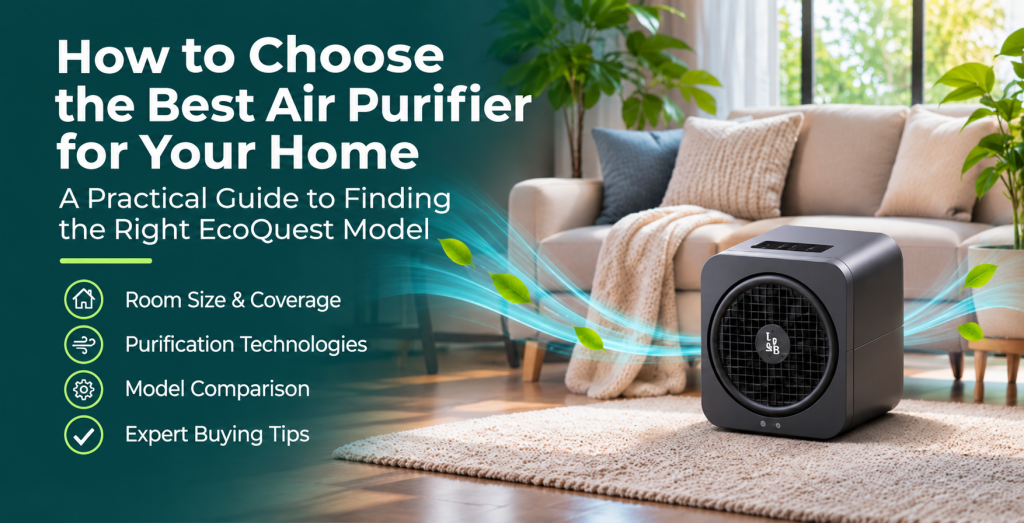
Choosing the right air purifier for your home involves more than comparing product prices or choosing the unit with the largest coverage number. The best choice depends on your floor plan, the rooms you use most, the types of indoor air pollutants you want to address, and the purification technology that fits your needs.
In any home, these decisions can be especially important. A single bedroom, a combined kitchen and living room, and an open-plan apartment all present different air quality challenges. A compact purifier may be sufficient for a dedicated room, while a larger living space may require a higher-capacity system or more than one unit.
EcoQuest offers air purification systems with different designs, coverage ratings, and technologies, including HEPA filtration, activated carbon, ionization, UV light, photocatalysis, and ozone-generating systems. Understanding these differences can help you narrow down the options before purchasing.
This guide explains how to evaluate your space, compare purification technologies, and choose an EcoQuest air purifier for your needs, from a single room to a larger connected living area.
Quick Guide: Which EcoQuest Air Purifier Should You Consider?
The following table provides a starting point based on the coverage information published in the EcoQuestPurifiers.com catalog.
| Space or Application | EcoQuest Model to Consider | Published Coverage |
|---|---|---|
| Bedroom or home office | HEPA & Charcoal Air Purifier | Up to 300 sq. ft. |
| Compact room or personal space | EcoRoom Plug-In Air Purifier | Up to 500 sq. ft. |
| Single room needing broader coverage | EcoQuest Box by OxyGi | Up to 1,500 sq. ft. |
| Apartment or connected living area | Fresh Air Black EcoQuest | Up to 3,000 sq. ft. |
| Larger open-plan home | Fresh Air Double Plus | Up to 3,500 sq. ft. |
| Large home or broad connected area | Classic Triple Plus | Up to 5,000 sq. ft. |
These figures are the manufacturer's published coverage ratings, not a guarantee that every room within that area will receive the same level of air cleaning. Actual results depend on the room layout, airflow, pollutant sources, operating conditions, and the specific performance characteristics of the selected model.
It is worth comparing the size of the area you actually want to treat with each unit’s features rather than automatically choosing the model with the highest coverage rating.
1. Start by Identifying Your Indoor Air Quality Needs
Before comparing air purifiers, think about what you want to improve in your home.
Indoor air can contain a mixture of particles and gases. Their sources vary from one household to another, so the right purification approach depends on the problem you are trying to address.
Dust and airborne particles
Dust can enter through open windows, accumulate on furniture, and become airborne during everyday activities. Some homes also experience seasonal pollen or other airborne particles.
For these concerns, a mechanical filtration system with an appropriately rated HEPA filter may be a useful starting point. HEPA filtration is designed to capture particles that pass through the filter, although actual whole-room performance depends on the unit's airflow, filter condition, and placement.
Cooking odors and household smells
Cooking, pets, cleaning products, and everyday household activities can contribute to unwanted odors.
Activated carbon is commonly used in air purifiers to adsorb certain gaseous compounds and odors. Its effectiveness depends on the amount and type of carbon, the compounds involved, and how much air passes through it.
Not every purifier has the same odor-control capabilities. Check the specific product configuration before making a decision.
Pet-related concerns
Homes with dogs or cats may have additional airborne particles, including dander, as well as odors.
A suitable filtration system can help capture airborne particles that pass through the unit. However, an air purifier does not remove pet hair from carpets or furniture, and it cannot replace regular vacuuming, washing, and cleaning.
General indoor air quality
Some homeowners are interested in technologies that work differently from conventional particle filters. EcoQuest's catalog includes systems using ionization, UV light, photocatalysis, and ozone-generating components.
These technologies should not be treated as interchangeable. Their capabilities and limitations depend on the specific design and operating conditions.
Important: Ozone is a respiratory irritant. Ozone-generating purification equipment should not be operated in occupied rooms unless the exact product is specifically approved for that use under applicable safety guidance. Follow the manufacturer's instructions, and do not assume that a device is safe for continuous occupied-space use simply because it is marketed as an air purifier.
If your primary concern is reducing airborne particles in a bedroom or another regularly occupied room, a properly sized, ozone-free HEPA purifier is often the more straightforward option.
2. Calculate the Size of the Area You Want to Purify
One of the most common purchasing mistakes is selecting a purifier based on the total size of the home without considering how the rooms are connected or which areas you want to treat.
A small apartment with an open living and dining area has different airflow characteristics from a house with several bedrooms separated by closed doors.
How to calculate square footage
For a rectangular room, multiply its length by its width.
Length × Width = Square Feet
For example:
A room measuring 15 feet long and 12 feet wide has an area of 180 square feet.
If the room is 10 feet long and 10 feet wide, its area is 100 square feet.
For an L-shaped room or an irregular layout, divide the floor plan into smaller rectangles, calculate each area, and add the results.
Should you measure the whole home or one room?
Consider the way you intend to use the purifier.
- One bedroom: Start with the bedroom's square footage.
- Home office: Measure the dedicated workspace.
- Open-plan apartment: Consider the connected living, dining, and kitchen areas together.
- Several separate rooms: Do not assume that a purifier rated for the combined square footage will clean every closed room equally.
- Entire home: Evaluate the floor plan, doors, stairs, airflow, and whether multiple units would be more practical.
What does “up to 500 square feet” actually mean?
A published coverage rating is a useful initial screening tool, but it does not tell you everything about real-world performance.
Two purifiers rated for the same area may have different airflow rates, filter designs, and purification methods. Coverage figures alone also do not establish how quickly a unit removes particles or how frequently the air is cleaned.
When available, look for independent performance data, including clean air delivery rate (CADR) for particle filtration. Also consider the number of air changes per hour at the room size you intend to use.
For your home, choosing a unit that fits your actual space and intended use is generally more useful than relying on the largest number printed on the product page.
3. Understand the Main Air Purification Technologies
EcoQuest offers several types of air purification equipment. Before selecting a model, it helps to understand what the listed technologies are intended to do.
HEPA filtration
HEPA filters physically capture airborne particles as air passes through the filter. Depending on the model and filter specification, this may include many fine particles such as dust, pollen, and other airborne debris.
A HEPA filter is a particularly relevant feature for shoppers who want to target airborne particles in bedrooms, offices, and other occupied spaces.
Check whether the product specifies a genuine HEPA filter, what replacement filters cost, and how frequently they need to be changed.
Activated carbon
Activated carbon adsorbs certain gases and odor-causing compounds. It is often combined with particle filtration.
Carbon capacity matters. A thin carbon layer and a substantial carbon bed should not be assumed to provide the same performance.
Ionization
Ionization technologies generate charged particles that may interact with airborne particles. Depending on the technology, some particles may aggregate or settle onto surfaces.
Ionization is not equivalent to HEPA filtration. It should not be assumed to provide a particular particle-removal rate without suitable test data. Some ionization technologies can also produce ozone as a byproduct, so emissions information matters.
UV light
UV technology uses ultraviolet radiation. Its effectiveness against microorganisms depends on factors such as the wavelength, exposure time, intensity, and the design of the treatment chamber.
The presence of a UV lamp alone does not establish that a purifier disinfects the entire room or prevents illness.
Photocatalysis
Photocatalytic systems use light and a catalyst to promote chemical reactions involving certain compounds. Their performance depends on the system's design, the target substances, and operating conditions.
Look for independent testing when evaluating claims about specific pollutants.
Ozone-generating technology
Ozone can react with certain compounds, but breathing ozone can harm the respiratory system. Ozone-generating devices require particular care and should not be confused with ordinary HEPA filtration.
For a bedroom, nursery, or occupied home office, prioritize equipment intended for safe use in occupied spaces. If a device generates ozone, follow its exact operating restrictions and do not use it around people or pets unless the manufacturer and applicable safety guidance explicitly permit that use.
4. EcoQuest Air Purifiers for Different Spaces
The following models illustrate different approaches to air purification, from compact rooms to larger connected spaces. Each description is based on the product information listed in the EcoQuest catalog.
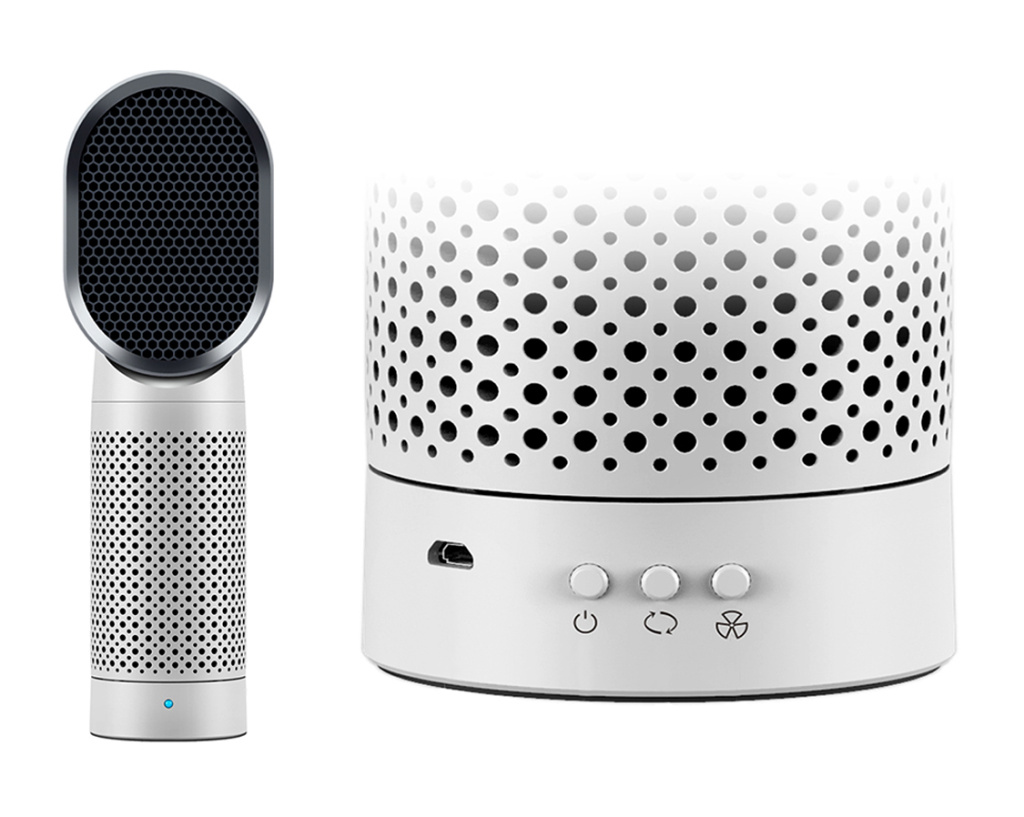
Best for a Small Bedroom or Office: HEPA & Charcoal Air Purifier
Published coverage: Up to 300 sq. ft.
For a compact bedroom, study, or home office, a smaller purifier may be more practical than a large whole-home unit.
The HEPA & Charcoal Air Purifier combines particle filtration with activated carbon and is listed for spaces up to 300 square feet. Its compact coverage category makes it worth considering for shoppers looking for a basic filtration-oriented option.
Consider this model if:
- You want to focus on one small room.
- Airborne particles and certain household odors are priorities.
- You prefer a unit with conventional filtration components.
Before purchasing, verify the exact HEPA specification, filter replacement availability, and any operating or maintenance requirements.
Learn More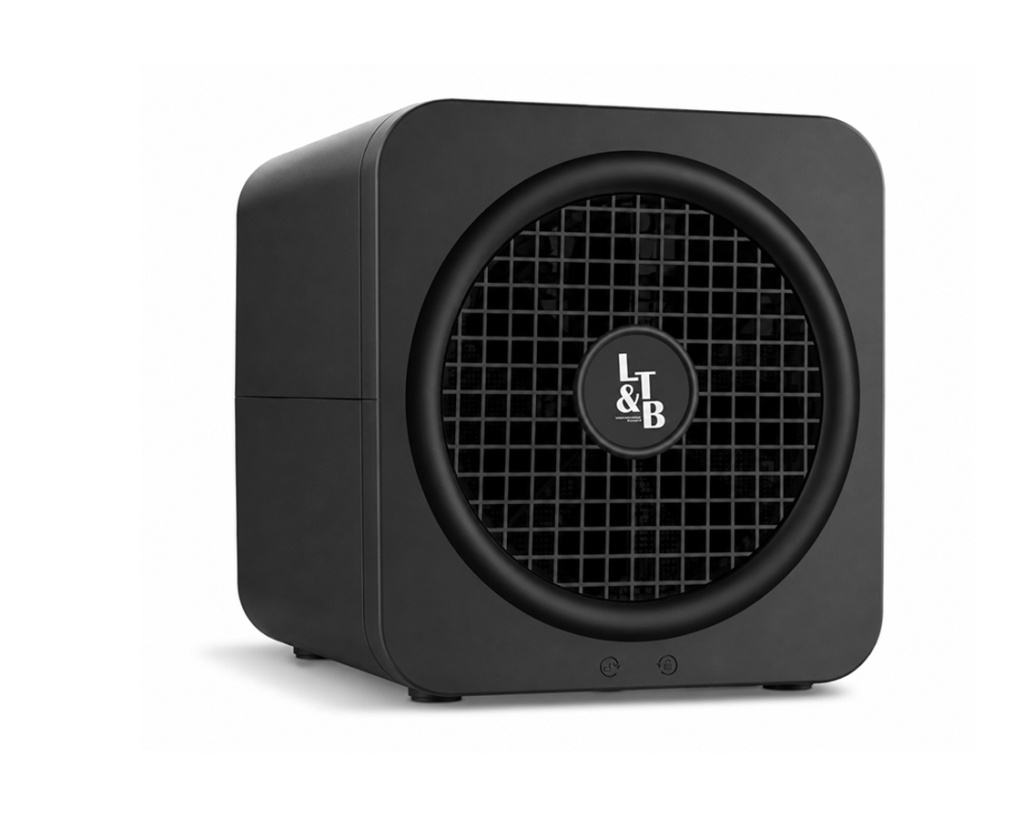
Best Plug-In Option for Compact Spaces: EcoRoom Plug-In Air Purifier
Published coverage: Up to 500 sq. ft.
The EcoRoom Plug-In Air Purifier is a compact option listed for one-room applications up to 500 square feet.
The product catalog identifies ActiveOx and plasma ionization among its technologies. Its plug-in design may appeal to shoppers who prefer a small unit rather than a larger floor-standing appliance.
Consider this model if:
- You want a compact device for a smaller room.
- You prefer a plug-in form factor.
- You are comparing alternatives to conventional filter-based purifiers.
The EcoRoom's listed technologies differ from those of a traditional HEPA-and-carbon unit. Review the product's specifications and safety instructions carefully, particularly if the purifier will operate in a bedroom or another occupied room.
Learn More
Best for a Larger Open-Plan Home: Fresh Air Double Plus
Published coverage: Up to 3,500 sq. ft.
The Fresh Air Double Plus is listed for spaces up to 3,500 square feet and combines ionization, ozone, UV, and photocatalysis according to the product catalog.
It is an option for shoppers researching systems with higher published coverage figures. Its technology configuration differs from that of a conventional mechanical filtration unit.
Consider this model if:
- You are comparing systems for a large connected area.
- You want to review a multitechnology design.
- You have checked the manufacturer's operating instructions and the requirements for ozone-generating equipment.
For a home where people spend most of their time in the treated space, safety and suitability for occupied use should take priority over the advertised coverage rating.
Learn More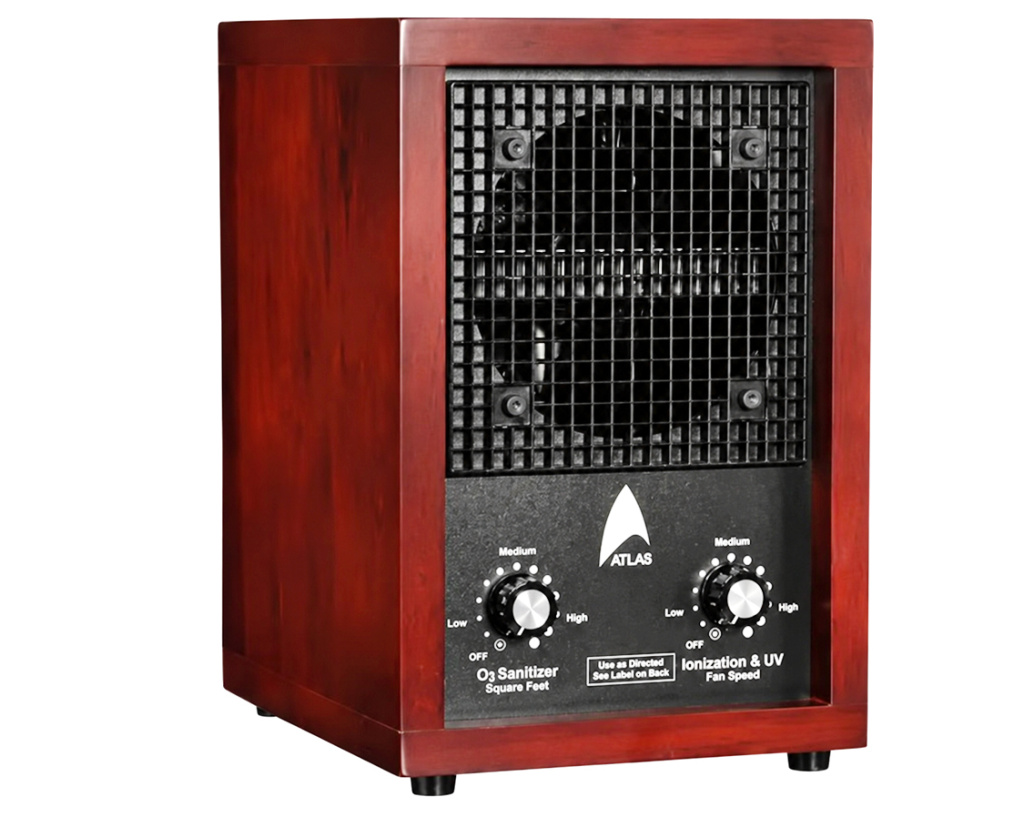
Best for Comparing Higher Coverage Ratings: Classic Triple Plus
Published coverage: Up to 5,000 sq. ft.
The Classic Triple Plus is listed with ionization, ozone, UV, and photocatalysis and a published coverage rating of up to 5,000 square feet.
It is worth examining if you are comparing larger-capacity systems, but a higher coverage rating should not be interpreted as proof of superior particle filtration or uniform performance throughout a home.
Consider this model if:
- You are researching equipment with a higher published coverage rating.
- Your home has a large connected area.
- You want to compare the design, features, maintenance, and safety requirements of different systems.
As with other ozone-generating models, verify the exact operating restrictions before considering this unit for residential use.
Learn More5. Compare the Models Before You Buy
The following table summarizes the principal differences between the models discussed above.
| Model | Published Coverage | Listed Technology or Configuration | Main Consideration |
|---|---|---|---|
| HEPA & Charcoal Air Purifier | Up to 300 sq. ft. | HEPA, charcoal, ions | Small-room filtration |
| EcoRoom Plug-In | Up to 500 sq. ft. | ActiveOx, plasma ionization | Compact plug-in design |
| EcoQuest Box by OxyGi | Up to 1,500 sq. ft. | Check current product specifications | Single-room application |
| Fresh Air Black EcoQuest | Up to 3,000 sq. ft. | Ions, ozone, UV, photocatalysis | Larger coverage rating; ozone safety |
| Fresh Air Double Plus | Up to 3,500 sq. ft. | Ions, ozone, UV, photocatalysis | Larger coverage rating; ozone safety |
| Classic Triple Plus | Up to 5,000 sq. ft. | Ions, ozone, UV, photocatalysis | Higher coverage rating; ozone safety |
The coverage figures and listed technologies are based on the current catalog descriptions. Confirm the specifications on each individual product page before purchasing, as product configurations and availability may change.
The table should be used to narrow down your options, not as a ranking of independently verified purification performance.
6. One Air Purifier or Several?
For some homes, one appropriately selected purifier may be enough. In other layouts, multiple units can be more practical.
When one unit may be sufficient
One purifier may be a reasonable starting point if:
- You primarily want to treat one bedroom or office.
- Your main living area is open and has reasonably unobstructed airflow.
- The model's verified performance suits the area and the pollutants you want to address.
When multiple units may be more practical
Consider separate units if:
- Bedrooms are separated by closed doors.
- Your home has several floors.
- The kitchen and living room are connected, but the bedrooms are isolated.
- You want to target different areas with different filtration requirements.
Air does not move freely between every room. A purifier operating in the living room should not be assumed to provide the same cleaning performance in a closed bedroom at the other end of the home.
For a smaller house or apartment, it may be sensible to prioritize the room where you spend the most time and expand your setup only if necessary.
7. Placement Matters More Than Many Buyers Expect
Even an appropriately sized purifier can perform poorly if it is positioned where airflow is restricted.
When installing your unit:
- Follow the manufacturer's recommended clearances.
- Avoid blocking air intakes and outlets with furniture or curtains.
- Keep the device away from excessive moisture unless it is specifically designed for that environment.
- Consider where dust and other pollutants are generated.
- Maintain the unit according to its instructions.
If the purifier uses a mechanical filter, inspect and replace it according to the manufacturer's schedule. A dirty or incorrectly installed filter can interfere with airflow.
For ozone-generating equipment, follow the product's specific safety restrictions. Never assume that ordinary placement advice overrides instructions requiring the space to be unoccupied.
8. Don't Ignore Maintenance and Running Costs
The purchase price is only one part of the cost of owning an air purifier.
Before choosing a model, investigate its ongoing requirements.
Filter replacement
Mechanical filtration units may require replacement HEPA or carbon filters. Compare the price of genuine replacement components and check their availability.
Cleaning and component replacement
Some systems use components that need periodic cleaning or replacement. Understand what maintenance is required, how often it must be performed, and whether it can be done by the owner.
Electricity consumption
Check the unit's rated power and expected operating schedule. Actual energy use depends on power consumption and how many hours the device runs.
Noise
Noise can be especially important in a bedroom, nursery, or home office. Check the manufacturer's noise specifications at the settings you expect to use.
Long-term value
A lower-priced purifier may be economical if its filters are readily available and its performance fits your needs. A more expensive system may offer features you do not need.
Compare the total cost of ownership rather than assuming that a higher price or more complex technology automatically provides better results.
9. Common Air Purifier Buying Mistakes
Choosing by coverage alone
A large coverage number does not tell you how efficiently a purifier removes specific pollutants. Compare independent performance data, filter specifications, and the intended application.
Assuming every technology removes every pollutant
HEPA filters, activated carbon, ionization, UV, and photocatalysis serve different functions. The presence of several technologies does not prove that a unit effectively addresses every indoor pollutant.
Overlooking ozone emissions
Ozone is not a harmless substitute for conventional filtration. Before purchasing an ozone-generating device, verify its intended use, emissions information, and operating restrictions.
Expecting one unit to solve every air quality problem
Air purifiers cannot correct every cause of poor indoor air quality. Ventilation, moisture management, source control, and regular cleaning remain important.
Forgetting about replacement parts
Check the availability and cost of filters, lamps, plates, and other components before committing to a model.
Ignoring the actual room layout
A unit's performance in a large open room may differ from its performance in a home with several closed bedrooms. Consider the areas you want to treat individually.
10. How to Choose an EcoQuest Air Purifier in Five Steps
If you want to simplify the selection process, use the following checklist.
Step 1: Measure your space.
Calculate the square footage of the room or connected area you intend to treat.
Step 2: Identify your main concern.
Decide whether your priority is airborne particles, certain odors, or another indoor air quality concern.
Step 3: Select the appropriate technology.
For particle removal in occupied rooms, start by comparing appropriately sized HEPA filtration options. Evaluate other technologies according to their specific capabilities and safety requirements.
Step 4: Compare operating costs.
Review filter replacement, maintenance, electricity consumption, and noise.
Step 5: Verify safety and performance.
Read the individual product specifications. Look for independent test data where available, and pay particular attention to ozone emissions and operating restrictions.
This approach helps prevent you from paying for features that do not match your actual needs.
Frequently Asked Questions
What is the best air purifier for your home?
There is no single best model for every home. The right choice depends on the area you want to treat, the pollutants you want to address, and the device's verified performance.
For a bedroom or office, compare filtration-oriented options such as the HEPA & Charcoal Air Purifier. For other applications, review the EcoQuest catalog and the specifications of each model.
Which EcoQuest air purifier is suitable for a bedroom?
The HEPA & Charcoal Air Purifier is listed for spaces up to 300 square feet and combines HEPA and charcoal filtration with ions.
It is a reasonable starting point for comparison if your priority is conventional particle filtration. Verify the exact filter specifications and the unit's suitability for occupied use before buying.
Which EcoQuest model may suit a larger home or connected living area?
The Fresh Air Black EcoQuest is listed for coverage up to 3,000 square feet, while the Fresh Air Double Plus is listed for up to 3,500 square feet.
However, both product listings include ozone-generating technology. Their coverage ratings alone do not establish that they are appropriate for continuous operation in occupied residential spaces.
Do I need an air purifier for every room?
Not necessarily. One unit may be sufficient for a primary living area, depending on its performance and the home's layout. Separate bedrooms and floors may require additional units if you want to treat those spaces independently.
Is a HEPA purifier better than an ionizer?
They work differently. HEPA filtration physically captures airborne particles that pass through the filter. Ionization uses charged particles and may affect how airborne particles behave.
Neither should be judged solely by its technology label. For particle removal, look for appropriate filtration specifications and independent performance data. Also investigate ozone emissions where relevant.
Can an air purifier remove household odors?
Some purifiers use activated carbon or other technologies intended to address certain odors or gaseous compounds. Performance depends on the substance, the amount of treatment material, and the operating conditions.
Removing the source of an odor and improving ventilation may be necessary even when a purifier is used.
Can an air purifier replace ventilation?
No. Air purification and ventilation serve different purposes. Ventilation helps exchange indoor air with outdoor air, while a purifier treats air using its particular technology.
A healthy indoor environment may require both, along with moisture control and removal of pollutant sources.
Are ozone-generating air purifiers suitable for bedrooms?
Ozone can irritate and damage the respiratory system. Do not use an ozone-generating purifier in an occupied bedroom unless the exact product is explicitly approved for that use under applicable safety guidance.
For a bedroom, prioritize an ozone-free purifier intended for occupied spaces.
How do I know if a purifier is powerful enough?
Start with the room size, then look for verified airflow and performance specifications relevant to your target pollutants. For particle filtration, CADR and air changes per hour can provide more useful information than coverage claims alone.
Remember that doors, walls, furniture, and pollutant sources can affect real-world performance.
How often should I maintain an air purifier?
Maintenance depends on the model. Follow the manufacturer's instructions for filter replacement, cleaning, inspection, and replacement of other components.
Before buying, check the cost and availability of the required consumables.
Final Verdict: Find the Right Air Purifier for Your Space
Choosing an air purifier for your home becomes easier when you start with your actual needs rather than the largest coverage figure or the most complicated technology.
For a compact room, compare filtration-oriented options such as the HEPA & Charcoal Air Purifier. If you prefer a plug-in design, investigate the EcoRoom and its specific operating requirements. For larger connected spaces, compare the published coverage and configuration of the Fresh Air models, while carefully reviewing their ozone-related safety restrictions.
Most importantly, choose a system whose performance is appropriate for the pollutants you want to address and the environment in which it will operate.
A Simple EcoQuest Selection Guide
- Bedroom or home office: HEPA & Charcoal Air Purifier
- Compact plug-in option: EcoRoom Plug-In Air Purifier
- Single-room application with a higher published coverage rating: EcoQuest Box by OxyGi
- Larger connected space: Compare the Fresh Air Black EcoQuest and Fresh Air Double Plus, taking their ozone-generating technology into account
- Higher published coverage rating: Review the Classic Triple Plus specifications and operating restrictions
A well-chosen air purifier should fit your room, your indoor air quality priorities, and your willingness to maintain it. Combine the right equipment with regular cleaning, appropriate ventilation, and control of pollution sources to build a more practical indoor air quality strategy for your home.