
What Are VOCs in Nail Salons and How to Remove Them?
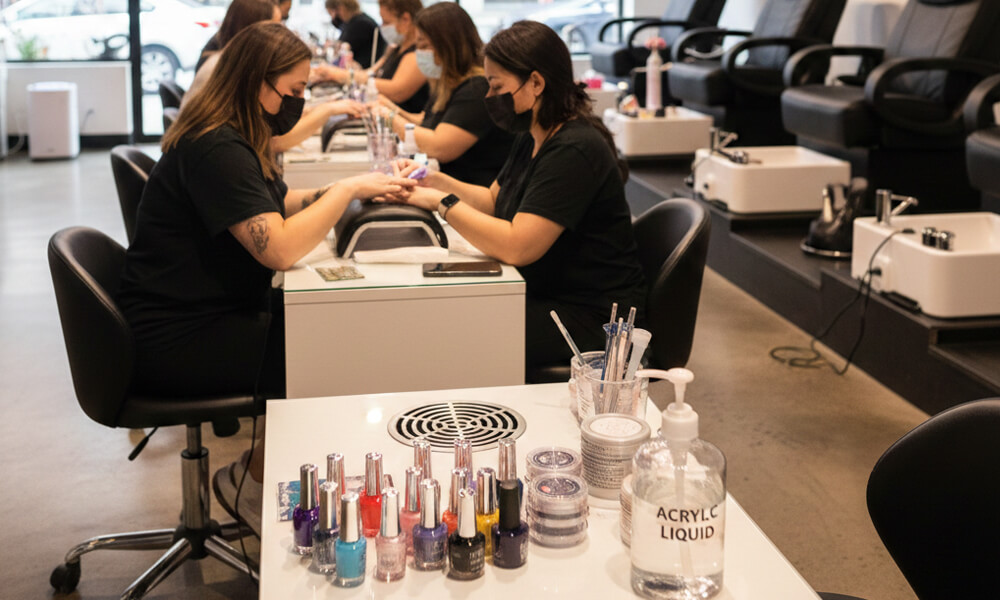
Walk into a busy nail salon and you may notice a distinct chemical smell. That odor is not just a cosmetic inconvenience — it is often the presence of volatile organic compounds, commonly known as VOCs.
In nail salons, VOCs are released from polishes, removers, acrylic liquids, disinfectants, and other professional products. While individual products may meet regulatory standards, prolonged exposure in poorly ventilated environments can create long-term air quality concerns.
Understanding VOCs — and how to manage them — is essential for modern nail salon owners.
What Are VOCs?
Volatile Organic Compounds are carbon-based chemicals that evaporate easily at room temperature. Because they vaporize quickly, they become airborne and accumulate in indoor environments.
In nail salons, VOCs are not unusual. They are part of the chemistry of professional beauty products. The issue arises when ventilation and air management are insufficient to dilute and remove them effectively.
Common Sources of VOCs in Nail Salons
Acrylic Liquid Monomers
Liquid monomers used in acrylic nail systems release noticeable vapors during application. These fumes contribute significantly to the characteristic “acrylic smell” of salons.
Nail Polish and Gel Products
Certain formulations contain solvents that evaporate during drying. Even after application, residual vapors may linger in the air.
Acetone and Removers
Acetone evaporates rapidly and can contribute to strong indoor chemical odors when used repeatedly throughout the day.
Disinfectants and Cleaning Agents
Surface cleaners and sanitation products may also emit VOCs, particularly in enclosed spaces.
For a broader look at how these airborne contaminants affect overall salon environments, see: How to improve air quality in nail salons
Health Effects of Prolonged VOC Exposure
Short-term exposure to elevated VOC levels may cause:
- Eye irritation
- Headaches
- Dizziness
- Respiratory discomfort
Long-term exposure, particularly for technicians working full-time, raises concerns about occupational health.
While most salons operate within legal product limits, cumulative exposure in poorly ventilated environments can increase discomfort and reduce workplace satisfaction.
Understanding ventilation standards can help reduce overall exposure risk: Nail salon ventilation requirements
Why Ventilation Alone Is Not Enough
Many salon owners believe increasing airflow solves the problem. Ventilation helps dilute VOC concentration by introducing fresh air. However, it does not chemically neutralize or capture airborne compounds.
In colder climates, increasing outside air intake can also increase heating costs and create inconsistent airflow patterns.
A balanced approach combines air exchange with filtration and purification technologies.
How to Remove VOCs in Nail Salons
Increase Controlled Air Exchange
Improving air changes per hour (ACH) helps reduce concentration levels. Proper HVAC maintenance ensures air is moving efficiently.
Use Local Source Capture
Table-mounted dust collectors help capture particulates during filing but do not eliminate chemical vapors.
Install Commercial Air Purification Systems
Commercial-grade air purification systems designed for professional environments can help reduce VOC concentration through advanced filtration technologies.
Unlike small residential units, commercial systems are built to handle larger square footage and continuous exposure conditions.
Owners exploring solutions specifically designed for beauty environments can review: Nail salon air purifiers
For a broader business-level consultation on implementing air quality systems, see: Commercial air purification solutions for nail salons
Choosing the Right System for VOC Reduction
When selecting a system, salon owners should consider:
- Coverage area relative to square footage
- Filtration technology designed for odor control
- Quiet operation
- Ease of maintenance
Systems should integrate naturally into the salon layout without disrupting client experience.
Creating a Safer Salon Environment in 2026
Clients are increasingly aware of indoor air quality. Technicians are more informed about occupational exposure. Clean air is becoming part of professional brand identity.
By combining ventilation improvements, source capture, and commercial air purification, nail salons can significantly reduce VOC presence and create healthier, more comfortable environments.
VOCs are an unavoidable part of modern nail services — but excessive exposure is not.
Salon owners who understand the science behind indoor air contaminants are better positioned to protect their staff, satisfy clients, and maintain regulatory confidence.
Investing in proper air management systems is no longer just about comfort. It is about long-term business sustainability.