
Air Purifiers for Pet Owners: What Actually Matters?
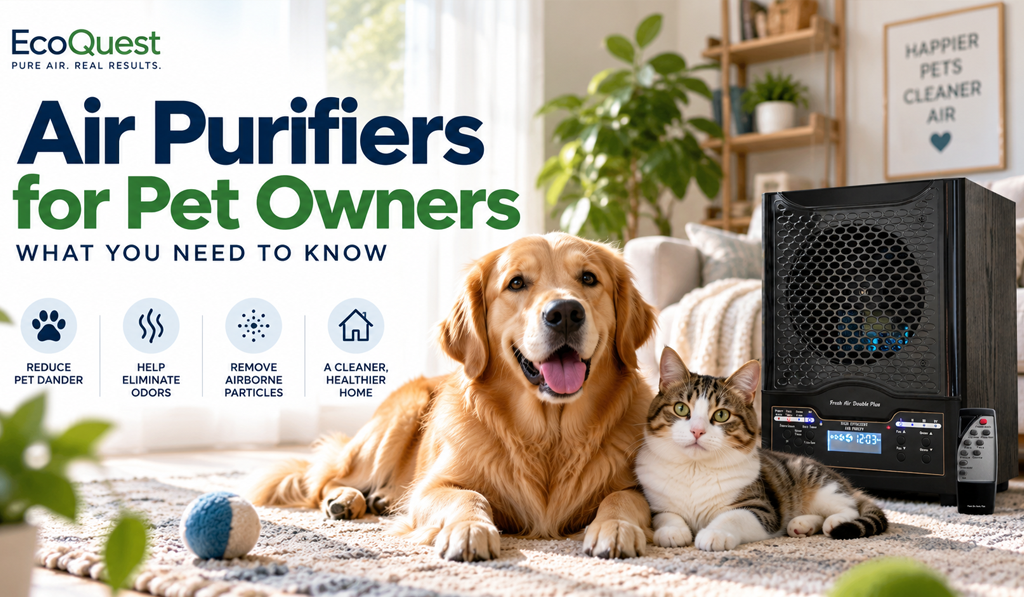
Living with a dog or cat comes with plenty of benefits, but it can also change the air inside your home. Pet hair ends up on furniture, dander settles into carpets, litter can create fine particles, and odors can linger long after the original source is gone.
That does not mean you need to turn your home into a laboratory or run an air purifier in every room. The more useful approach is to understand what your pets are actually adding to the indoor environment and choose an air-cleaning system that matches those problems.
The right choice depends on several factors: the size of the room, the type of pollutants you want to reduce, whether you need particle filtration or odor control, how often you are willing to maintain the unit, and whether the purifier uses a technology that intentionally generates ozone.
Here is what pet owners should know before choosing an air purifier.
Start With the Problem, Not the Pet
“Air purifier for pets” sounds like a specific category, but dogs and cats do not create just one type of indoor-air problem.
A pet-friendly home can contain a mixture of:
- Pet dander
- Loose hair and fur
- Dust
- Pollen brought indoors from outside
- Litter particles
- Food particles
- Household dust
- Pet-related odors
- Smoke and other pollutants unrelated to pets
These contaminants behave differently.
Large pieces of fur usually settle quickly on floors and furniture. Smaller particles can remain airborne longer and circulate through the room. Odors are a different problem again because removing particles does not automatically remove gaseous odor compounds.
That distinction is important when comparing air purifiers. A system designed primarily for particle filtration may not be the same thing as a system designed to address odors, and a filterless air treatment system works differently from a conventional mechanical filter.
Pet Hair Is Not the Same as Pet Dander
One of the most common mistakes when shopping for a pet air purifier is treating hair and dander as the same thing.
They are not.
Pet hair is easy to see. It tends to collect on sofas, clothing, carpets and floors, where regular vacuuming and grooming can make a noticeable difference.
Pet dander is much smaller. It consists primarily of tiny flakes of skin and other biological material and can become airborne.
This is why an air purifier should not be viewed as a machine that simply “removes pet hair from the room.” Its more useful role is helping manage airborne particles that are small enough to circulate through the air.
For visible fur, focus on grooming, vacuuming and cleaning fabrics. For airborne particles, the characteristics of the air purifier become much more important.
HEPA Filtration: A Straightforward Approach to Airborne Particles
If airborne pet particles are your main concern, mechanical filtration is one of the easiest technologies to understand.
A HEPA filter uses a dense network of fibers to capture particles as air passes through it. A properly designed HEPA system can capture very small airborne particles, including many particles associated with household dust, pollen and pet-related debris.
For pet owners, this approach can be particularly relevant when the goal is particle removal rather than simply odor control.
The EcoQuest HEPA & Charcoal Air Purifier, for example, combines a pre-filter, H13 HEPA filtration and activated carbon in a three-stage system. The manufacturer lists pet hair, odors, dust and pollen among the pollutants it is designed to address and specifies use for smaller spaces.
There is, however, a practical consideration with any filter-based purifier: the filter eventually loads with captured material and needs to be replaced according to the manufacturer's instructions.
For a home with pets, that maintenance should be part of the buying decision from the beginning.

What About Filterless Air Purifiers?
Filterless systems take a different approach.
Instead of relying primarily on a disposable mechanical filter, some models use technologies such as ionization, electrostatic collection, UV or oxidation-based air treatment.
One example in the EcoQuest lineup is the Living Air Classic XL-15, which the manufacturer describes as a filterless system using ionization and activated oxygen technology. The product is marketed for large spaces and specifically mentions pet odors among the applications.
The main attraction for some pet owners is straightforward: there is no conventional disposable HEPA filter to purchase and replace.
But filterless does not mean maintenance-free, and it does not mean that every filterless technology performs the same job as a HEPA filter.
That is why the technology inside the unit matters more than the word “filterless” on the box.
Odors Require a Different Strategy
Pet owners often notice odors before they notice airborne particles.
A dog that has been outside in wet weather, a cat's litter box, a pet bed or an accident on a carpet can all create persistent smells.
An air purifier can be part of an odor-control strategy, but it should not be expected to solve the source of the odor by itself.
Think of it this way:
The source creates the odor. The purifier treats the air around the source.
If a dog bed smells, wash it.
If the litter box smells, clean it.
If a carpet has absorbed an accident, treat the carpet.
If upholstery has accumulated years of pet odors, clean the upholstery.
Only after dealing with the source does air purification become part of the solution.
Some air purifiers also include activated carbon specifically because carbon can help with certain gaseous pollutants and odors. This is one reason a combination of particle filtration and carbon can be useful when both dander and pet odors are concerns.
Cats Create a Few Extra Considerations
Cat owners have some additional sources of indoor particles and odors to think about.
Litter can produce fine dust when cats dig, jump out of the box or walk through the surrounding area. The litter box can also become a concentrated source of odor.
That does not mean the purifier should be placed directly inside the litter area.
Instead, position it nearby where it can circulate air through the surrounding space without becoming coated with litter dust.
The same principle applies to pet beds. A purifier can be placed in the room where the bed is located, while the bed itself should still be washed regularly.
Where Should You Put an Air Purifier?
The best location is usually determined by where the air-quality problem is concentrated and how air moves through the room.
Living Room
If your dog or cat spends most of the day in the living room, this may be the most useful location.
Pets spend a lot of time on sofas, rugs and floors, all of which can collect dust and dander.
Bedroom
If your pet sleeps in your bedroom, placing an appropriately sized purifier there may make more sense than putting it in a room the pet rarely enters.
This is particularly relevant if you spend many hours in the bedroom.
Near a Pet Bed
Pet bedding can collect hair, dander and dust.
A purifier in the same room can complement regular washing and vacuuming.
Near a Litter Box
For cats, place the purifier near the litter area rather than directly inside it. Leave enough space for normal airflow and avoid positioning it where litter dust is likely to be pulled directly into the unit.
Open-Plan Homes
In an open floor plan, look at the actual airflow rather than simply placing the purifier against a wall.
Avoid blocking the intake or outlet with furniture, curtains or other large objects.
One Large Purifier or Several Smaller Ones?
Bigger is not automatically better.
A purifier designed for a 3,000-square-foot space may be unnecessary if your main concern is a 200-square-foot bedroom.
On the other hand, a small desktop purifier cannot realistically provide the same air circulation throughout a large open living area.
Start by asking:
Which room needs cleaner air?
Then look at the manufacturer's stated coverage, airflow specifications and intended use.
For example, EcoQuest's current lineup includes the compact HEPA & Charcoal Air Purifier for smaller spaces, while other models are designed for substantially larger areas.
Coverage claims should be treated as a starting point rather than a guarantee of identical performance in every home. Room layout, doors, ceilings, airflow and the number of pollutants present all affect real-world results.
What Pet Owners Should Look for
Instead of searching for a product simply labeled “pet air purifier,” compare the actual features.
If airborne particles are your priority
Look for:
- HEPA or another clearly specified particle-capture technology
- Appropriate room coverage
- Adequate airflow
- A replaceable filter that is easy to access
- Reasonable operating noise
If odors are your main concern
Look for:
- Activated carbon or another technology specifically intended for odor-related gases
- Appropriate room coverage
- Easy maintenance
- A design that allows good air circulation
If you want to avoid disposable filters
Look at:
- Filterless technologies
- Required cleaning
- Replacement cells or plates
- Maintenance intervals
- Whether the system generates ozone
The last point is particularly important.
Don't Ignore Ozone
Some air purifiers and air-treatment products intentionally generate ozone.
That deserves separate consideration in a home with pets.
EPA identifies ozone as a lung irritant and notes that ozone can worsen respiratory conditions such as asthma. EPA also warns consumers about portable air cleaners that intentionally produce ozone.
This is especially relevant to households with animals because pets share the same indoor environment.
EcoQuest sells models that use ozone or activated oxygen technology, while other models in its lineup use HEPA filtration. For example, the Fresh Air Double Plus combines HEPA and activated carbon with several other technologies, including ozone generation.
The important point is not that one technology should automatically be chosen over another. Know what the purifier produces, where it is intended to operate, and follow the manufacturer's operating instructions.
Do not assume that a higher ozone setting means better everyday air quality.
An Air Purifier Cannot Replace Cleaning
This is perhaps the most important point for any pet owner.
Even a well-sized air purifier works best as part of a broader cleaning routine.
A practical pet-home routine can include:
Vacuum floors and rugs regularly.
Pay particular attention to areas where your pet spends most of its time.
Wash pet bedding.
Beds and blankets can accumulate hair, dander and odors.
Groom pets regularly.
Removing loose hair before it spreads around the house can reduce the amount that ends up on floors and furniture.
Clean upholstery.
Sofas and chairs can hold a surprising amount of pet-related debris.
Keep litter boxes clean.
This is one of the simplest ways to control persistent cat-related odors.
Clean accidents promptly.
The longer an odor source remains in carpet or upholstery, the harder it can be to remove.
Ventilate when outdoor conditions allow.
Fresh outdoor air can be useful when outdoor air quality is good.
Use the air purifier consistently.
Running it occasionally after the room already smells strongly is different from using it as part of an ongoing air-quality routine.
Three EcoQuest Options for Pet-Friendly Homes
EcoQuest's lineup includes several technologies, so there isn't one configuration that fits every pet owner's situation.
HEPA & Charcoal Air Purifier
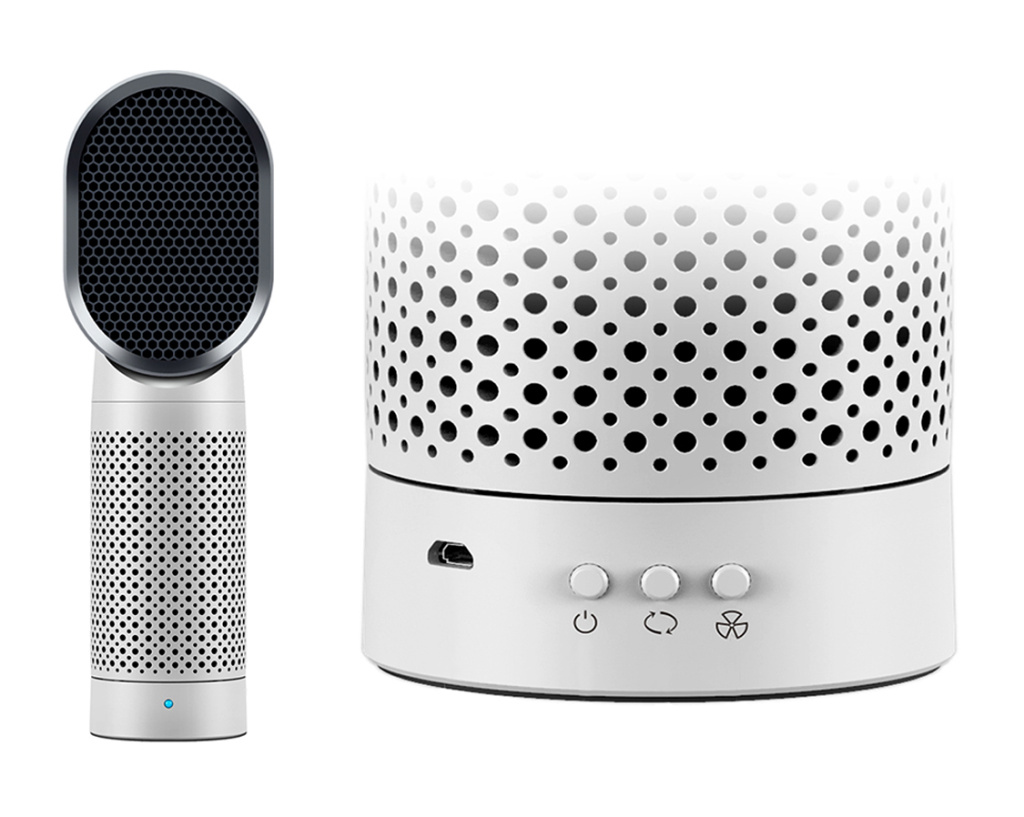
For a smaller room where airborne particles are the main concern, the HEPA & Charcoal Air Purifier offers a straightforward combination of pre-filtration, H13 HEPA and activated carbon.
Consider it when:
- Bedrooms
- Home offices
- Small living spaces
- Individual rooms
- Smaller pet areas
EcoQuest lists pet hair, odors, dust and pollen among the pollutants addressed by the system.
Learn More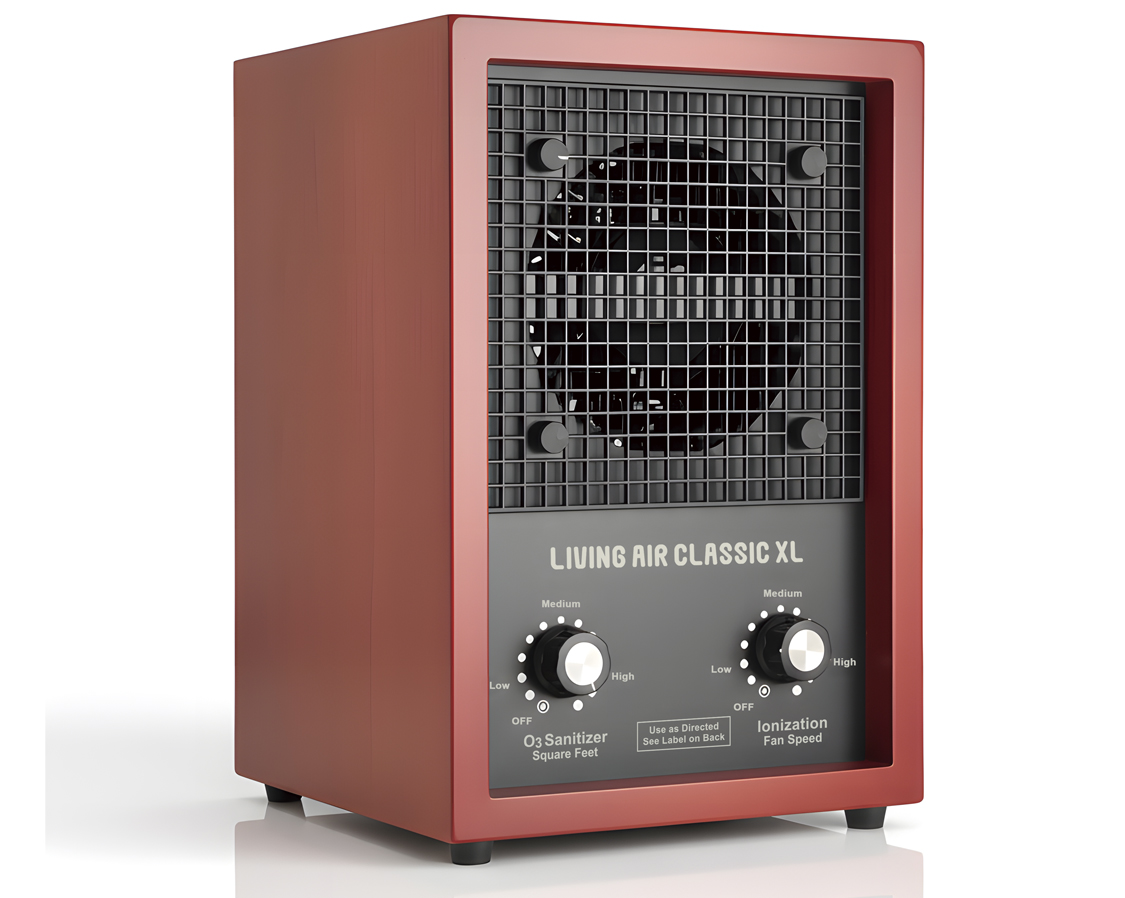
Living Air Classic XL-15
The Classic XL-15 takes a different approach, using ionization and activated oxygen technology rather than relying on a conventional disposable HEPA filter. The manufacturer lists coverage of up to 3,500 square feet and mentions pet odors, dust and allergens among its applications.
Consider it when:
- You want a large-room system
- You are specifically comparing filterless and filter-based technologies
- Replacement-filter requirements are an important consideration
Because the system uses activated oxygen technology, review the operating instructions and ozone-related considerations carefully before using it around pets.
Learn More
Fresh Air Double Plus
For shoppers interested in a multi-stage system, the Fresh Air Double Plus combines HEPA and activated carbon with additional technologies including UV, ionization and ozone generation. EcoQuest lists coverage up to 3,500 square feet.
Consider it when:
- You want HEPA plus additional air-treatment technologies
- You need coverage for a larger space
- Particle and odor concerns overlap
Again, because this model intentionally generates ozone, it should not be treated as equivalent to a conventional HEPA-only purifier for everyday occupied-room use.
Learn MoreThe Best Setup for a Pet-Friendly Home Is More Than One Device
There is no universal “best air purifier for pets.”
The useful question is:
What do you actually need the purifier to do?
If airborne particles are the priority, pay close attention to particle filtration and room size.
If odors are the main problem, consider technologies designed to address gaseous pollutants as well as particles.
If avoiding replacement filters is important, compare filterless systems carefully and look at their actual maintenance requirements.
If you have a large open home with several pets, airflow and coverage become more important than choosing a purifier simply because it is marketed for pets.
And regardless of the technology, remember that air purification works alongside source control, cleaning and ventilation rather than replacing them.
Final Thoughts
Pets are not the problem to be “purified away.” They are part of the home, and a good indoor-air strategy should account for the particles, dust and odors that naturally come with living with animals.
Start with the source. Keep bedding and litter areas clean, vacuum regularly, groom your pets and clean surfaces where hair and dander accumulate.
Then choose an air purifier based on the specific air-quality problem, room size, technology and maintenance requirements.
For some households, that may mean a compact HEPA and carbon system. For others, a larger or filterless air-treatment system may be worth considering. The important thing is to understand what the technology actually does before deciding what belongs in your home.