
How to Reduce Indoor Humidity: Step-by-Step Guide
You wake up to a musty bedroom, fogged windows, or that sticky feeling that makes the house seem warmer than the thermostat suggests. The bathroom fan has been running, the air conditioner appears to work normally, and yet the basement still smells damp. Opening every window may seem like the obvious next step, but in humid weather it can make the problem worse.
The first decision is simple: compare indoor and outdoor moisture before ventilating. If the outside air is drier, ventilation can help. If it's warm and humid outside, close the windows and use source control, air conditioning, or dehumidification instead. Good humidity control starts with that decision, then works backward to find where the moisture is entering.
Table of Contents
- Understanding Indoor Humidity and Why It Matters
- Measuring Humidity Like a Professional
- Quick Fixes to Lower Indoor Moisture Today
- Choosing and Using a Dehumidifier Correctly
- When Ventilation Helps and When It Backfires
- Long-Term Solutions for Persistent Humidity Problems
- Seasonal Humidity Control and Final Recommendations
Understanding Indoor Humidity and Why It Matters
Indoor relative humidity, or RH, describes how much water vapor the air holds compared with the maximum it could hold at that temperature. A hygrometer might show 45% RH, which means the air is holding roughly that proportion of its moisture capacity under the current conditions. The reading changes with temperature, so RH isn't the same thing as the total amount of water in the air.
For most homes, a practical target sits between 30% and 50% RH. ASHRAE identifies 40% to 60% RH as a preferred range for human health and comfort, with a broader practical range of 30% to 70% in some contexts. It also advises keeping indoor RH below 60% in hot, humid climates to reduce mold growth and surface condensation. The ASHRAE guidance on indoor humidity and moisture control provides the building-science context behind these thresholds.

Read the symptoms before the damage
High humidity often announces itself through condensation on windows, musty odors, clammy air, peeling paint, swollen wood, or mold spotting. Bathrooms, below-grade rooms, crawl spaces, and rooms with poor air circulation deserve special attention. A bedroom can also stay damp when a closed door limits air movement and occupants add moisture overnight through breathing.
Use a hygrometer to check the room at different times rather than treating one reading as a verdict. If the room repeatedly sits above 60% RH, moisture reduction becomes a priority because that level is associated with condensation and microbial growth risk. If you see a high reading beside a cold exterior wall, inspect the wall and nearby plumbing instead of assuming a portable unit will solve the cause.
A purifier, such as an air purifier for mold-sensitive rooms, may support air-quality management, but it doesn't replace leak repair or humidity control. Remove the water source first, then address the air and surface conditions that allow odors and microbial growth to persist.
Measuring Humidity Like a Professional
A reliable diagnosis starts with a reliable reading. Buy a digital hygrometer and place it in the occupied part of the room, roughly at breathing height, away from direct sunlight, supply vents, radiators, exterior doors, kitchens, and bathrooms. A device sitting beside a shower will report the shower environment, not the home's normal humidity.
Take readings in the basement, main living area, bedrooms, and any room where you notice odor or condensation. Record the time and conditions. A morning reading may differ from an afternoon reading because cooking, bathing, outdoor weather, heating, and cooling all change the moisture balance.
Avoid misleading readings
Some locations regularly produce false impressions:
- Near an HVAC register: Moving air can make the reading appear lower or more variable than the room average.
- Against an exterior wall: A cold surface can create a localized damp pocket that doesn't represent the center of the room.
- Beside a window: Sunlight and glass temperature can distort the result.
- Inside a cabinet or closet: Restricted air movement may reveal a real problem, but it shouldn't be used as the only whole-room reading.
Let the hygrometer sit undisturbed before recording a result. If you have two devices, place them together in the same room and compare them. A consistent difference doesn't necessarily mean either device is useless, but it tells you to track trends with the same instrument rather than comparing isolated readings from different meters.
For a broader view of humidity, temperature, and indoor conditions, an indoor air quality monitor can help you build a room-by-room baseline. The important habit is consistency. Measure before changing anything, measure again after a shower or cooking, and check whether the high reading is local or spread throughout the home.
Quick Fixes to Lower Indoor Moisture Today
Start with the moisture sources you can control immediately. Run the bathroom exhaust fan during a shower and keep it operating afterward long enough to clear the steam. Use the range hood when cooking, keep pot lids on when practical, and vent clothes dryers outdoors. If laundry is drying indoors, move it to a space with deliberate exhaust or use a dryer that sends the moist air outside.
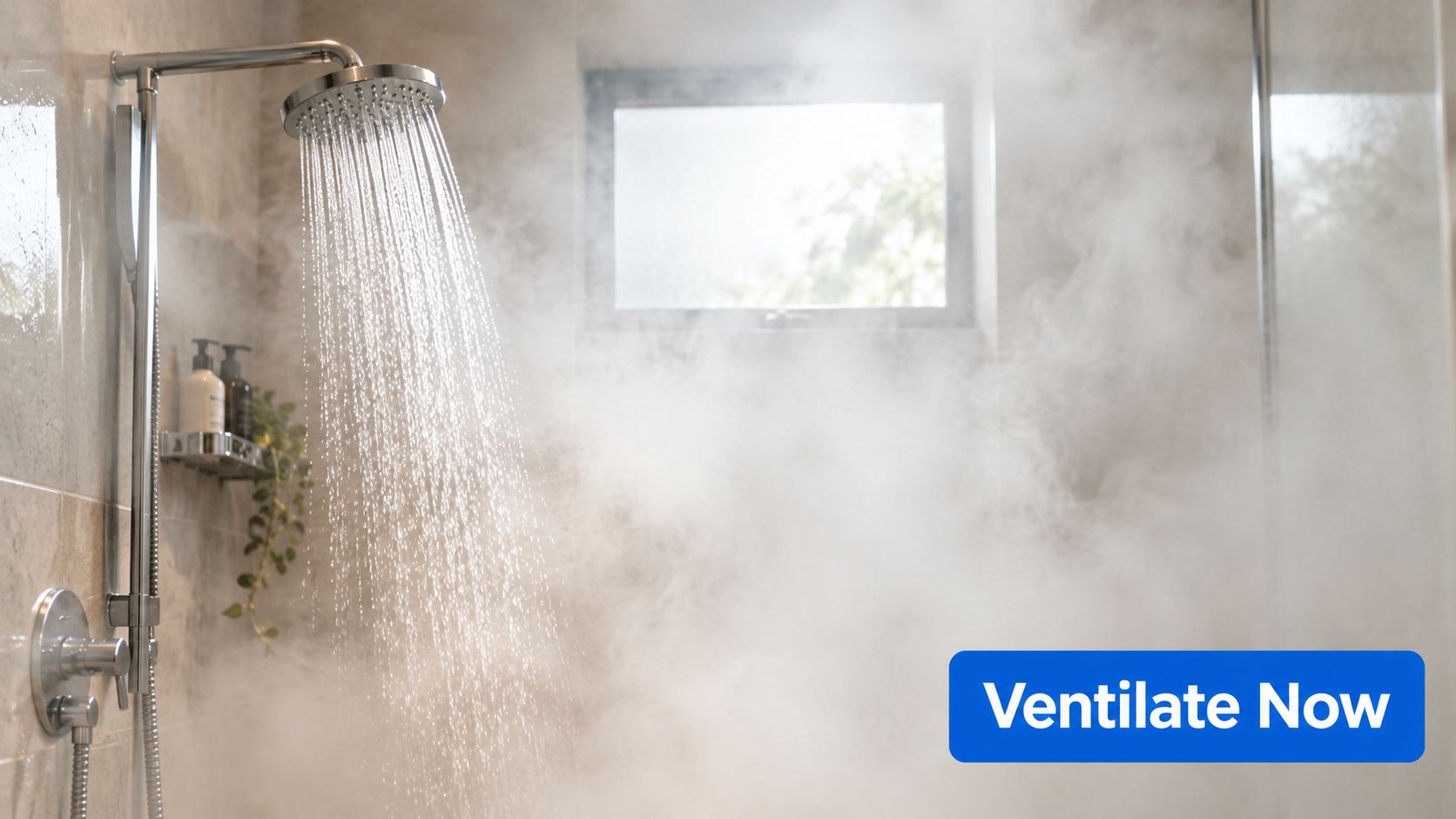
The EPA's mold and moisture guidance recommends keeping indoor humidity below 60% RH, ideally between 30% and 50%, and identifies air conditioning and dehumidifiers as useful tools in hot, humid climates. It also recommends venting moisture-producing appliances outdoors and using bathroom fans during showers.
Match the fix to the source
A few practical changes can make a noticeable difference:
- After bathing: Wipe water from shower walls and floors so it doesn't evaporate into the room. Keep the bathroom door closed while steam is being exhausted.
- During cooking: Use the exhaust hood, especially for boiling and simmering. If the hood only recirculates air, open a suitable exhaust path or improve the ventilation system.
- During laundry: Don't hang wet clothes in a closed bedroom or basement. Dry them outdoors when weather permits.
- After a leak: Dry wet materials promptly, but don't cover or repaint them while the underlying assembly remains damp.
- Before opening windows: Check outdoor conditions. Cooling outdoor air can still carry enough moisture to raise indoor RH.
These actions work well when moisture comes from occasional activities. They won't solve groundwater entering a basement, a leaking supply line, a saturated crawl space, or a home-wide humidity problem that returns as soon as the fans stop.
A short demonstration can help explain why moisture source control matters in bathrooms and other wet rooms.
Practical rule: If humidity rises quickly after a specific activity and falls after the source is controlled, change the habit or improve local exhaust. If it stays high all day, investigate the building or add deliberate dehumidification.
Choosing and Using a Dehumidifier Correctly
A dehumidifier is useful when indoor air remains damp after leaks and moisture-producing activities have been addressed. Choose it according to space size, moisture load, drainage options, and operating conditions, not just the footprint printed on the box. A small, lightly damp bedroom needs a different solution from a basement with cool floors, masonry walls, and ongoing water intrusion.
Portable units work well for a defined area. They can be placed in a basement, laundry room, or bedroom and moved as conditions change. Whole-house systems serve a different purpose, treating air through a central system or dedicated ductwork so humidity control isn't limited to the room containing the appliance.
Think beyond the capacity label
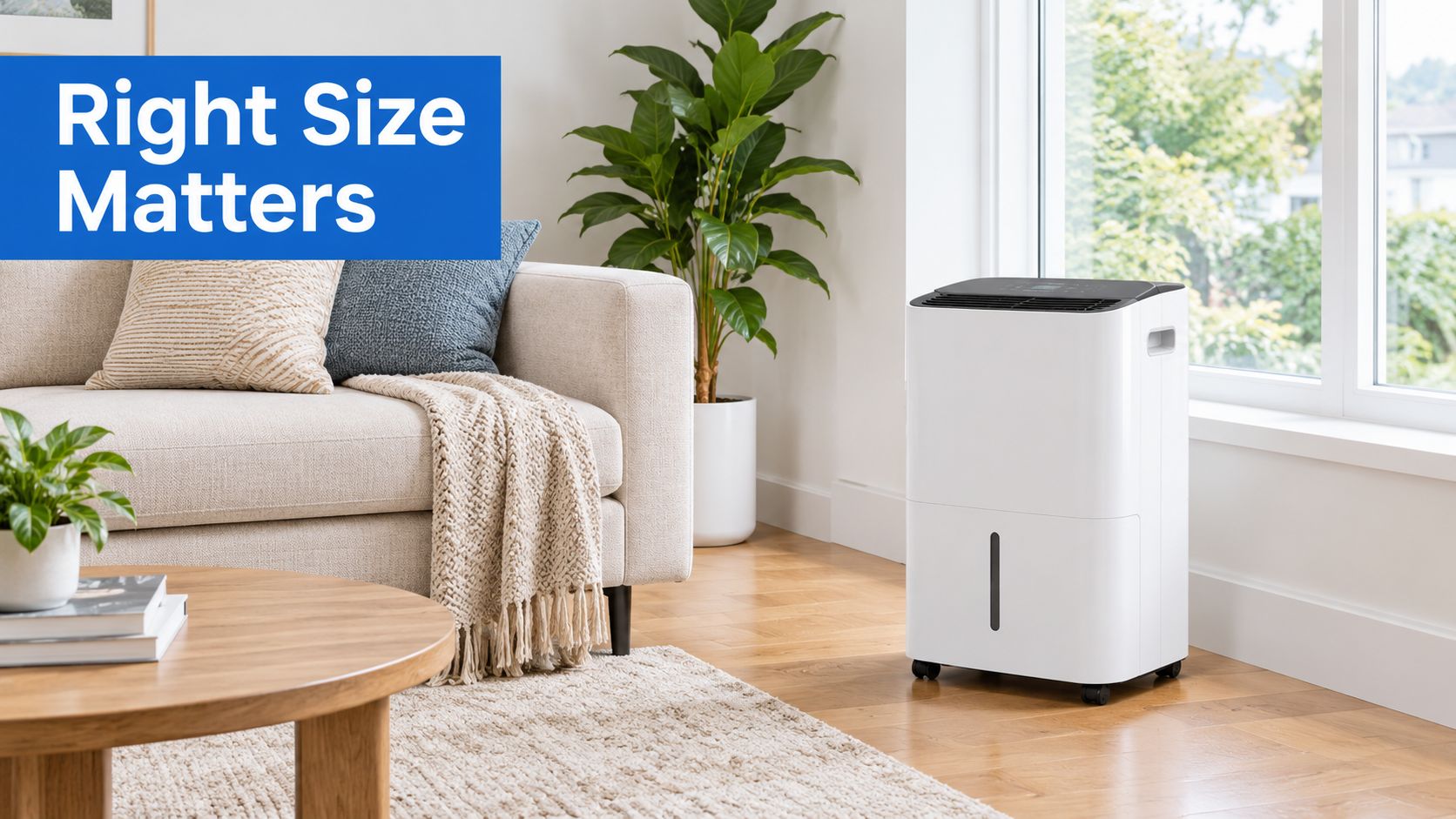
Capacity ratings describe how much water a unit can remove under specified test conditions. Real performance changes with room temperature, airflow, door position, and the amount of moisture entering the space. A unit that's too small may run constantly without reaching its set point. A unit that's oversized for a small space may cycle quickly and provide less consistent control, while also creating an awkwardly cold or dry room.
Place a portable unit where it can draw and discharge air freely. Don't push it against a wall, hide it behind furniture, or put it directly beside the wettest surface unless the manufacturer allows that arrangement. In a basement, use a continuous drain where possible. Otherwise, check and empty the reservoir before it shuts off, particularly during the first few days of operation.
Keep the equipment effective
Clean the air filter according to the manufacturer's instructions. Inspect the condensate hose for kinks, confirm that the drain flows properly, and keep the intake and discharge clear. A dirty filter reduces airflow, while a blocked drain can turn a humidity-control project into a water spill.
Field research in 20 Houston homes found that energy-efficiency upgrades and controlled mechanical ventilation still required supplemental dehumidification to remain below 60% RH year-round. The same research found that systems dehumidifying recirculated indoor air performed better than approaches relying only on ventilation-air dehumidification or cooling-system dehumidification. The residential dehumidification research for hot-humid climates illustrates why bringing in more outdoor air isn't always the most reliable drying strategy.
Set the humidistat to a reasonable target and observe the result across several days. Don't chase a single fluctuating reading. If the appliance runs continuously, produces little water, or can't reduce humidity, look for a cold operating environment, restricted airflow, an undersized unit, or a moisture source that needs repair.
When Ventilation Helps and When It Backfires
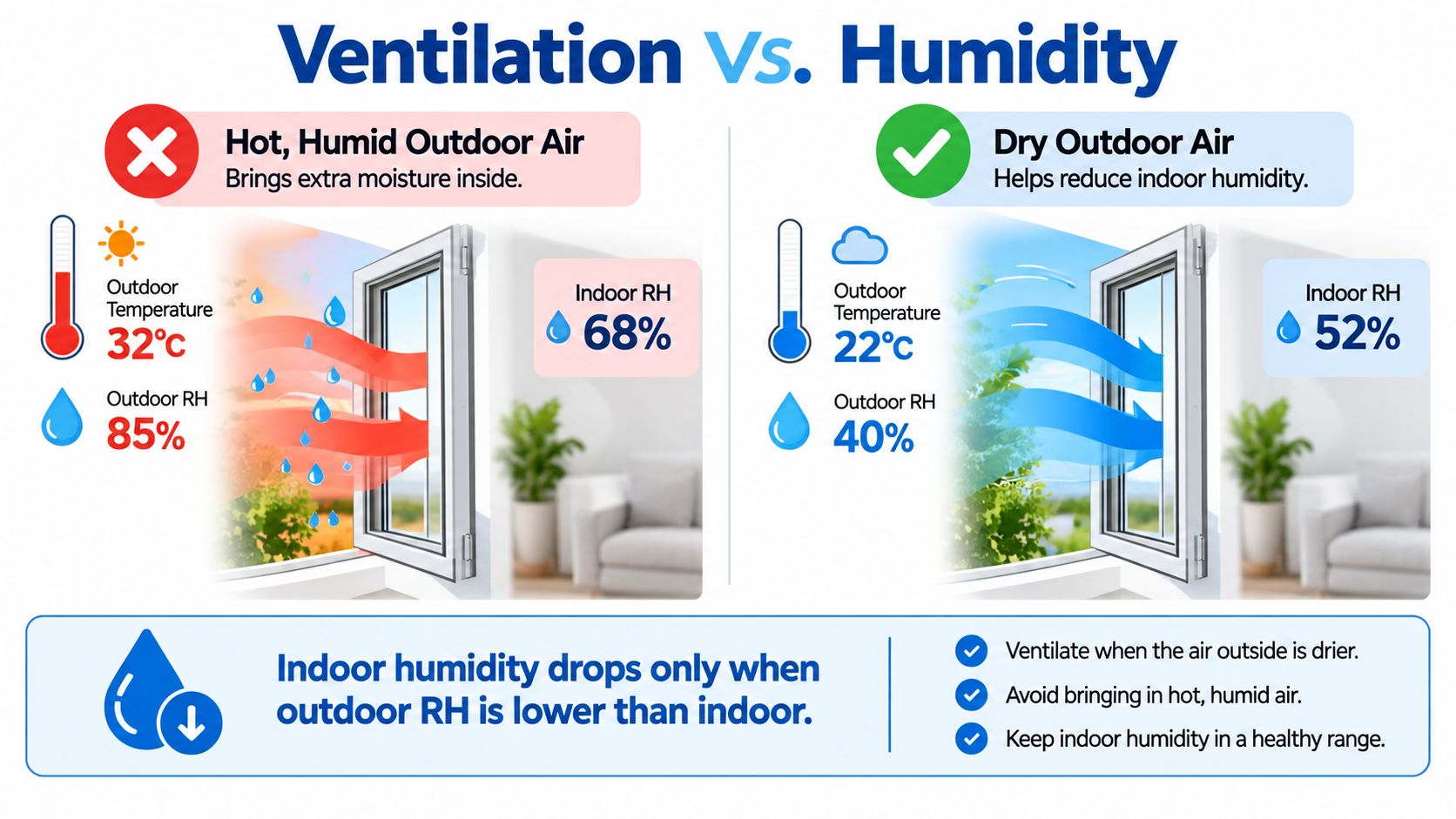
Opening a window lowers indoor humidity only when the outdoor air is drier than the indoor air. Temperature alone doesn't answer that question. A cool evening can still be humid, and a warm afternoon can sometimes be comparatively dry.
Before opening windows, compare the indoor hygrometer reading with outdoor relative humidity. Government and extension guidance recommends opening windows when outdoor RH is low, such as below 50%, and keeping them closed when outdoor air is more humid. The University of Minnesota guidance on controlling moisture makes this decision point explicit.
Use a simple weather decision
- Outdoor air is meaningfully drier: Open windows briefly to exchange air, especially after cooking or bathing. Cross-ventilation can clear localized moisture efficiently.
- Outdoor air is warmer and humid: Keep windows closed. Use air conditioning, a dehumidifier, and local exhaust instead.
- Rain, fog, or damp nighttime conditions: Assume outdoor moisture may be working against you until measurements show otherwise.
- Cold, dry winter weather: Controlled ventilation can bring in useful dry air, but avoid creating drafts or over-drying the home.
Exhaust fans also need a destination. A bathroom fan that discharges into an attic, wall cavity, or crawl space hasn't solved the moisture problem. It has moved the water vapor into a concealed area where condensation and material damage may be harder to detect.
In hot-humid climates, air conditioning often provides safer moisture reduction than casual window ventilation. However, an air conditioner that short-cycles, has poor airflow, or is not matched to the home's load may not remove enough moisture. Long-term control usually combines a reasonably tight envelope, correctly designed ventilation, effective exhaust, and equipment that can dehumidify without relying on accidental air leakage.
Long-Term Solutions for Persistent Humidity Problems
Persistent humidity usually points to a building problem, not a missing household habit. Start outside. Clean gutters, extend downspouts away from the foundation, correct grading that directs water toward the house, and inspect basement walls and floors for signs of intrusion. A dehumidifier can dry the air, but it can't stop bulk water from entering through a foundation crack or plumbing failure.
Crawl spaces deserve the same discipline. Standing water, exposed soil, poor drainage, and an incomplete vapor barrier can keep the house damp even when the living areas look clean. Sealing the space, controlling drainage, and repairing foundation defects should come before relying on a portable appliance.
Improve the mechanical system
Ask an HVAC professional to check airflow, coil condition, condensate drainage, sizing, and thermostat operation. In a humid climate, the system may need dedicated whole-house dehumidification so it can remove moisture when the home doesn't need much cooling. A sealed envelope can improve comfort and reduce uncontrolled outdoor moisture, but sealing without providing appropriate controlled ventilation can trap indoor pollutants and moisture.
A reputable assessment should include:
- Room-by-room humidity readings: The contractor should compare problem areas with normal living spaces.
- Moisture-source inspection: Look for leaks, drainage failures, wet insulation, crawl-space moisture, and condensation points.
- HVAC diagnostics: Confirm airflow, cooling performance, coil cleanliness, condensate disposal, and equipment operation.
- Building-envelope review: Inspect penetrations, windows, doors, foundation walls, and areas where warm humid air meets cold surfaces.
- Written recommendations: The proposed fix should identify the source, expected operating conditions, maintenance needs, and limitations.
If a damp area has no obvious source, thermal imaging can help locate temperature patterns associated with hidden plumbing moisture. A practical overview of thermal imaging for plumbing inspections can help homeowners understand what this diagnostic method can and can't reveal. Thermal imaging doesn't directly see water inside every wall, so a qualified inspector should combine it with moisture-meter readings and visual inspection.
Air-cleaning products, including a large multipurpose charcoal air-purifying bag, may help with odors after moisture is controlled. They aren't substitutes for drainage repair, dehumidification, or removal of mold-damaged materials.
Seasonal Humidity Control and Final Recommendations
Humidity control changes with the weather, but the order of operations stays consistent. In winter, outdoor air is often drier, so modest controlled ventilation may help, while excessive heating and air leakage can create an overly dry home. In summer, keep humid outdoor air out when readings show it would raise indoor moisture. During spring rain and mild, damp weather, don't assume that open windows will dry the house just because the temperature feels comfortable.
Use this hierarchy when deciding what to do next:
- Repair water entry first. Fix plumbing leaks, roof defects, foundation seepage, gutter discharge, and crawl-space drainage.
- Control indoor sources. Exhaust bathroom and cooking moisture outdoors, vent the dryer properly, and avoid drying laundry in closed rooms.
- Measure before adjusting equipment. Track multiple rooms and times of day so you know whether the issue is local or home-wide.
- Ventilate selectively. Open windows only when outdoor air is drier than indoor air.
- Use dehumidification when needed. Choose a portable or whole-house system that matches the moisture load and maintain its filter and drainage.
- Bring in a professional for recurring problems. Persistent odors, staining, condensation, soft materials, visible mold, or humidity that remains high after basic corrections suggest a deeper building issue.
Keep the home generally within the practical 30% to 50% RH range, and treat repeated readings above 60% RH as a signal to investigate and reduce moisture. If occupants experience ongoing irritation or the building shows warped materials, peeling finishes, or concealed dampness, don't mask the symptoms with fragrance or air cleaning alone. Find the water.
EcoQuest Purifiers offers indoor air quality products, replacement parts, and repair support for homes and businesses, including air-cleaning options that can complement a moisture-control plan after the source has been addressed. Review the available solutions at EcoQuest Purifiers, then choose equipment based on the room, the contaminant concern, and the humidity strategy already in place.