
How to Remove Smoke, Odors & Chemical Fumes from Your Home
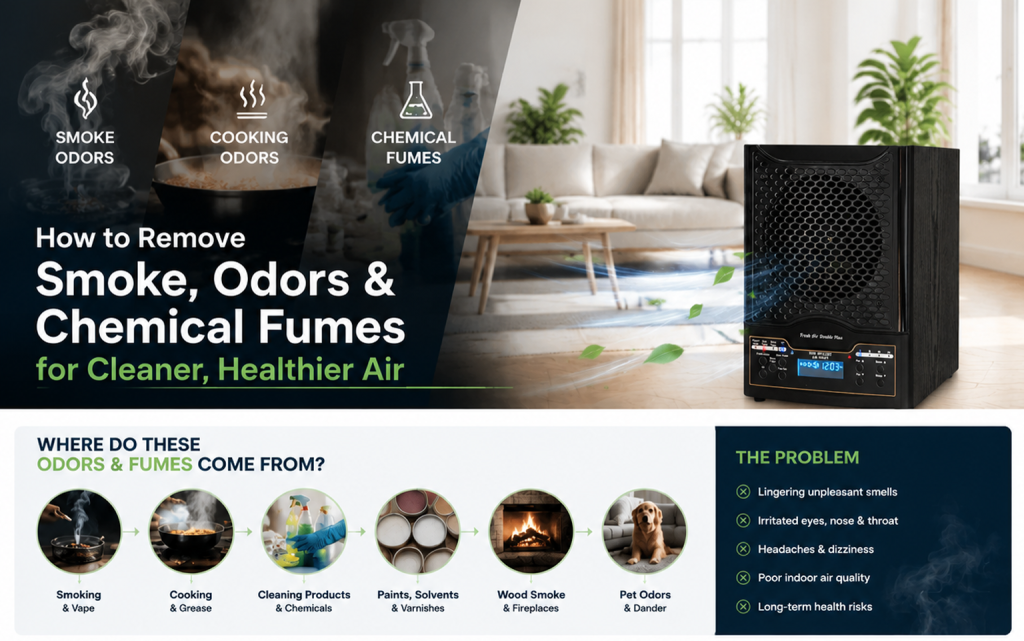
Smoke doesn't simply disappear after the visible haze is gone. The same is true for cooking odors, chemical fumes, paint smells, and many common household odors. Even when the air looks perfectly clean, microscopic particles, odor-causing molecules, and airborne chemicals can remain indoors long after the source has been removed. This is why opening a window or spraying an air freshener often provides only temporary relief. The smell may fade for a short time—but the pollutants responsible for it can still linger in the air or settle on furniture, carpets, curtains, and other surfaces. Understanding what remains in your indoor air is the first step toward choosing the right air purification solution.
In this guide, you'll learn:
- Why smoke is so difficult to remove
- Why odors often return after cleaning
- What chemical fumes and VOCs are
- Which air purification technologies work best
- Why modern air purifiers combine multiple technologies
- How to choose the right air purifier for your home
Smoke Is More Than Just an Unpleasant Smell
Many people think smoke is simply an unpleasant odor. In reality, smoke is a complex mixture of airborne pollutants. Depending on its source, smoke may contain:
- Fine airborne particles
- Soot and ash
- Odor-causing molecules
- Volatile Organic Compounds (VOCs)
- Combustion byproducts
- Various gases released during burning
Each behaves differently once released into indoor air. Some particles remain suspended in the air for hours. Others settle onto furniture, carpets, clothing, and upholstery. Some gases and odor molecules continue circulating throughout the home long after the visible smoke has disappeared. This is why smoke odors often seem to return even after a room has been cleaned.
Why Air Fresheners Don't Solve the Problem
When a room smells unpleasant, many people instinctively reach for an air freshener. While this may temporarily improve the scent of a room, it usually doesn't remove the source of the odor. Air fresheners are primarily designed to mask existing smells with stronger fragrances. The smoke particles, chemical compounds, or odor-causing molecules often remain in the air. Imagine spraying perfume inside a room where food has burned. The fragrance may be noticeable at first, but once it fades, the original odor is still there. Effective air purification focuses on reducing the contaminants responsible for the smell—not simply covering them up.
What's Actually Floating in Your Air?
Smoke and odors aren't made of a single type of contaminant. Indoor air can contain several different categories of pollutants at the same time.
Fine Particles
These include:
- Smoke particles
- Dust
- Ash
- Soot
- Pollen
- Pet dander
- Mold spores
Many of these microscopic particles can remain airborne for extended periods before eventually settling onto surfaces.
Odor Molecules
Household odors are created by tiny airborne molecules released from sources such as:
- Cooking
- Pets
- Garbage
- Mold and mildew
- Tobacco smoke
- Burned food
- Organic waste
Because these molecules are much smaller than dust particles, they often require different purification strategies.
Chemical Fumes
Many everyday household products release chemical vapors into the air. Common sources include:
- Fresh paint
- Cleaning products
- New furniture
- Flooring materials
- Adhesives
- Solvents
- Building materials
Many of these emissions belong to a group known as Volatile Organic Compounds (VOCs).
Combustion Byproducts
Whenever something burns, it produces more than visible smoke. Common sources include:
- Cigarette smoke
- Wildfire smoke
- Fireplace smoke
- Candles
- Incense
- Burned cooking oils
- Overheated food
Each source creates a unique combination of particles, gases, and odor-causing compounds.
Why Removing Smoke Is So Difficult
Many homeowners assume that once the visible smoke disappears, the problem is solved. Unfortunately, that's rarely the case. Smoke creates several challenges at once. First, microscopic particles remain suspended in the air. Second, odor molecules spread throughout the room. Third, smoke residue settles onto walls, furniture, fabrics, and ventilation systems, where it can continue releasing odors for days—or even weeks. This is why simply opening windows or running a fan often isn't enough to eliminate persistent smoke smells. Instead, effective smoke removal typically requires a combination of cleaning, ventilation, source control, and appropriate air purification.
Different Types of Smoke Create Different Challenges
Not all smoke is the same. Its composition depends on what is burning.
| Smoke Source | Typical Indoor Air Challenges |
|---|---|
| Cigarette Smoke | Fine particles, tar residue, persistent odors, VOCs |
| Wildfire Smoke | Extremely fine particles, outdoor pollutants, lingering smoky smell |
| Fireplace Smoke | Soot, ash, combustion particles, smoke odor |
| Cooking Smoke | Grease aerosols, burnt food odors, fine particles |
| Burned Food | Strong odor molecules and smoke particles |
| Candles & Incense | Fine particles and fragrance compounds |
Because every smoke source produces a different combination of airborne contaminants, no single purification technology is equally effective in every situation.
The Truth About Smoke Removal
There isn't one technology that removes everything in smoke.
Smoke contains particles, odor molecules, gases, and volatile organic compounds (VOCs)—all of which behave differently indoors.
That's why the most effective air purifiers don't rely on a single purification method. Instead, they combine multiple complementary technologies to address different types of airborne pollutants.
Why Modern Air Purifiers Combine Multiple Technologies
If you've been researching air purifiers, you've probably noticed that manufacturers emphasize different technologies. Some promote HEPA filtration. Others focus on activated carbon. Some highlight ionization, while others feature UV-C light, Photocatalytic Oxidation (PCO), activated oxygen, or adjustable ozone output.
So which one is best?
The honest answer is:
It depends on what you're trying to remove.
Smoke particles require one approach.
Odor molecules often require another.
Chemical fumes and VOCs present an entirely different challenge.
This is why many premium air purification systems no longer rely on just one technology.
Instead, they combine multiple complementary purification methods that work together to improve indoor air quality more comprehensively.
Meet Three Air Purifiers Designed for Different Homes
At EcoQuest, different homes call for different air purification solutions. Rather than offering a one-size-fits-all system, EcoQuest provides several models designed for different room sizes and everyday air quality needs. Throughout this guide, we'll use three examples.

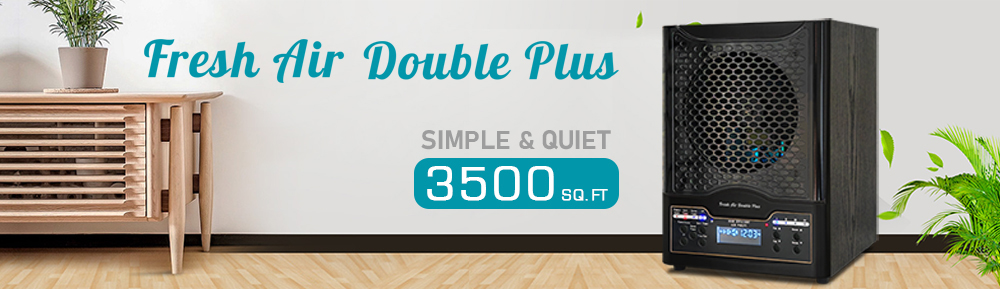
Fresh Air Double Plus
Is a multi-technology air purifier designed to help address a wide range of indoor air quality concerns by combining several complementary purification technologies.
Best suited for:
- Whole-home air purification
- Persistent household odors
- Smoke-related concerns
- Everyday VOC management
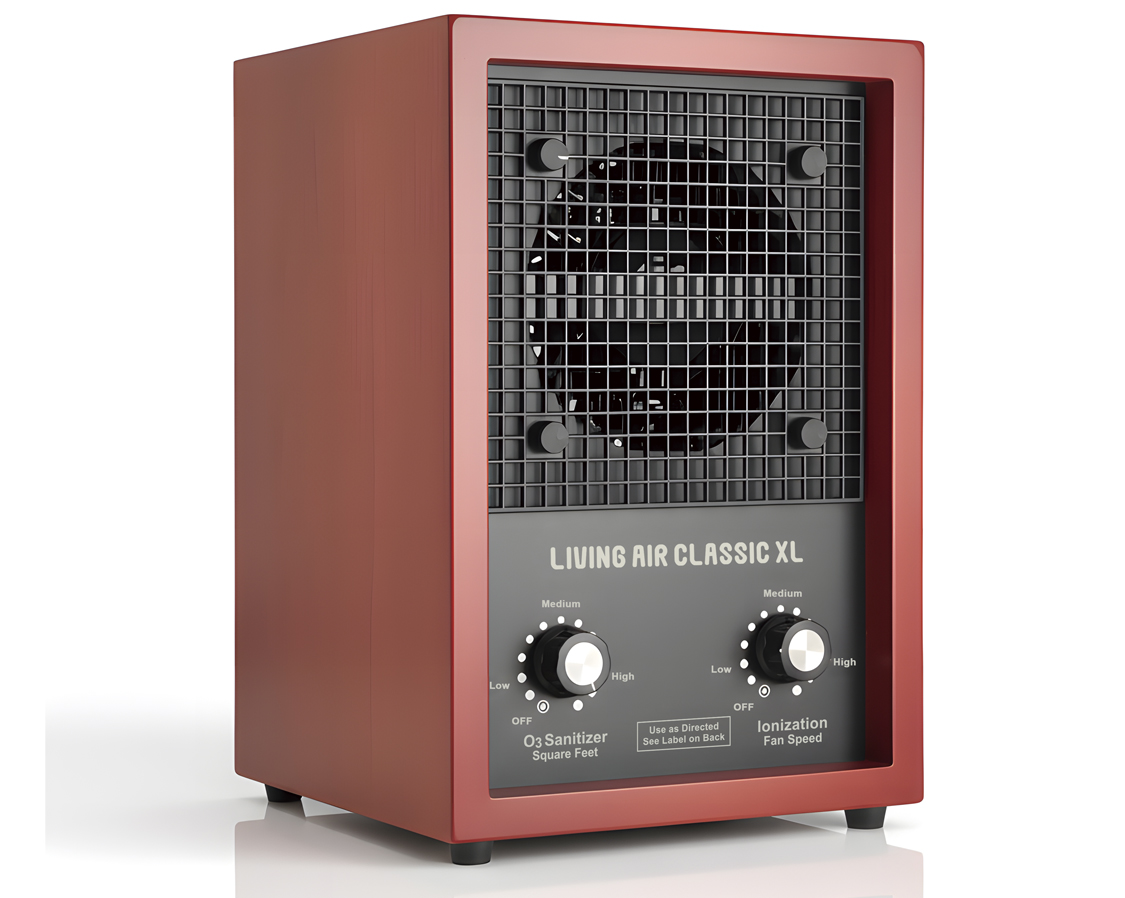
Living Air Classic XL-15
Designed for larger homes and open living areas where broader coverage and continuous air treatment are especially important.
Best suited for:
- Large homes
- Open floor plans
- Family living spaces
- Continuous everyday air purification
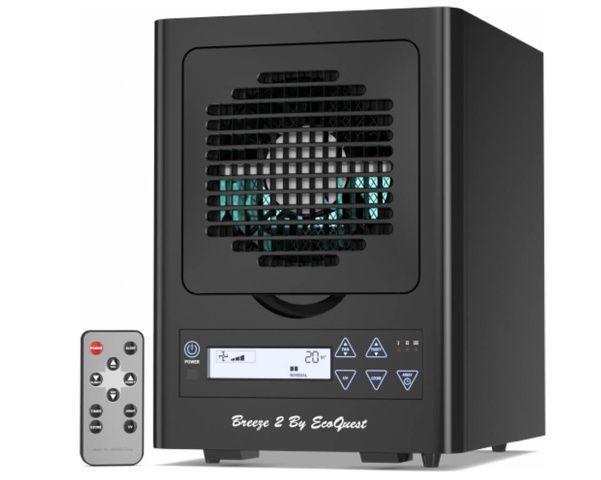
Breeze 2
A compact solution designed for localized air purification in smaller rooms.
Best suited for:
- Bedrooms
- Apartments
- Home offices
- Nurseries
- Smaller living spaces
Which Air Purification Technologies Actually Help?
Once you understand what smoke, odors, and chemical fumes are made of, the next question becomes obvious:
Which air purification technology actually works?
The answer isn't as simple as choosing one feature over another.
Smoke isn't a single pollutant. It's a mixture of microscopic particles, odor-causing compounds, gases, and volatile organic compounds (VOCs). Because each behaves differently in the air, no single purification technology is designed to address them all equally well.
This is why many modern air purifiers combine multiple technologies instead of relying on only one.
Let's take a closer look at the most common air purification technologies and what each one is designed to do.
HEPA Filtration
HEPA (High-Efficiency Particulate Air) filtration is one of the best-known air purification technologies. Unlike active purification methods, HEPA is a mechanical filter that physically captures airborne particles as air passes through it. Because of its ability to trap microscopic particles, HEPA is widely used in homes, hospitals, laboratories, and commercial buildings.
What HEPA Does Well
HEPA filters are highly effective at capturing airborne particles such as:
- Smoke particles
- Ash
- Dust
- Pollen
- Pet dander
- Mold spores
- Fine particulate matter (PM)
This makes HEPA particularly valuable during wildfire season or in homes where airborne particles are the primary concern.
Where HEPA Has Limitations
Although HEPA is excellent for particles, it isn't designed to remove gases or odors. For example, HEPA alone cannot effectively address:
- Smoke smell
- Cooking odors
- Paint fumes
- Chemical vapors
- Most VOCs
This explains why a room may look visibly cleaner while still smelling like smoke. The particles have been captured. The odor molecules remain.
Best Applications
- >Wildfire smoke particles
- Dust and allergens
- Airborne particulate matter
- Pet dander
Activated Carbon
Activated carbon addresses a different category of indoor pollutants. Instead of trapping particles, it helps reduce many airborne gases and odor-causing compounds through a process known as adsorption. Its extremely porous structure provides a large surface area capable of capturing many molecules responsible for household odors and certain airborne chemicals.
What Activated Carbon Helps Reduce
Activated carbon is commonly used for:
- Cigarette smoke odors
- Cooking smells
- Pet odors
- Garbage odors
- Household odors
- Many VOCs
- Certain chemical fumes
For this reason, activated carbon is frequently paired with HEPA filtration. The two technologies complement one another. HEPA captures particles. Activated carbon focuses on many gases and odors.
Limitations
Activated carbon doesn't last forever. Over time, the available adsorption sites become saturated, reducing its effectiveness. Performance depends on factors such as:
- The amount of activated carbon used
- Airflow
- Pollutant concentration
- Usage time
Eventually, replacement becomes necessary.
Best Applications
- Household odors
- Cigarette smoke smell
- Cooking odors
- Paint fumes
- VOC reduction
Ionization
Ionization takes a completely different approach to air purification. Instead of collecting pollutants inside a filter, ionization releases electrically charged ions into the surrounding air. These ions attach to airborne particles, causing them to behave differently than uncharged particles. Depending on the purifier's design, the particles may become easier to collect within the system or settle from the air more readily.
What Ionization Helps With
Ionization is commonly associated with improving the management of:
- Smoke particles
- Dust
- Pet dander
- Fine airborne particles
Because ionization complements other purification methods, it is often included in advanced multi-stage air purification systems rather than used by itself.
Best Applications
- Everyday airborne particles
- Smoke particles
- Dust reduction
- Hybrid purification systems
UV-C Light
UV-C light is another technology frequently mentioned in premium air purifiers. Unlike filtration technologies, UV-C isn't designed to trap particles or absorb odors. Instead, it serves as one stage within a broader purification process. Many advanced systems pair UV-C with other technologies to enhance the overall treatment process.
Why UV-C Is Rarely Used Alone
UV-C performs best when integrated into a multi-stage air purifier. Rather than replacing filtration or odor control technologies, it supports them. This is why simply adding a UV lamp doesn't automatically create a more effective air purifier. The overall system design remains just as important as the individual technologies themselves.
Best Applications
- Multi-stage purification systems
- Integrated air treatment
- Complementary purification processes
Photocatalytic Oxidation (PCO)
Photocatalytic Oxidation, commonly known as PCO, is one of the most advanced technologies used in residential air purification. Instead of capturing pollutants, PCO helps break down certain airborne organic compounds through an oxidation process. A typical PCO system combines:
- UV-C light
- A photocatalyst, usually titanium dioxide (TiO₂)
When working together, these components support the treatment of various airborne organic compounds commonly found indoors.
What PCO Helps Address
PCO is commonly associated with:
- Household odors
- Smoke odors
- Cooking smells
- VOCs
- Organic airborne contaminants
For this reason, PCO is often included in premium whole-home air purification systems.
Best Applications
- Smoke odors
- Cooking odors
- VOC management
- Organic airborne compounds
Activated Oxygen
Activated Oxygen is another technology found in many advanced air purification systems. Rather than filtering particles, it supports oxidation-based purification processes designed to help reduce odor-causing compounds in indoor air. When combined with other purification technologies, Activated Oxygen adds another layer of odor management.
Best Applications
- Household odors
- Smoke odors
- Cooking smells
- Everyday indoor air freshness
Adjustable Ozone Technology
Ozone is one of the most misunderstood topics in air purification. Some people assume any amount of ozone is harmful. Others believe ozone alone can solve every odor problem. The reality is more nuanced. Certain advanced air purifiers incorporate adjustable ozone output, allowing users to select different operating levels depending on the intended application and always according to the manufacturer's recommendations.
When properly integrated into a multi-stage purification system, adjustable ozone becomes one component of a broader odor-management strategy rather than a standalone solution.
Best Applications
- Persistent smoke odors
- Strong household odors
- Targeted odor-treatment applications
Comparing Today's Air Purification Technologies
Each technology serves a different purpose. The following comparison illustrates where each performs best.
| Technology | Smoke Particles | Smoke Odors | Chemical Fumes | VOCs | Household Odors |
|---|---|---|---|---|---|
| HEPA | ⭐⭐⭐⭐⭐ | ⭐ | ⭐ | ⭐ | ⭐ |
| Activated Carbon | ⭐ | ⭐⭐⭐⭐⭐ | ⭐⭐⭐⭐ | ⭐⭐⭐⭐⭐ | ⭐⭐⭐⭐⭐ |
| Ionization | ⭐⭐⭐⭐ | ⭐⭐ | ⭐ | ⭐ | ⭐⭐ |
| UV-C | ⭐ | ⭐ | ⭐ | ⭐ | ⭐ |
| Photocatalytic Oxidation (PCO) | ⭐ | ⭐⭐⭐⭐ | ⭐⭐⭐⭐ | ⭐⭐⭐⭐ | ⭐⭐⭐⭐ |
| Activated Oxygen | ⭐ | ⭐⭐⭐⭐ | ⭐⭐⭐ | ⭐⭐⭐ | ⭐⭐⭐⭐ |
| Adjustable Ozone* | ⭐ | ⭐⭐⭐⭐⭐ | ⭐⭐⭐ | ⭐⭐⭐ | ⭐⭐⭐⭐⭐ |
*Use according to the manufacturer's recommendations.
Which Technology Helps With Which Indoor Air Problem?
Because different pollutants require different treatment methods, the "best" technology depends on what you're trying to reduce.
| Indoor Air Concern | Technologies Commonly Used |
|---|---|
| Wildfire Smoke Particles | HEPA |
| Cigarette Smoke Particles | HEPA, Ionization |
| Smoke Odors | Activated Carbon, PCO, Activated Oxygen |
| Cooking Smoke | PCO, Activated Oxygen |
| Paint Fumes | Activated Carbon, PCO |
| Household Chemical Fumes | Activated Carbon, PCO |
| VOCs | Activated Carbon, PCO |
| Mixed Indoor Air Pollution | Multi-Technology Systems |
One pattern quickly becomes clear. No single technology appears in every row. That's because indoor air pollution isn't a single problem—it's a combination of particles, gases, odors, and chemical compounds.
This is why many premium air purifiers combine several complementary technologies into one integrated system rather than relying on a single purification method.
Why Multi-Technology Air Purifiers Deliver Better Results
After comparing today's leading air purification technologies, one thing becomes clear:
Every technology has strengths.
Every technology also has limitations.
HEPA excels at capturing airborne particles.
Activated carbon helps reduce many odors and gases.
Ionization supports airborne particle management.
Photocatalytic Oxidation (PCO) helps address certain airborne organic compounds.
Activated Oxygen contributes to odor management.
Adjustable ozone output can assist with targeted odor-treatment applications.
None of these technologies was designed to solve every indoor air quality challenge on its own.
That's why many modern air purifiers combine multiple complementary technologies into one integrated system.
This approach is commonly referred to as multi-stage air purification.
Why One Technology Isn't Enough
Imagine a typical family home. On any given day, the indoor air may contain:
- Dust and allergens
- Pet dander
- Cooking smoke
- Cigarette smoke
- VOCs released from furniture and flooring
- Odors from pets or garbage
- Cleaning product fumes
- Seasonal outdoor pollutants
- Airborne particles brought in from outside
These contaminants don't all behave the same way. Some are microscopic particles. Others are gases. Some are odor molecules. Others are chemical compounds released into the air over time. Because each category requires a different treatment approach, relying on a single purification technology often means addressing only part of the problem. A multi-stage air purifier is designed to tackle several types of pollutants simultaneously.
How Multi-Stage Air Purification Works
Instead of asking one technology to perform every task, a multi-stage system assigns different roles to different technologies. Each stage complements the others, creating a more comprehensive air purification process.
A simplified example looks like this:
| Purification Stage | Primary Purpose |
|---|---|
| Ionization | Helps manage airborne particles |
| UV-C Light | Supports the overall purification process |
| Photocatalytic Oxidation (PCO) | Helps address certain airborne organic compounds |
| Activated Oxygen | Supports odor reduction |
| Adjustable Ozone Output | Designed for specific odor-treatment applications |
Rather than competing with one another, these technologies work together as part of a single integrated system.
Fresh Air Black: A Multi-Technology Approach
One example of this design philosophy is the Fresh Air Black.
Instead of relying on a traditional filter alone, Fresh Air Black combines multiple complementary purification technologies into one air purification system.
These include:
- Ionization
- UV-C Light
- Photocatalytic Oxidation (PCO)
- Activated Oxygen
- Adjustable Ozone Output
Each technology addresses a different aspect of indoor air quality. Some help manage airborne particles. Others focus on odors or airborne organic compounds. Together, they create a broader approach to indoor air purification than any single technology could provide on its own. This makes Fresh Air Black well suited for homes where smoke, cooking odors, everyday household smells, and airborne pollutants may all be present at different times.
Alpine Air Classic XL-15: Designed for Larger Living Spaces
Not every home has the same air purification needs. A compact apartment requires a different solution than a large open-concept house. The Alpine Air Classic XL-15 is designed for larger residential environments where air moves freely between connected spaces.
Examples include:
- Open floor plans
- Large family rooms
- Multi-room living areas
- Homes with high ceilings
- Combined kitchen and living spaces
Because smoke and odors can easily spread throughout connected areas, wider coverage becomes just as important as the purification technologies themselves.
For homeowners looking to improve air quality across larger spaces, Alpine Air Classic XL-15 offers a practical whole-home solution.
Breeze 2: Ideal for Smaller Rooms
Sometimes the air quality issue is limited to a single room.
Examples include:
- A bedroom
- A nursery
- A home office
- A guest room
- A studio apartment
In these situations, a compact purifier may be the most practical option.
Breeze 2 is designed for localized air purification in smaller spaces where improving everyday indoor air quality is the primary goal.
Its compact size makes it suitable for rooms where a whole-home system isn't necessary.
Choosing the Right EcoQuest Air Purifier
Selecting the right air purifier isn't only about technology.
The size of your home, the type of pollutants you're dealing with, and the areas you want to improve all play an important role.
The following comparison provides a general overview.
| Model | Best For | Recommended Environment |
|---|---|---|
| Fresh Air Black | Everyday smoke, household odors, VOC management and mixed indoor pollutants | Whole-home use and larger family living areas |
| Alpine Air Classic XL-15 | Larger coverage areas and continuous air treatment | Large homes, open floor plans and connected living spaces |
| Breeze 2 | Everyday air purification in smaller spaces | Bedrooms, apartments, nurseries and home offices |
Each model is designed for a different living environment while following the same principle: Providing a comprehensive approach to improving indoor air quality.
Why System Design Matters
One of the biggest misconceptions about air purifiers is that more features automatically mean better performance. In reality, effective air purification depends on much more than the number of technologies listed on a product page.
What matters most is how those technologies are integrated into a complete system.
A well-engineered purifier ensures that each stage complements the next instead of duplicating the same function.
This coordinated approach allows the system to address a broader range of indoor air quality challenges while maintaining consistent performance.
For this reason, professionals often evaluate an air purifier as an integrated system rather than focusing on a single feature or specification.
The Best Air Purifier Isn't Necessarily the One With the Most Features
Air purification isn't about collecting as many technologies as possible. It's about using the right technologies for the right purpose. A thoughtfully engineered multi-stage system can provide more comprehensive indoor air purification than a product that simply advertises a long list of features without showing how they work together.
When comparing air purifiers, always consider the complete system—not just individual technologies.
Bringing It All Together
Smoke particles, lingering odors, chemical fumes, and VOCs are different types of indoor pollutants. Because they behave differently, they also require different purification methods. This is why modern air purification has moved beyond relying on a single technology. Systems like Fresh Air Black combine multiple complementary technologies to help address a broad range of everyday indoor air quality concerns.
For larger homes, Alpine Air Classic XL-15 extends this same philosophy to more spacious environments.
For bedrooms, apartments, and smaller living areas, Breeze 2 offers a compact solution designed for localized air purification.
Real-World Air Quality Challenges and the Right Air Purification Approach
Indoor air pollution doesn't always come from a single source. Most homeowners experience a variety of air quality issues throughout the year—from wildfire smoke and cooking odors to paint fumes and lingering household smells. While the source may change, the goal remains the same: improving indoor air quality and making your home more comfortable. Below are some of the most common situations and the air purification strategies that can help.

Scenario 1: Wildfire Smoke Enters Your Home
Even with doors and windows closed, wildfire smoke can find its way indoors through small gaps, ventilation systems, and frequent trips outside.
The result is often:
- Fine airborne particles
- Lingering smoky odors
- Reduced indoor air quality
Recommended Approach
- Keep windows and doors closed whenever possible.
- Minimize outdoor air entering the home during heavy smoke events.
- Run your air purifier continuously rather than only when smoke is noticeable.
- Replace or clean HVAC filters according to the manufacturer's recommendations.
Recommended EcoQuest Models
- Fresh Air Black – suitable for everyday whole-home air purification.
- Alpine Air Classic XL-15 – an excellent option for larger homes and open living areas.
Scenario 2: Cigarette Smoke Indoors
Cigarette smoke is particularly challenging because it contains both microscopic particles and persistent odor-causing compounds.
Even after smoking stops, odors may remain on:
- Furniture
- Curtains
- Carpets
- Clothing
- Walls
Over time, these surfaces can continue releasing smoke-related odors back into the air.
Recommended Approach
- Eliminate the smoke source whenever possible.
- Thoroughly clean fabrics and hard surfaces.
- Increase ventilation.
- Use a multi-technology air purifier to help manage both particles and odors.
Recommended EcoQuest Model
Fresh Air Black is particularly well suited for homes where smoke particles, odors, and VOC-related concerns may all be present.
Scenario 3: Cooking Smoke and Burned Food
Every kitchen produces airborne pollutants.
Even everyday cooking can release:
- Smoke particles
- Grease aerosols
- Strong food odors
- Combustion byproducts
Burned food can leave lingering smells that spread throughout the home within minutes.
Recommended Approach
- Use the kitchen exhaust fan whenever possible.
- Improve ventilation during and after cooking.
- Continue operating your air purifier even after cooking has finished to help improve indoor air quality.
Recommended EcoQuest Models
- Fresh Air Black for whole-home odor management.
- Breeze 2 for kitchens, apartments, or smaller living spaces.
Scenario 4: Fresh Paint or Home Renovation
Painting, installing new flooring, or bringing new furniture into your home often introduces additional airborne chemicals.
These products may release VOCs for days or even weeks. Common sources include:
- Paint
- Flooring
- Cabinets
- Furniture
- Adhesives
- Construction materials
Recommended Approach
- Follow manufacturer recommendations regarding ventilation.
- Increase fresh air circulation whenever practical.
- Operate an air purifier continuously during the initial off-gassing period.
Recommended EcoQuest Models
- Fresh Air Black
- Alpine Air Classic XL-15 for larger renovation projects and open floor plans.
Scenario 5: Everyday Household Odors
Not every air quality concern involves smoke. Many homes experience everyday odors from:
- Pets
- Garbage
- Laundry rooms
- Bathrooms
- Cooking
- Sports equipment
These odors may not indicate poor housekeeping—they're simply part of daily life.
Recommended Approach
Rather than masking odors with scented sprays, focus on improving overall indoor air quality and eliminating the source whenever possible.
Running an air purifier as part of your everyday routine can help maintain a fresher indoor environment.
Which EcoQuest Air Purifier Is Right for Your Situation?
| Your Situation | Recommended Model |
|---|---|
| Everyday smoke and household odors | Fresh Air Black |
| Large homes and open floor plans | Alpine Air Classic XL-15 |
| Bedrooms, apartments, and home offices | Breeze 2 |
| Cooking odors | Fresh Air Black or Breeze 2 |
| Home renovation and paint fumes | Fresh Air Black or Alpine Air Classic XL-15 |
Choosing an Air Purifier: What to Consider
Before purchasing an air purifier, consider the following questions:
- What is your primary concern—smoke, odors, particles, or chemical fumes?
- How large is the space you want to treat?
- Is the issue limited to one room or the entire home?
- Are you looking for everyday air purification or occasional odor treatment?
- Would a multi-technology system better match the variety of pollutants in your home?
Answering these questions will help narrow your options and ensure you choose a purifier that fits your environment rather than focusing on a single advertised feature.
Key Takeaway
There is no universal solution for every indoor air quality challenge.
Wildfire smoke, cigarette smoke, cooking odors, chemical fumes, and everyday household smells all have different characteristics.
The most effective approach is to identify the source of the problem, improve ventilation where appropriate, eliminate the source whenever possible, and choose an air purifier designed for your home's size and air quality needs.
Whether you're looking for a whole-home solution like Fresh Air Black, broader coverage with Alpine Air Classic XL-15, or localized air purification with Breeze 2, selecting a system that combines complementary technologies can provide a more comprehensive approach to improving indoor air quality.
Choosing the Right Air Purifier for Your Home
By now, you've probably noticed that there isn't a single technology capable of solving every indoor air quality challenge.
Smoke, odors, chemical fumes, VOCs, and airborne particles all behave differently.
That's why choosing an air purifier shouldn't start with a single feature listed on a product page. Instead, it should begin with a simple question:
What problem are you trying to solve?
If your primary concern is wildfire smoke, you'll likely prioritize technologies designed to manage airborne particles.
If persistent household odors are the issue, odor-management technologies become more important.
If your home contains a combination of smoke, cooking odors, pets, cleaning products, and everyday pollutants—as many homes do—a multi-technology approach often provides the most comprehensive solution.
Quick Buying Checklist
Before purchasing an air purifier, ask yourself these questions: What is my primary air quality concern?
- Smoke particles
- Household odors
- Chemical fumes
- VOCs
- Everyday indoor air quality
How large is the space?
- One bedroom
- Apartment
- Large living room
- Open-concept home
- Whole house
Is this a temporary problem or an everyday need?
For example:
- Wildfire season
- Home renovation
- Persistent cigarette odors
- Daily cooking
- Pet-related odors
Would a single technology address my needs?
Or would a purifier that combines multiple complementary technologies offer broader everyday protection?
Comparing the EcoQuest Models
Choosing between EcoQuest models is largely a matter of matching the purifier to your living environment.
| Model | Best Choice For |
|---|---|
| Fresh Air Black | Everyday whole-home air purification, smoke concerns, household odors, VOC management and mixed indoor air quality challenges |
| Alpine Air Classic XL-15 | Larger homes, open floor plans and spacious living areas requiring broader air treatment |
| Breeze 2 | Bedrooms, apartments, nurseries, home offices and localized air purification |
Each model is designed for a different application while sharing the same overall objective:
Helping create cleaner, fresher indoor air.
Small Changes Can Make a Big Difference
Improving indoor air quality isn't always about purchasing new equipment. Simple everyday habits can also make a noticeable difference.
Consider:
- Ventilating your home whenever outdoor conditions allow.
- Eliminating odor sources whenever possible.
- Maintaining HVAC systems and replacing filters as recommended.
- Keeping kitchens and bathrooms properly ventilated.
- Choosing low-VOC products during home renovations.
- Using an air purifier consistently rather than only when odors become noticeable.
When combined, these small improvements can help create a healthier and more comfortable indoor environment over time.
Final Thoughts
Smoke doesn't simply disappear. Neither do many household odors or chemical fumes. Even after the visible haze is gone, microscopic particles, odor-causing molecules, and airborne compounds may continue affecting your indoor environment. Fortunately, modern air purification has evolved well beyond relying on a single technology.
Today's most advanced systems combine complementary purification methods to address different types of airborne pollutants more effectively.
Whether you're dealing with wildfire smoke, cigarette odors, cooking fumes, paint vapors, or everyday household smells, understanding how different technologies work is the first step toward making an informed decision.
Find the Right Solution for Your Home
EcoQuest offers air purification solutions designed for different room sizes, lifestyles, and indoor air quality needs.
Whether you're looking for a whole-home system like Fresh Air Black, broader coverage with Alpine Air Classic XL-15, or a compact solution such as Breeze 2, choosing a purifier that matches your environment is just as important as choosing the technologies it uses.
The better you understand your indoor air quality challenges, the easier it becomes to select a solution that helps create a cleaner, fresher, and more comfortable home.